Owner’s manual
 View engine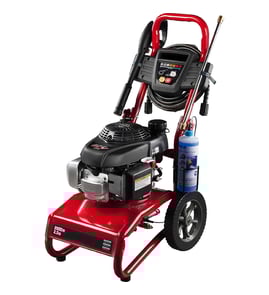



Can you put 87 gas in a pressure washer?
Yes. For the Craftsman 580752051 gas pressure washer, we use clean, fresh unleaded gasoline with a minimum rating of 87 octane (87 AKI). Gasoline with up to 10% ethanol (gasohol) or up to 15% MTBE is acceptable; do not use E85 and do not mix oil into the gasoline (see the owner's manual).
Fuel requirements for model 580752051
Use fuel that meets these basics:
- Clean, fresh, unleaded gasoline
- Minimum 87 octane (87 AKI)
- Up to 10% ethanol (E10) is acceptable
- Up to 15% MTBE is acceptable
- No E85 (or other unapproved fuels)
- No oil mixed into the gasoline
Quick fuel compatibility table
| Fuel type | OK to use? | Notes |
|---|---|---|
| Unleaded 87 octane (87 AKI) | Yes | Minimum recommended rating |
| Unleaded 88 to 93 octane | Yes | Fine to use if it is clean and fresh |
| E10 (up to 10% ethanol) | Yes | Acceptable per manual |
| Up to 15% MTBE | Yes | Acceptable per manual |
| E85 | No | Not an approved fuel |
| Gas mixed with oil | No | Do not mix oil in gasoline |
Best practices to prevent hard starting and poor performance
Fuel issues are one of the most common causes of “won’t start” and “runs rough” complaints on gas pressure washers.
- Buy fuel in small quantities so it stays fresh
- Add fuel stabilizer when filling the tank if the washer may sit
- If starting or performance problems begin after a fill-up, switch fuel brands or stations
- For storage longer than 30 days, prep the fuel system as described in the owner's manual
Why it matters
Using the correct gasoline helps your engine maintain the right fuel-air mixture, start reliably, and avoid gum and varnish buildup in the carburetor and fuel system. It also helps protect long-term performance and service life.
Last updated: February 2026
Is it worth repairing a pressure washer?
Yes, repairing a pressure washer is usually worth it when the problem is a wear item (hose leak, clogged inlet screen, worn seals) or a maintenance issue. For a Craftsman 580752051 gas pressure washer, repair is the smart choice when the fix is straightforward and the engine and pump are still in good shape.
Quick way to decide
We use this checklist to decide repair vs. replace:
- The engine starts and runs smoothly after basic maintenance (oil level, air filter, spark plug).
- The pump is not leaking oil or water from the crankcase area.
- The issue is isolated to the spray system (hose, gun, nozzle, inlet screen).
- You can complete the repair safely without bypassing guards or safety devices.
- The repair cost stays well below the cost of a comparable new gas pressure washer.
Repairs that are commonly worth doing
These are high-value fixes because they are common and usually low complexity:
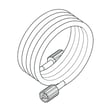
- Replace a leaking or damaged high-pressure hose (example: pressure washer hose 84006753).
- Clean the water inlet screen if clogged; replace it if torn.
- Fix air leaks on the suction side (garden hose connection, inlet fittings).
- Address pressure surging by servicing valves, O-rings, or the unloader system.
When replacement makes more sense
Replacement is typically the better call when you have major failures that stack up:
- Engine has low compression, heavy smoke, or repeated no-start issues after tune-up.
- Pump has internal damage (persistent low pressure with good water supply, metal noise, or severe leaks).
- Multiple expensive components are failing at the same time.
Cost and effort comparison
| Situation | Typical best choice | Why |
|---|---|---|
| Hose leak, fitting leak, clogged inlet screen | Repair | Fast, low cost, restores performance |
| Pressure spikes or surging | Repair first | Often unloader/valve/O-ring related |
| Engine or pump failure | Compare costs | Highest parts and labor impact |
Why it matters
Regular maintenance extends the life of the pressure washer and prevents “big” failures. The maintenance schedule in the owner's manual calls out items like checking the high-pressure hose, cleaning debris, checking the inlet screen, and checking engine oil before each use.
Last updated: February 2026
What is a good PSI for a gas pressure washer?
A good PSI depends on the job, but for the Craftsman 580752051 gas pressure washer, the rated maximum outlet pressure is 2,550 PSI, which is a strong all-around level for most homeowner cleaning tasks. Confirm operating and setup details in the owner's manual.
Quick PSI guide (what to choose)
- 1,300 to 2,000 PSI: cars, patio furniture, grills, light siding rinse
- 2,000 to 2,800 PSI: decks, driveways, fences, most home exterior cleaning
- 2,800 to 3,500 PSI: heavy concrete, paint prep (more risk of surface damage)
- 3,500+ PSI: commercial use; requires more experience and surface testing
Model-specific specs for Craftsman 580752051
The manual lists these performance ratings:
| Spec | Rating |
|---|---|
| Max outlet pressure | 2,550 PSI |
| Max flow rate | 2.3 GPM |
| Water supply temperature | Not to exceed 100°F |
Why PSI is not the whole story
PSI is cleaning force, but real cleaning speed also depends on flow (GPM) and the spray tip you use.
- Higher PSI can etch wood, strip paint, or damage siding if you get too close.
- Higher GPM rinses faster and carries debris away better.
- The spray tip angle controls how concentrated the stream is.
Tips to get better cleaning without “too much PSI”
- Start with a wider fan tip and increase intensity only as needed.
- Keep a consistent distance; begin farther away and move closer gradually.
- Make sure the water supply meets the minimum requirement (at least 20 PSI at the washer end of the garden hose).
- Purge air from the pump by squeezing the trigger with water on before starting.
- Replace a worn or leaking hose if pressure pulses or performance drops (see pressure washer hose 84006753).
When pressure seems weak or inconsistent
Use a structured troubleshooting path before replacing major parts:
| Symptom | Common cause |
|---|---|
| Low pressure | clogged tip, air in pump, water supply restriction |
| Surging/pulsing | partially blocked nozzle, worn seals, unloader issue |
| Good pressure then drops | overheating, inlet restriction, hose leak |
For step-by-step help, use solving pressure washer problems.
Last updated: February 2026