 Owner’s manual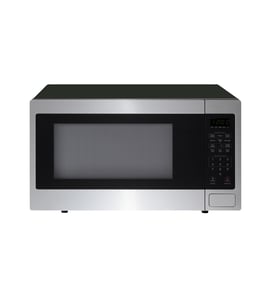


What is the best Panasonic microwave?
The best Panasonic microwave is the one that matches how you cook most often. For everyday countertop use, we prioritize Panasonic Inverter Technology for steadier power and more even heating, plus Sensor Cooking for reliable reheats and defrosting. Use the owner's manual to compare features and operating options with your NN-SD767S.
How we choose the “best” Panasonic microwave
We recommend comparing these practical factors first:
- Cooking performance: Inverter-style power control helps reduce overcooking at lower power levels
- Capacity and footprint: make sure the interior fits your common dishes and the exterior fits your counter
- Controls you will use: Sensor Reheat, Popcorn, Keep Warm, Quick Minute
- Noise and ventilation: fan noise varies by design and age
- Serviceability: door fit, latch operation, and overall condition matter for safe operation
Quick comparison: which Panasonic type fits your needs?
| If you want... | Look for... | Why it helps |
|---|---|---|
| Best everyday reheating | Inverter + Sensor Cooking | More consistent results across many foods |
| Best for families | Larger capacity countertop model | Fits bigger plates and casserole dishes |
| Best for small kitchens | Compact countertop model | Saves space while still handling basics |
| Best durability for heavy use | Commercial-style microwave | Built for frequent cycles |
What to check on your Panasonic NN-SD767S specifically
Your NN-SD767S is designed as a countertop microwave with common convenience features (clock, child lock, power level and cook time selection). For the most accurate feature list and operating details:
- Confirm which auto features your control panel supports (Popcorn, More/Less, Keep Warm)
- Review grounding and installation requirements before relocating the unit
- Follow door and seal care guidance; the door must close properly
- Use the recommended cookware and avoid practices that can cause arcing
Why it matters
“Best” comes down to consistent heating and safe, repeatable results. Features like inverter-style power control and sensor programs reduce hot spots, improve defrosting, and make daily use simpler.
Related troubleshooting help
If you are choosing a replacement because your current unit is not warming food, start with why is my microwave not heating to narrow down common causes.
Last updated: February 2026
How big is a 1.3 cu ft microwave?
A 1.3 cu. ft. countertop microwave is typically about 20 to 22 inches wide, 12 inches tall, and 16 to 20 inches deep. For the Panasonic NN-SD767S specifically, the outside size is 11 15/16 in. H x 21 7/8 in. W x 19 7/16 in. D (about 30 lb); see the owner's manual for the full specifications.
NN-SD767S dimensions and space you need
Here are the key measurements from the Panasonic NN-SD767S specifications:
| Measurement | Size (inches) | Size (mm) |
|---|---|---|
| Outside dimensions (H x W x D) | 11 15/16 x 21 7/8 x 19 7/16 | 304 x 555 x 493 |
| Oven cavity (H x W x D) | 9 x 16 7/16 x 18 1/2 | 228 x 418 x 470 |
Counter space and ventilation clearances
To help prevent overheating and nuisance shutoffs, we follow the placement guidance in the manual:
- Place the microwave on a flat, stable surface.
- Keep the front of the door 3 inches or more back from the counter edge to reduce tipping risk.
- Allow 3 inches of clearance on both sides.
- Allow 1 inch of clearance above the microwave.
- Do not block the air vents.
Why “1.3 cu. ft.” does not equal outside size
“1.3 cu. ft.” describes the interior cooking capacity, not the cabinet size. Two microwaves with the same capacity can have different outside dimensions because of:
- Different door design and handle depth
- Different venting layout and fan ducting
- Different control panel size
- Different insulation and chassis design
Quick fit check before you buy or move it
Use this checklist to avoid a tight fit:
- Measure your available width, height, and depth.
- Add the side and top clearances listed above.
- Confirm the door can swing open without hitting a wall or backsplash.
- Make sure the outlet location does not force the cord to kink.
Last updated: February 2026
How many watts is the Panasonic NN-SD767S?
The Panasonic NN-SD767S microwave is rated at 1,250 watts of cooking power. That is the output power used for heating food; the unit’s electrical input (power consumption) is higher at 1,460 watts.
Cooking power vs power consumption (what the watt number means)
Microwaves list two different watt values; using the right one helps you compare performance and troubleshoot.
- Cooking power (output): how strongly it heats food (NN-SD767S: 1,250 W)
- Power consumption (input): what it draws from the outlet (NN-SD767S: 1,460 W)
- Power source: 120 V, 60 Hz household circuit
- Operating frequency: 2,450 MHz
| Spec type | What it affects | NN-SD767S spec |
|---|---|---|
| Cooking power (W) | Heating speed and performance | 1,250 W |
| Power consumption (W) | Electrical draw and energy use | 1,460 W |
Why it matters
- Cooking results: Higher cooking power usually means faster heating and more even results.
- Recipe adjustments: If a recipe assumes 1,000 W, you often reduce cook time slightly on a 1,250 W unit.
- Electrical checks: If the microwave is tripping a breaker or blowing a fuse, the input wattage and amperage matter more than cooking power.
Where to confirm it in your documentation
You can find the NN-SD767S wattage ratings in the specifications section of the owner's manual.
Related troubleshooting (if it runs but does not heat)
If the display works and the turntable runs but food stays cold, focus on common heating-system causes.
- Verify you are not using a very low power level
- Test with a cup of water for 60 seconds
- Check for arcing, burning smells, or unusual buzzing
- If symptoms persist, use our guide: why is my microwave not heating
Last updated: February 2026


