


What is a combination HVAC unit?
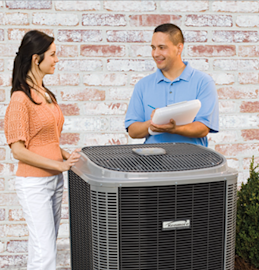
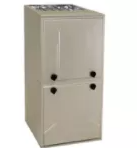
A combination HVAC unit is a single, self-contained system that provides both heating and cooling in one outdoor cabinet. For the Goodman package gas model PGB030075-1, that typically means a gas furnace section for heat plus an air-conditioning section (compressor and coil) for cooling.
What “combination” means on a package gas unit
A package (combined) unit puts major components together in one enclosure, instead of splitting them between an indoor furnace/air handler and an outdoor condenser.
Common components you will find in a combined heating and cooling unit include:
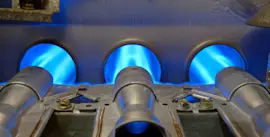
- Gas burners and a heat exchanger for heating
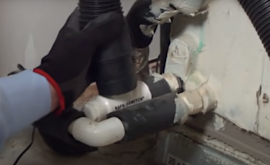
- Inducer vent motor and flue/venting components for safe combustion airflow
- Compressor and condenser fan for air conditioning
- Evaporator coil and blower to move conditioned air through ductwork
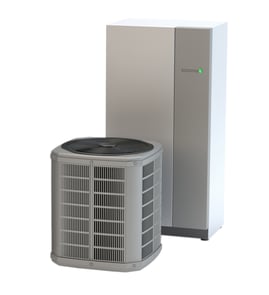
How it compares to a split system
| Feature | Package (combination) unit | Split system |
|---|---|---|
| Main components | All in one outdoor cabinet | Indoor furnace/air handler plus outdoor condenser |
| Typical install | Rooftop or ground pad with duct connections | Indoor closet/attic plus outdoor pad |
| Service access | One cabinet | Two locations |
Why it matters
Knowing you have a combination unit helps you troubleshoot correctly because heating and cooling share controls, airflow, and safety switches. For example, a failed inducer can stop heat, while a failed condenser fan motor can stop cooling.
Parts you may see referenced during service
These are examples of common package-unit parts that relate to heating or cooling operation:
- Furnace inducer vent motor assembly B2959000S (supports combustion draft for heating)
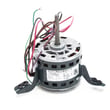
- Central air conditioner condenser fan motor B13400251S (moves air across the condenser for cooling)
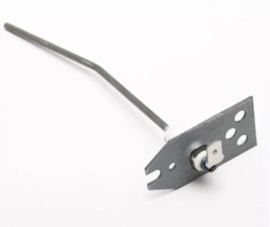
- Central air conditioner limit switch, 180-degree 1370901S (protects against overheating)
Last updated: January 2026
How to tell the tonnage of a Goodman furnace?
For a Goodman package gas unit like model PGB030075-1, “tonnage” usually refers to the air conditioning cooling capacity, not the gas heat output. We identify tonnage by reading the unit’s model number on the data plate and converting the BTU rating to tons (12,000 BTU per ton).
How to find tonnage on the unit
- Turn off power at the disconnect and breaker before opening panels.
- Locate the data plate (often inside the control/blower compartment or on an exterior panel).
- Write down the full model number and any cooling capacity/BTU information.
- Look for a 2-digit number in the model number that commonly indicates thousands of BTU (for example, 24, 30, 36, 42, 48, 60).
- Convert BTU to tons using the table below.
Quick conversion table (BTU to tons)
| Cooling capacity | Approx. tons |
|---|---|
| 24,000 BTU | 2.0 |
| 30,000 BTU | 2.5 |
| 36,000 BTU | 3.0 |
| 42,000 BTU | 3.5 |
| 48,000 BTU | 4.0 |
| 60,000 BTU | 5.0 |
What “075” means on PGB030075-1
On many Goodman model numbers, 075 commonly points to the furnace heat input class (about 75,000 BTU input), while the 030 portion commonly points to cooling capacity class (about 30,000 BTU, or 2.5 tons). Use the data plate to confirm the exact cooling rating for your specific unit.
Why it matters
Correct tonnage helps you match the right replacement parts (like a blower motor or condenser fan motor), verify airflow requirements, and avoid comfort issues caused by an oversized or undersized system.
Related parts that affect cooling performance
| Part | What it impacts |
|---|---|
| Central air conditioner condenser fan motor B13400251S | Outdoor airflow and head pressure |
| Central air conditioner air handler blower motor B13400313S | Indoor airflow across the coil |
| Overload CAP050300440RSP | Compressor protection during overheating |
Last updated: January 2026
How wide is a Goodman furnace?
For the Goodman PGB030075-1 package gas heating and cooling combined unit, the cabinet width is set by the specific chassis used for this packaged model, not a standard “Goodman furnace” width. The fastest way to get the exact width is to read the unit rating plate and measure the cabinet.
Get the exact cabinet width for PGB030075-1
Use the rating plate plus a quick tape measure check so you match your curb/pad and duct transitions.
- Shut off power at the outdoor disconnect before removing panels
- Find the rating plate (commonly inside the control compartment or on an exterior panel)
- Confirm the full model number is PGB030075-1 and record the serial number
- Measure the cabinet at the widest metal-to-metal point (exclude duct adapters and gas piping)
- Compare your measurement to the curb/pad opening and required service clearances
What width to expect for packaged gas units
Packaged gas/electric units are typically wider than many indoor furnaces because the blower, heat section, and coil share one outdoor cabinet.
| Equipment type | Typical width range | Notes |
|---|---|---|
| Indoor upflow gas furnace | 14 to 24 in. | Common “A/B/C” cabinet widths vary by capacity |
| Packaged gas/electric unit (like PGB series) | 24 to 36 in. | Width varies by tonnage and cabinet family |
Why it matters
Cabinet width affects curb fit, pad size, duct alignment, and whether you can remove access panels for service. Confirming the exact width up front prevents curb adapter issues and avoids rework.
Related part that affects cabinet fit
If the cabinet has been damaged or won’t seal correctly after service, replacing the correct panel helps restore proper airflow and weather protection.
Last updated: January 2026