

What is the highest rated countertop microwave?
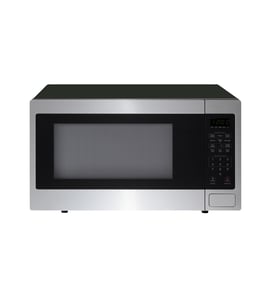
There is no single “highest rated” countertop microwave for every kitchen; the best choice depends on capacity, power, and features you will actually use. For shoppers who like Panasonic performance, models with inverter cooking (including your Panasonic NN-SD986S) are commonly chosen for more even heating and better defrosting.
When we help customers compare countertop microwaves, we focus on a few specs and real-world use cases that drive satisfaction.
- Capacity (cu. ft.): match the cavity size to your dishes and family size.
- Power (watts): higher wattage typically heats faster and more evenly.
- Inverter vs. non-inverter: inverter-style power control helps reduce overcooking at the edges.
- Sensor cooking/reheat: improves consistency for common foods.
- Noise and usability: keypad feel, interior light, and turntable performance matter daily.
- Footprint: measure your counter space and ventilation clearance.
| If you care most about... | Look for... | Why it matters |
|---|---|---|
| Even heating and defrosting | Inverter-style power control | Smoother power delivery helps avoid hot spots and rubbery edges |
| Fast reheating | Higher wattage (often 1000W+) | Shorter cook times for leftovers and beverages |
| Versatility | Convection or air-fry combo features | One appliance can bake, crisp, and microwave |
| Value | Simple controls, solid wattage, good reliability | Best performance per dollar for everyday use |
“Highest rated” lists often mix different priorities (price, size, features, and test methods). Picking the right countertop microwave for your space and cooking habits prevents common frustrations like uneven heating, oversized footprints, or paying for features you never use.
If your Panasonic NN-SD986S runs but does not heat, that is a troubleshooting issue (not a “rating” issue). Start with safe basics like verifying the outlet power and trying a 1-cup water test; then use our guide: why is my microwave not heating.
If you are shopping for replacement parts (door switches, turntable parts, fuses, or a control board), start with the model-based parts list; you can also search by model number on Sears PartsDirect.
Last updated: February 2026
What are the disadvantages of an inverter microwave?
In an inverter microwave like many Panasonic countertop models (including NN-SD986S), the main disadvantages are higher upfront cost and more complex electronics; when an inverter-related component fails, diagnosis and repair typically cost more than on a traditional on-off (duty-cycle) microwave.
- Higher purchase price compared with basic microwaves of similar size.
- More complex power electronics (inverter circuitry) that can be pricier to troubleshoot and replace.
- Sensitive to heat and airflow issues; blocked vents and grease buildup can shorten electronic component life.
- Different sound profile; some units make a higher-pitched whine or variable fan noise during low-power cooking.
- Controls can feel less intuitive if you are used to “full power on, then off” cycling behavior.
Inverter designs deliver steadier power at lower settings, but they do it with additional components (inverter board, sensors, control board interactions). That extra complexity can mean:
- More steps to pinpoint the failed part
- Higher parts and labor cost when the failure is in the high-voltage power system
- More “no heat” complaints that require electrical testing rather than a simple switch replacement
| Microwave type | How it reduces power | Common downside when it fails |
|---|---|---|
| Traditional (non-inverter) | Cycles full power on/off | Often simpler diagnosis; fewer power-electronics parts |
| Inverter | Varies power output more smoothly | More complex electronics; repairs can be more expensive |
If you mostly reheat leftovers and run short cook times, a standard microwave can be the most cost-effective choice. If you frequently simmer, soften, or defrost and want more even results, inverter cooking can be worth it, as long as you keep airflow clear and the cavity clean.
- Keep the air vents clear and avoid pushing the microwave tight against walls.
- Wipe up grease and splatters so the cooling fan path stays cleaner.
- If the microwave runs but does not heat, start with safe, basic checks (power supply, door closing fully), then follow a structured diagnostic path like why is my microwave not heating.
- If you need to look up diagrams or order replacement components by model number, use the parts list for NN-SD986S or search by model at Sears PartsDirect.
Last updated: February 2026
Is it worth repairing a Panasonic microwave?
Yes, it’s worth repairing a Panasonic microwave like model NN-SD986S when the problem is a low-cost, non-high-voltage issue (door switch, fuse, turntable drive, control panel) and the oven is otherwise in good condition. If the repair involves the magnetron or other high-voltage parts, replacement is usually the better value.
- Repair it if the microwave still runs quietly, the door seals well, and the issue is intermittent or minor.
- Repair it if the symptom points to a simple electrical protection part (dead unit, no display, blows breaker).
- Replace it if it heats poorly, makes a loud hum, or smells like burning during heating.
- Replace it if the cavity is rusted, the door is bent, or the latch does not close consistently.
- Replace it if you see repeated arcing or burn marks that return after cleaning.
| Symptom | Most common cause | Typical “worth it” outcome |
|---|---|---|
| No power, no display | Blown fuse, loose connection, thermal cutout | Often worth repairing |
| Runs but does not heat | High-voltage system issue (diode, capacitor, magnetron) | Often replace |
| Starts then stops | Door switch or latch alignment | Often worth repairing |
| Sparks or burn marks | Waveguide cover damage, metal in cavity, food splatter | Depends on damage |
Microwaves contain a high-voltage circuit that can store dangerous energy even when unplugged. Choosing repair vs. replace based on the symptom helps you avoid paying for a high-cost repair that does not improve reliability.
- Start with safe basics: unplug the unit, inspect the door and latch, and clean the cavity.
- If it’s not heating, use our troubleshooting steps in why is my microwave not heating to narrow the cause.
- If it’s completely dead or keeps blowing a fuse, follow the diagnostic approach in how to replace a microwave fuse (many customers choose a technician for this).
- For parts availability and pricing, check the model parts list first; you can also search by model number on Sears PartsDirect.
Last updated: February 2026
Can I repair my Panasonic microwave myself?
Yes, you can handle some basic troubleshooting and a few external repairs on your Panasonic NN-SD986S countertop microwave yourself, but we do not recommend DIY repairs inside the cabinet. Internal microwave components can retain dangerous high voltage even when unplugged, so cabinet-off service is a job for a qualified technician.
These steps cover the most common “microwave not working” complaints without opening the unit:
- Reset power: unplug for 2 minutes, then plug back in
- Try a different outlet (microwaves should be on a properly grounded outlet)
- Check the kitchen breaker or GFCI outlet and reset if tripped
- Confirm the door closes fully and the latch area is clean (crumbs can prevent proper closing)
- Test with a cup of water for 60 seconds to confirm heating performance
Some repairs are straightforward in other appliances, but microwaves are different. If the fix requires removing the outer cover, we treat it as high-risk.
| Task | Typical DIY? | Why |
|---|---|---|
| Cleaning interior, turntable, roller ring | Yes | No electrical exposure |
| Replacing the glass tray or roller ring | Yes | External, tool-free |
| Diagnosing “runs but won’t heat” | Limited | Often points to high-voltage system |
| Replacing an internal fuse | No | Requires cabinet removal and electrical testing |
For symptom-based guidance, use our DIY article why is my microwave not heating.
Microwaves use a high-voltage circuit (including parts like the capacitor, diode, and magnetron). Incorrect testing or reassembly can cause arcing, blown fuses, door-switch problems, or unsafe operation.
We list model-specific parts by diagram when available for Panasonic NN-SD986S. If you do not see the part you need right away, search by the full model number NN-SD986S on Sears PartsDirect to match the correct component and revision.
Last updated: February 2026
How long will a Panasonic microwave last?
Most Panasonic countertop microwaves like model NN-SD986S last 10 years with normal household use. With heavy daily use (multiple long cook cycles per day), a realistic lifespan is 7 years before wear on door switches, the cooling fan, or the high-voltage system makes repair more likely.
Microwave life is driven more by heat load and door use than by brand name alone.
- Light use (reheat, short cycles): 10 years
- Normal use (daily cooking + reheat): 10 years
- Heavy family use (many cycles per day): 7 years
- Harsh conditions (grease, poor ventilation, frequent overheating): 7 years
These are the most common failure points we see across countertop microwaves:
- Door interlock switches: won’t start, starts then stops, or blows a fuse when the door is moved
- Thermal cutout/thermostat: runs briefly then shuts off until it cools
- Fuse: completely dead (no display, no interior light)
- Magnetron or high-voltage components: runs but does not heat or heats weakly
- Cooling fan or airflow issues: loud operation, burning smell, repeated overheating shutdowns
| Symptom | Most likely area | Usually worth fixing? |
|---|---|---|
| Dead, no display | Fuse, door switches, wiring | Yes, often |
| Runs but not heating | Magnetron, HV diode/capacitor | Sometimes |
| Sparks or burn marks inside | Waveguide cover, cavity damage | Depends |
| Loud grinding noise | Turntable motor, fan | Yes, often |
A microwave can appear “fine” for years, then fail quickly once heat stress builds up. Keeping vents clear, avoiding empty operation, and stopping arcing early helps you reach the full 10-year lifespan.
- Use our troubleshooting steps in why is my microwave not heating if the unit runs but food stays cold.
- If the microwave is completely dead, follow how to replace a microwave fuse for safe, step-by-step guidance.
For replacement parts and model lookups, start with the NN-SD986S parts list, or search by model number on Sears PartsDirect.
Last updated: February 2026


