Installation guide
 Owner’s manual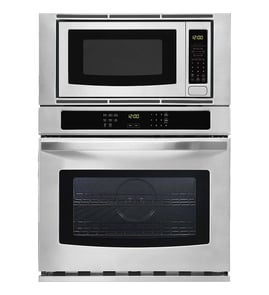





How to reset a GE wall oven?
To reset your GE JT3800SH5SS wall oven/microwave combo, restore power to the unit by resetting the home circuit breaker (or replacing the fuse). This power cycle typically clears a control glitch and reboots the electronic controls.
Reset methods that work on JT3800SH5SS
- Breaker reset (most common): Turn the oven’s breaker OFF, wait about 60 seconds, then turn it back ON.
- Control reset for unresponsive pads: Press and hold Clear/Off (on the side of the display that is not responding) for about 30 seconds.
- After a power outage/surge: Press Clear/Off, then set the clock and re-enter your cooking settings.
Quick checklist before you reset
- Confirm the breaker is fully in the ON position (flip it OFF then ON to be sure).
- Make sure the oven door is closed securely.
- If the display says “Control is LOCKED”, press and hold Settings for 3 seconds to unlock.
- If the display is blank, check the Settings menu for display or power-saver options.
What you should see after a successful reset
| Symptom before reset | What usually happens after reset | Next best step if it returns |
|---|---|---|
| Display blank | Display returns, clock may flash | Set clock in JT3800SH5SS owner’s manual |
| “Control is LOCKED” | Controls unlock after Settings hold | Re-lock only if needed |
| Oven will not start | Functions respond normally | Check breaker/fuse again; then troubleshoot |
Why it matters
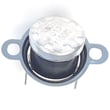
A reset clears temporary software lockups and restores normal operation without replacing parts. If the oven still will not heat after resetting, the issue is usually power supply, a locked control, or a failed component such as the wall oven temperature sensor WB21X10165.
Last updated: January 2026
How to find wall oven model number?
On the GE JT3800SH5SS wall oven/microwave combo, the model and serial number are typically on a label on the side trim or on the front of the oven behind the oven door. This label is the fastest way to match the correct parts and instructions.
Where to look first (most common spots)
- Side trim label (visible when the door is open)
- Front frame area behind the oven door
- Along the oven frame near the door opening
- Inside the oven cavity edge (near the rim of the opening)
Quick steps to find it
- Turn the oven light on and open the lower oven door.
- Check the side trim area first; look for a white or silver rating label.
- If you do not see it, check the front frame behind the door.
- Write down both the model and serial numbers exactly as shown.
- Use those numbers when ordering parts or following procedures in the JT3800SH5SS owner’s manual.
What the label usually includes
| Item on label | Why it matters |
|---|---|
| Model number | Ensures parts fit your exact wall oven/microwave combo |
| Serial number | Helps identify production version and compatible revisions |
| Electrical ratings | Useful for installation checks and service diagnostics |
Why it matters
We use the model number to match the correct GE parts (like a control board, temperature sensor, or door components) and to ensure troubleshooting steps and installation requirements apply to your exact JT3800SH5SS configuration.
Last updated: January 2026
How long do GE wall ovens last?
Most GE wall ovens last about 12 to 15 years with normal use and basic care. For the GE JT3800SH5SS wall oven/microwave combo, keeping vents clear, avoiding door stress, and addressing heating or fan issues early helps you reach the upper end of that range; see the JT3800SH5SS owner’s manual for care and operating guidance.
Typical lifespan and what affects it
A wall oven’s service life depends more on heat exposure and electronics than on cosmetic wear.
- Heavy daily baking and frequent self-clean cycles shorten lifespan
- Power surges and loose electrical connections can damage control boards
- Blocked airflow can overheat components and increase cooling-fan run time
- Slamming or leaning on the door can damage hinges, glass, or the door lock
- Promptly fixing temperature accuracy problems reduces stress on heating components
Quick “how long” guide
| Usage pattern | Typical lifespan | What to watch for |
|---|---|---|
| Light (a few times/week) | 14 to 18 years | Door seal condition, even baking |
| Average (most days) | 12 to 15 years | Preheat time, fan noise, temp swings |
| Heavy (multiple times/day) | 8 to 12 years | Control issues, overheating, repeated faults |
Signs your wall oven is nearing end-of-life
These symptoms often show up in the last few years of service:
- Oven temperature is consistently off (overcooks or undercooks)
- Longer preheat times than normal
- Cooling fan runs excessively after cooking
- Display or keypad becomes intermittent
- Door won’t lock or unlock reliably for clean modes
If baking temperatures seem inaccurate, a common first check is the oven temperature sensor, such as the wall oven temperature sensor WB21X10165.
Why it matters
Knowing the expected lifespan helps you decide whether to repair (sensor, fan, board) or plan a replacement, especially when performance issues start affecting cooking results and energy use.
Last updated: January 2026
What size breaker and wire for 20 amp wall oven?
For a GE JT3800SH5SS wall oven/microwave combo, a 20-amp dedicated circuit is used when the oven’s kW rating falls in the lowest range shown in the installation requirements; in that case, 12 AWG copper is the typical branch-circuit wire size for a 20-amp breaker. Confirm the unit’s kW rating on the rating plate and match it to the circuit-size table in the JT3800SH5SS installation guide.
How to choose the correct breaker size (use the kW rating)
The installation instructions size the circuit by the appliance’s kW rating (at 240V or 208V). Use the rating plate (not the model family) to pick the correct dedicated breaker.
- Find the rating plate (commonly on the oven side trim).
- Note the kW rating and whether your supply is 240V or 208V.
- Match that kW value to the circuit-size table in the installation instructions.
- Use a dedicated circuit (no other loads on that breaker).
- Hard-wire to an approved junction box (no plug and receptacle for these wall ovens).
Typical wire size for a 20-amp circuit
For most home installations, the standard pairing is:
| Circuit breaker | Typical copper wire size | Notes |
|---|---|---|
| 20 amp (dedicated) | 12 AWG | Match insulation type and temperature rating to local code and the install requirements |
Safety and installation notes that matter
Because this is a built-in wall oven/microwave combo, correct wiring and secure mounting are critical for safe operation.
- Turn power off at the service panel before wiring.
- Use a proper strain relief clamp at the junction box.
- Make sure the cabinet and supports are rated for the appliance weight.
- Never use an extension cord or adapter.
Why it matters
An undersized breaker or wire can cause nuisance tripping, overheating at connections, and poor performance. An oversized breaker can reduce protection for the branch-circuit wiring. Using the kW-based circuit table in the installation instructions keeps the electrical supply matched to how the JT3800SH5SS is designed to run.
Last updated: January 2026