Owner’s manual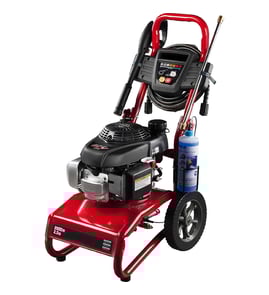

What kind of gas goes in a Craftsman 919679180 pressure washer?
Use clean, fresh, unleaded gasoline (regular) with a minimum 87 octane (87 AKI) in your Craftsman 919679180 2400-PSI high-pressure washer. Avoid old fuel and never mix oil into the gasoline because this model uses a 4-cycle Briggs engine.
Fuel type and what to avoid
- Use: fresh, unleaded gasoline, 87 octane (AKI) or higher
- Do not use: gasoline older than 30 days (unless treated with fuel stabilizer)
- Do not use: mixed gas (2-cycle oil and gas blend)
- Avoid: overfilling the tank; leave room for expansion
- Avoid: spilling fuel on a hot engine or muffler
Quick checklist before you fill the tank
- Shut the engine off and let it cool.
- Move the pressure washer to a well-ventilated outdoor area.
- Wipe dirt away from the fuel cap area so debris does not fall into the tank.
- Fill with fresh unleaded gas; tighten the cap securely.
- If the unit has been stored, drain stale fuel and refill before starting.
Common fuel questions (fast answers)
| Question | Best practice for this model |
|---|---|
| Can I use premium gas? | Yes; it is fine, but not required if you have fresh 87 octane. |
| Can I use ethanol fuel? | Most small engines run best on low-ethanol fuel; if you use E10, keep it fresh and do not store it long-term. |
| Should I add oil to the gas? | No; this is a 4-cycle engine with separate crankcase oil. |
Why it matters
Using the right gasoline helps the carburetor, fuel lines, and engine start and run consistently. Old or contaminated fuel is one of the most common causes of hard starting, surging, and stalling on gas pressure washers.
For model-specific operating and storage steps (including fuel handling), follow the 919679180 owner's manual.
Last updated: January 2026
What PSI should my pressure washer be?
For the Craftsman 919679180 gas pressure washer, the rated working pressure is 1600 PSI, and the unit is marketed as a 2400 PSI high-pressure washer (a peak rating). For best results and to protect the pump and surfaces, match PSI to the cleaning job and nozzle you are using.
What to use for common cleaning jobs
Use the lowest pressure that still cleans effectively.
- Wood decks, painted surfaces: 500 to 1200 PSI
- Vinyl siding: 1000 to 1500 PSI
- Concrete driveways/sidewalks: 2000 to 3000 PSI (use caution and distance)
- Cars, patio furniture: 700 to 1200 PSI
- Brick or masonry: 1500 to 2500 PSI (test a small area first)
Model specs that help you choose PSI
Your washer’s cleaning power is a combination of pressure and flow.
| Spec | Craftsman 919679180 value | Why it matters |
|---|---|---|
| Rated pressure | 1600 PSI | Realistic working pressure for most tasks |
| Peak pressure (marketing) | 2400 PSI | Short peak, not a steady cleaning setting |
| Flow rate | 2.0 GPM | Higher GPM rinses faster and improves cleaning |
| Cleaning units | 3600 (PSI x GPM) | Quick way to compare overall output |
How to “set” the right PSI on a gas pressure washer
Most gas units do not have a precise PSI dial; pressure changes mainly with nozzle choice and technique.
- Start with a wider spray tip (lower pressure) and move closer only as needed
- Keep the nozzle moving to avoid etching or stripping
- Increase cleaning power by using detergent and dwell time instead of max pressure
- Maintain a safe distance (often 12 to 24 inches) and test on an inconspicuous spot
- If pressure surges or drops, check the inlet screen and purge air from the pump
Why it matters
Using more PSI than the surface can handle can gouge wood, strip paint, and force water behind siding. Using too little PSI wastes time and can make you overwork the pump and engine.
For operating guidance, nozzle use, and maintenance steps specific to this model, follow the Craftsman 919679180 owner’s manual.
Last updated: January 2026
How to tell if your pressure washer pump is bad?
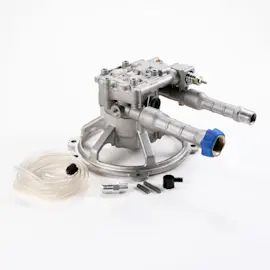
On the Craftsman 919679180 2400-psi high-pressure washer, a “bad pump” usually shows up as low or surging pressure, water leaking from the pump area, or the engine bogging when you squeeze the trigger. First confirm you are supplying steady water flow because running without water quickly damages the pump.
Quick checks before you blame the pump
- Verify the garden hose is fully on and flowing strongly; never run or start the unit without water connected and turned on.
- Squeeze the spray-gun trigger to purge air before starting; trapped air can cause sputtering and weak pressure.
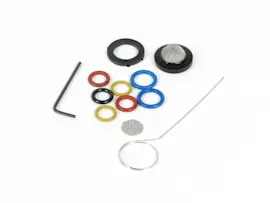
- Inspect and clean the pump inlet screen; a clogged inlet screen starves the pump and mimics pump failure.
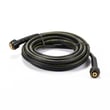
- Check the high-pressure hose for kinks, cuts, bulges, or leaking couplings; hose problems often look like a weak pump.
- Check the spray tip/nozzle for blockage and confirm the trigger snaps back normally.
Symptoms that point to a failing pump
| Symptom | Most likely cause | What to do next |
|---|---|---|
| Pressure pulses or surges | Air in system, restricted inlet screen, worn seals/valves | Purge air, clean inlet screen; if it persists, plan pump service/replacement |
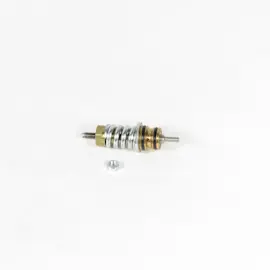
| Low pressure with good water supply | Worn pump valves/seals, unloader issue | Confirm nozzle is clear; then inspect pump/unloader per 919679180 owner's manual |
| Water leaking from pump body | Seal failure or freeze damage | Stop using it; inspect for cracks and leaking seals |
| Engine stalls when trigger is pulled | Nozzle restriction, unloader stuck, pump binding | Check nozzle first; then check unloader and pump movement |
What we recommend doing (in order)
- Turn the engine off and relieve pressure by squeezing the trigger for about 3 seconds.
- Confirm strong water supply and a non-kinked garden hose.
- Clean the inlet screen at the pump inlet fitting.
- Inspect the high-pressure hose and couplings for leaks or bulging.
- If pressure is still low or surging, follow the pump and gun/wand inspection steps in the 919679180 owner's manual.
Why it matters
This model uses a sealed pump (no pump oil changes). The biggest pump killer is running or starting the pressure washer without water flow; even brief dry running can score internal parts and permanently reduce pressure.
Last updated: January 2026