Owner’s manual
 View engine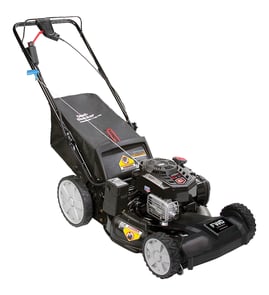



How do you tell if a mower is commercial or residential?
A quick way to tell is by how the mower is rated for use and warranty coverage: residential mowers are intended for homeowner use, while commercial mowers are built and supported for daily, heavy-duty work. For Craftsman model 917376631, the owner's manual shows a 2-year warranty for homeowner use and a shorter 90-day warranty when used commercially.
Fast checks that usually identify commercial vs. residential
- Warranty language: commercial or rental use typically has a shorter coverage period.
- Duty cycle: commercial machines are designed for all-day operation; residential machines are designed for weekly mowing.
- Build features: heavier deck, stronger wheel/drive components, and more robust controls are common on commercial units.
- Serviceability: commercial mowers often have easier access to belts, pulleys, and wear parts for frequent maintenance.
- Engine and drivetrain: commercial models commonly pair higher-duty engines with heavier transmissions and wheel drive parts.
What the 917376631 manual tells you
The Craftsman 917376631 manual’s warranty section is a practical indicator:
| Use type | Typical intent | What you’ll see in documentation |
|---|---|---|
| Residential | Homeowner, normal weekly mowing | Longer warranty period (this model: 2 years) |
| Commercial/rental | Frequent, revenue or fleet use | Shorter warranty period (this model: 90 days) |
That difference is one of the clearest ways to classify the mower without guessing based on appearance.
Why it matters
Commercial vs. residential affects how you maintain the mower and how quickly wear items get replaced. The manual also calls out common “expendable” parts (like blades and belts) that wear during normal use, so planning routine service helps protect performance and engine life.
Related maintenance tip (helps either type)
For best performance, we follow the manual’s guidance to keep the deck clean and service key items on schedule. If you’re doing blade service, the lawn mower blade removal tool guide helps you remove the blade safely and correctly.
Last updated: February 2026
What are the most common lawn mower repairs?
On the Craftsman rotary lawn mower model 917376631, the most common repairs are basic tune-up and wear-item replacements that fix no-start, loss of power, rough running, vibration, poor cutting, and self-propel drive issues. These problems usually trace back to fuel quality, ignition, airflow, blade condition, or the ground-drive system (belt, wheels, and controls).
Most common repairs we see
- Replace or service the spark plug and reconnect the plug wire (common no-start cause).
- Drain stale fuel and refill with fresh gasoline (especially after 30+ days of storage).
- Clean or replace the air filter (dirty filter causes loss of power and poor cutting).
- Tighten blade hardware and replace a worn or bent blade.
- Clean grass and debris buildup from under the mower deck.
- Restore self-propel drive by replacing a worn belt or fixing wheel drive parts.
Quick symptom-to-fix guide
| Symptom | Most likely fix | What to check first |
|---|---|---|
| Won’t start | Fuel, spark, air | Fuel level, plug wire, spark plug |
| Loses power / surges | Airflow or fuel quality | Air filter, stale fuel |
| Excessive vibration | Blade or blade adapter issue | Blade tightness, blade condition |
| Poor or uneven cut | Blade or deck buildup | Blade wear, deck packed with grass |
| Hard to push / won’t self-propel | Drive system wear | Drive belt, drive wheels, control cable |
Parts that commonly wear out on this model
These are normal wear items on walk-behind mowers and are frequently replaced during routine repairs:
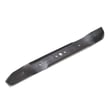
- Lawn mower blade 532406713 (worn, bent, or loose blades can cause vibration and poor cut)
- Poulan lawn mower ground drive belt 532196857 (loss of drive or slowing drive speed)
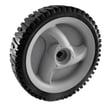
- Lawn mower wheel and tire, 8 x 1.75-in 583719501 (worn tread or damaged wheel affects traction)
- Drive pawl 532404845 (wheel drive engagement problems)
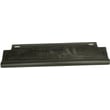
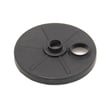
- Lawn mower wheel dust cover 581840401 (helps protect wheel/drive area from debris)
Why it matters
Most “big” mower problems start as small maintenance issues. Keeping the blade sharp, the deck clean, and the fuel and air systems in good shape prevents hard starting, protects the engine from strain, and keeps cutting performance consistent.
Safety and setup notes we follow
- Disconnect the spark plug wire before servicing to prevent accidental starting.
- Never adjust engine speed or tamper with the governor; engine speed is factory set.
- Avoid wheel height adjustments while the engine is running.
For model-specific maintenance intervals and troubleshooting steps, use the owner's manual.
Last updated: February 2026
How to find Craftsman mower model number?
For Craftsman rotary lawn mower model 917376631, the model and serial numbers are printed on a decal on the rear of the lawn mower housing (rear of the deck). Write both down exactly; you will use them to match the correct parts diagrams and procedures.
Where to look on the mower
Start with the most common location for this model, then check nearby areas:
- Rear of the mower deck/housing (decal with model and serial)
- Rear deck area near the discharge door
- Top of the deck near the engine mounting area
- Near the rear wheels on the deck housing
What to record (and how it’s used)
Capture these details exactly as shown on the decal:
- Model number (example: 917376631)
- Serial number (unique to your mower)
- Date of purchase (useful for maintenance tracking)
Quick examples of parts you match by model number
Once you confirm the model number, you can confidently select the correct replacement parts for your mower, such as:
| Part type | Example part for this model | What it affects |
|---|---|---|
| Blade | Lawn mower blade 532406713 | Cut quality and deck performance |
| Wheel and tire | Lawn mower wheel and tire, 8 x 1.75-in 583719501 | Rolling, traction, and deck height consistency |
| Height adjuster knob | Husqvarna lawn mower height adjuster knob 532701037 | Cutting height adjustment |
Tips if the decal is dirty or faded
- Clean the decal gently with a damp rag and mild soap; avoid harsh solvents.
- Shine a flashlight across the decal at an angle to make faint printing stand out.
- Take a close-up photo and zoom in to read the characters.
Why it matters
The model number ensures you get the right Craftsman parts and the correct adjustment and maintenance steps for your exact mower configuration.
For identification details and diagrams, use the owner's manual.
Last updated: February 2026
How old is my lawn mower by serial number lookup?
For Craftsman rotary lawn mower model 917376631, the model and serial number are on a decal on the rear of the mower housing. The most accurate way to date your mower is the date of purchase you recorded; the serial number is mainly used to identify the correct parts and documentation in the owner's manual.
Where to find the serial number on model 917376631
The owner's manual notes the model and serial numbers are on a decal on the rear of the lawn mower housing.
- Shut the engine off and let it cool
- Tip the handle forward for easier viewing (keep the mower stable)
- Wipe the decal clean so every digit is readable
- Write down the model number (917376631) and serial number exactly
- Take a clear photo for your records
How to determine the mower’s age
Use the method that matches what you have available.
- Best method: use your receipt or the date of purchase you recorded in the manual
- If you do not have the receipt: check any maintenance log, tune-up sticker, or service tag
- If the engine has its own ID label: record the engine model/type code; it helps date the engine (not always the mower deck)
- If you are ordering parts: use the model number and serial number to match the correct diagrams and revisions
Quick guide
| What you want to date | Best source | What it tells you |
|---|---|---|
| Ownership age | Receipt or recorded purchase date | When you bought it |
| Mower identification | Serial number decal | Which version you have |
| Engine build timeframe | Engine ID label | Engine manufacturing info |
Why it matters
Knowing the approximate age helps us choose the right OEM-fit replacement parts and maintenance items for your Craftsman 917376631, such as the cutting blade and wheel components.
Common parts customers replace on walk-behind mowers include:
- Lawn mower blade 532406713
- Lawn mower wheel dust cover 581840401
- Lawn mower wheel and tire, 8 x 1.75-in 583719501
Last updated: February 2026
Why is my self-propelled lawn mower pulling to one side?
On a Craftsman 917376631 walk-behind mower, pulling to one side is caused by the mower rolling unevenly, not by a left or right drive wheel “powering” differently. The most common fixes are matching wheel height settings, correcting tire/wheel issues, and checking the blade for damage or imbalance; use the owner's manual for the correct adjustment points and safety steps.
Quick checks (fastest fixes)
- Set all wheels to the exact same cutting height setting; mismatched height adjusters steer the mower.
- Inspect both rear wheels for damage, wobble, or heavy grass packed around the hub; clean debris.
- Confirm the handle is straight and both handle brackets are tight.
- Check the blade for bends, heavy nicks, or a loose blade bolt.
- Mow at a steady pace; forcing the mower through tall, wet grass can make it drift.
What to inspect and what it means
| What you notice | Most likely cause | What to do |
|---|---|---|
| Pulls consistently on flat ground | Wheel height mismatch or wheel issue | Match height settings; inspect wheel for wobble or damage |
| Pulls more in thick grass | Deck drag or grass buildup | Raise cutting height; clean underside of deck |
| Vibration plus pulling | Bent or unbalanced blade | Replace the blade and tighten hardware |
Parts that can correct tracking
If you find damage during inspection, these model-matched parts are common fixes:
- Lawn mower wheel and tire, 8 x 1.75-in 583719501 (a worn or out-of-round wheel can make the mower drift)
- Lawn mower blade 532406713 (a bent or unbalanced blade can cause vibration and steering pull)
Why it matters
A mower that pulls to one side is harder to control and often signals a wheel-height mismatch, wheel wear, or blade damage. Correcting the cause improves cut quality and reduces vibration-related wear.
Last updated: February 2026