Installation guide
 Owner’s manual
 Error Codes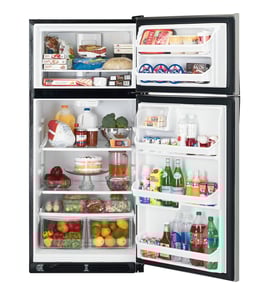


How do I find the model number on my 25374223700?
For a Kenmore Elite top-mount refrigerator, the model number is printed on the appliance’s rating label, not on the door front. On model 25374223700, check inside the fresh food compartment first; the label is typically on a side wall near the crisper area or along the door opening.
Where to look on the refrigerator
Check these common label locations in this order:
- Inside the refrigerator section on the left or right side wall
- Along the front frame (cabinet) behind the refrigerator door seal
- Near the crisper drawers or under the crisper cover area
- Inside the freezer section on a side wall (less common)
- On the back exterior panel near the compressor area (occasionally)
What you should write down
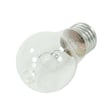
We recommend recording the full identification information so you get the correct parts (like a door gasket, light bulb, or water filter).
| Label item | What it’s used for |
|---|---|
| Model number (example: 25374223700) | Matches diagrams and ensures part fit |
| Serial number | Helps identify production run details |
| Electrical ratings | Useful for troubleshooting and safe service |
Tips if the label is hard to read
- Wipe the label gently with a damp cloth; avoid abrasive cleaners.
- Use your phone camera and zoom in to capture faded print.
- Copy the number exactly, including all digits.
Why it matters
Kenmore model numbers are the fastest way to match the correct replacement parts and installation details. Using the exact model number prevents ordering the wrong shelf, gasket, or ice maker component.
For more model-specific label location guidance and diagrams, use the 25374223700 owner’s manual.
Last updated: March 2026
What are the common problems with Kenmore Elite refrigerators?
Common problems on the Kenmore Elite 25374223700 top-mount refrigerator include warm temperatures (airflow or sealed-system issues), frost buildup (defrost or door-seal problems), water or ice maker troubles (filter, supply, or fill issues), and unusual noises (fan or compressor-related). Many fixes start with cleaning, inspection, and basic part checks using the 25374223700 owner's manual.
Most common symptoms and what usually causes them
- Not cooling or weak cooling: dirty condenser coils, blocked vents, evaporator fan problems, or a sealed-system issue.
- Frost or ice buildup in freezer: defrost system trouble (heater/thermostat), door left ajar, or a leaking gasket.
- Ice maker not making ice: water supply valve closed, air in the line after plumbing work, clogged filter, or ice maker component failure.
- Water leaks or puddles: clogged defrost drain, loose water line connection, or a leaking filter cup/O-ring.
- Buzzing, clicking, or rattling: fan blade interference, failing start components, or vibration from the cabinet or tubing.
Quick checks we recommend before replacing parts
- Confirm the refrigerator is on a dedicated 115V, 60 Hz outlet and the cord is fully seated.
- Set temperatures to typical targets and allow 24 hours for stabilization after changes.
- Make sure food packages are not blocking return vents in the freezer or fresh-food section.
- If ice tastes odd after new plumbing, discard ice made during the first 24 hours.
- If you recently changed the filter, flush water for about 3 minutes to purge air.
Parts that commonly relate to these problems
| Symptom | Common part area | Example part for this model |
|---|---|---|
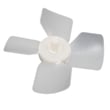
| Warm fridge/freezer | Air movement | Refrigerator evaporator fan blade 5308000010 |
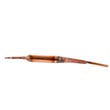
| Frost buildup | Defrost control | Refrigerator defrost bi-metal thermostat 5303918202 |
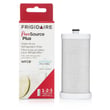
| Bad taste/slow water/ice issues | Filtration | Genuine Kenmore refrigerator water filter WFCB |
Why it matters
Catching airflow restrictions, defrost issues, or water filtration problems early helps protect food quality, reduces ice buildup, and prevents strain on the compressor and fans.
Last updated: January 2026
What is the average lifespan of a Kenmore Elite refrigerator?
A Kenmore Elite refrigerator like model 25374223700 typically lasts 10 to 15 years. With steady upkeep (good airflow, clean seals, correct temperatures), many units reach the upper end of that range; major sealed-system or compressor repairs often determine whether it is worth keeping longer.
Typical lifespan and what affects it
Most full-size refrigerators fall into a predictable life range, and the biggest swing factor is how hard the cooling system has to work.
- 10 to 15 years is the typical service life for a modern refrigerator
- Heavy use, hot garages, and dusty homes can shorten life by stressing the compressor
- Poor door sealing and frequent door openings increase run time and wear
- Clogged condenser airflow can cause warmer temps and longer run cycles
- Water and ice features add components that can need service over time
Maintenance that helps you reach the high end of the range
Use these habits to reduce compressor run time and prevent common failures.
- Keep the refrigerator and freezer at safe, steady settings (avoid “colder than needed”)
- Clean dust from condenser areas and keep airflow clear around the cabinet
- Keep door gaskets clean and check for gaps or curling
- Do not overload shelves so air can circulate through the fresh food and freezer sections
- If you have a filter-equipped model, replace the water filter on schedule (the manual notes the Kenmore replacement cartridge 46 9910)
For model-specific care and operating guidance, follow the 25374223700 owner’s manual.
Quick “repair vs. replace” guide
Use this as a practical decision tool when the refrigerator is aging.
| If your refrigerator is… | Usually makes sense to… | Why |
|---|---|---|
| Under ~8 years old | Repair | More remaining life; repairs often pay off |
| 10 to 15 years old | Compare costs | Big repairs can exceed the value of remaining life |
| Over ~15 years old | Lean toward replacement | Efficiency and reliability typically drop |
Why it matters
Knowing the typical lifespan helps you plan for food safety and budgeting. When a refrigerator is near the 10 to 15 year mark, proactive maintenance and quick response to temperature changes can prevent spoilage and reduce the chance of a major cooling-system breakdown.
Last updated: January 2026