


What is the 2 3 rule for air purifiers?
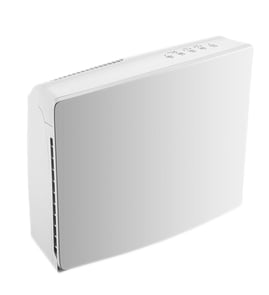
The 2/3 rule is a simple sizing guideline: for effective cleaning, an air purifier’s smoke CADR should be about two-thirds of your room’s square footage. For a Kenmore 83254 air cleaner, we use this rule to match purifier capacity to room size so you get meaningful air changes.
How to use the 2/3 rule (step by step)
- Measure the room’s length x width to get square footage.
- Multiply the room size by 0.67 (two-thirds).
- Choose an air purifier with a smoke CADR at or above that number.
- If ceilings are higher than 8 feet, size up because there is more air volume.
- If you are targeting heavy smoke (wildfire smoke, cooking smoke), size up for faster cleanup.
Quick examples
| Room size (sq ft) | Minimum smoke CADR (2/3 rule) | What that means |
|---|---|---|
| 150 | 100 | Good baseline for a bedroom |
| 300 | 200 | Typical living room target |
| 450 | 300 | Larger space, needs higher airflow |
When the 2/3 rule is not enough
The 2/3 rule is a baseline. We recommend going higher when:
- You want faster odor and smoke reduction.
- You have pets, frequent cooking, or higher dust loads.
- The purifier will run on lower fan speeds for noise reasons.
- The room is open to other areas (open floor plan).
Why it matters
If CADR is too low for the room, the purifier runs longer and still leaves more particles behind. If CADR is appropriately matched, you get more consistent particle removal and better day-to-day indoor air quality.
Parts and model matching
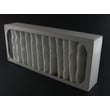
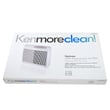
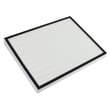
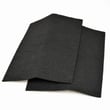
For Kenmore 83254, use the model number when searching so you get the correct filters and components for your exact unit. If you do not see what you need listed for this model, search by model number on Sears PartsDirect.
Last updated: February 2026
What is the most highly recommended air purifier?
The most highly recommended air purifier is the one that matches your room size and the problem you are solving (allergens, smoke, odors). For most homes, we recommend choosing a true HEPA air purifier with enough airflow to deliver about 4 to 5 air changes per hour in your room; you can also keep your Kenmore 83254 performing well by using the correct replacement filters from Sears PartsDirect.
What to look for in a “top” air purifier
- True HEPA filtration (best for dust, pollen, pet dander, and many fine particles)
- Room-size rating that fits your space (don’t oversize or undersize)
- CADR (clean air delivery rate) that supports your room’s needs
- Reasonable noise at the speed you will actually use (many people run medium, not turbo)
- Filter availability and cost (a great purifier is only great with fresh filters)
- Optional carbon filter if odors or VOCs are a concern
Quick sizing guidance (practical rule of thumb)
A strong target is 4 to 5 air changes per hour (ACH) for allergy and general air quality.
| Room size | Good target ACH | What it means in practice |
|---|---|---|
| Small bedroom (100 to 150 sq ft) | 4 to 5 | Medium CADR often works well |
| Medium room (200 to 300 sq ft) | 4 to 5 | Look for higher CADR and steady runtime |
| Large room (400+ sq ft) | 4 to 5 | Consider a larger unit or multiple purifiers |
If you already own the Kenmore 83254
Most “performance complaints” come down to airflow restrictions or maintenance. Focus on these checks first:
- Replace the HEPA and pre-filter on schedule (or sooner with pets or smoke)
- Vacuum dust from the intake grille and surrounding area
- Run the unit on a higher speed during peak events (cooking, wildfire smoke)
- Keep doors and windows closed when outdoor air quality is poor
- Place the purifier with clearance around the intake and outlet
Why it matters
Air purifiers are rated and tested under specific conditions. When the purifier is undersized, placed poorly, or running with a loaded filter, clean-air output drops fast. Matching CADR to room size and keeping filters fresh is what makes a model “highly recommended” in real-world use.
Last updated: February 2026
Is there a downside to air purifiers?
Yes. With a Kenmore 83254 air cleaner, the main downsides are ongoing filter costs, fan noise, and the fact that performance depends on using the right filter type and changing it on time. Some purifier features (like ionizers) can also be a poor fit for sensitive households.
Common downsides (and what to do about them)
- Filter replacement cost: HEPA and carbon filters are consumables; plan for regular replacements.
- Noise: Higher fan speeds clean faster but can be loud, especially in bedrooms.
- Limited gas and odor control: Standard particle filters help with dust and pollen; odors and VOCs typically need activated carbon.
- Not a whole-home solution: One room unit mainly helps the room it is in; you may need multiple units for larger homes.
- Maintenance matters: A clogged pre-filter or filter reduces airflow and can make the unit seem “weak.”
- Extra features can be a drawback: If your unit has an ionizer/UV feature, it may not be desirable for everyone; many customers prefer running the purifier in standard fan and filter mode.
Quick checklist to minimize the downsides
- Run the purifier on high for 15 to 60 minutes, then switch to a quieter setting.
- Keep doors closed in the room you are treating.
- Vacuum dust sources (rugs, upholstery) so the purifier is not doing all the work.
- Replace filters on schedule; don’t wait for airflow to drop.
- Place the unit with clearance around the intake and outlet (avoid corners and curtains).
What air purifiers do well vs. poorly
| Air quality issue | Typical purifier performance | What helps most |
|---|---|---|
| Dust, lint, pet dander | Strong | HEPA-type filtration, steady runtime |
| Pollen | Strong | HEPA-type filtration, closed windows |
| Smoke particles | Strong to moderate | HEPA plus higher fan speed |
| Odors, cooking smells | Moderate | Activated carbon, source control |
| VOCs (some gases) | Limited | More carbon, ventilation, source removal |
Why it matters
Air purifiers work best when you match the technology to the problem (particles vs. odors/gases) and keep airflow high with clean filters. That prevents wasted money, disappointing results, and unnecessary noise.
For replacement filters and other items for Kenmore model 83254, start with the parts list for this model, or search by model number on Sears PartsDirect.
Last updated: February 2026
Is it okay to sleep with an air purifier on all night?
Yes. For a Kenmore air cleaner like model 83254, it’s okay to run the air purifier all night because continuous operation keeps particles and odors from building back up while you sleep; just keep the unit in a safe location and stay on top of filter cleaning or replacement.
Best practices for overnight use
- Place the purifier on a flat, stable surface with several inches of clearance on all sides.
- Keep it away from bedding, curtains, and anything that can block the air intake or exhaust.
- Use the lowest effective fan speed (or a sleep/quiet setting if your unit has one).
- Make sure the cord is not under rugs or pinched behind furniture.
- Clean or replace filters on schedule; a clogged filter reduces airflow and performance.
Quick safety and comfort checklist
| What to check | What “good” looks like | What to do if it’s not |
|---|---|---|
| Airflow | Steady airflow from the outlet | Check for blocked vents; clean/replace filters |
| Noise | Low, consistent sound | Lower fan speed; confirm the unit is level |
| Odor | No hot or burning smell | Turn off, unplug, inspect for dust buildup |
| Heat | Slight warmth is normal | If it’s hot to the touch, stop using and inspect |
Why it matters
Air quality changes overnight from normal sources like dust, pet dander, and household odors. Running your purifier continuously helps maintain more consistent filtration in the bedroom, which is especially useful for allergy and asthma triggers.
Parts and help
If you need replacement filters or other parts for Kenmore 83254, start with the parts list for your model; if you are searching more broadly by model number, use Sears PartsDirect.
Last updated: February 2026