 Owner’s manual



What is the life expectancy of a GE washing machine?
A GE washing machine typically lasts 10 to 14 years with normal household use and basic maintenance. For your GE GTW725BPN1DG top-load washer, keeping it level, using the right detergent amount, and maintaining hoses and drainage helps you reach the upper end of that range (see the GTW725BPN1DG owner's manual).
What affects washer lifespan most
- Load size and balance: frequent overloading or consistently unbalanced loads increase wear on the suspension and drive system.
- Water quality: hard water can speed up mineral buildup in valves and internal water paths.
- Drain health: slow draining strains the pump and can leave residue behind.
- Hose condition: aging fill hoses are a common failure point.
- Leveling and vibration: rocking can stress the cabinet, bearings, and electronics.
Maintenance that extends life (high impact)
- Replace fill hoses on a regular schedule; GE recommends every 5 years.
- Keep the washer level; adjust leveling legs if you notice rocking or squeaking.
- Use HE detergent and avoid overdosing (too many suds can cause longer run times and residue).
- Run a monthly cleaning cycle (or hot wash with an approved washer cleaner) to reduce odor and buildup.
- If the washer will sit unused, turn off the water faucets to reduce leak risk.
Quick expectations by usage level
| Usage pattern | Typical life expectancy | What usually wears faster |
|---|---|---|
| Light (few loads/week) | 12 to 15 years | Hoses, lid lock, valves |
| Average (most homes) | 10 to 14 years | Drain pump, suspension, control issues |
| Heavy (daily loads) | 7 to 10 years | Drive components, suspension, pump |
Why it matters
Knowing the typical lifespan helps you decide whether to repair or replace. If your GTW725BPN1DG is under about 7 years old, repairs like a drain or fill issue are often worth it; past 10 years, compare repair cost to the washer’s overall condition and performance.
Last updated: January 2026
How to force GE washer to drain and spin?
On the GE GTW725BPN1DG washer, the correct way to force a drain and spin is to select the Drain & Spin cycle and press Start with the lid closed; the washer will pump out the water and then spin the basket to remove excess water (see the GTW725BPN1DG owner's manual).
Steps to drain and spin (GTW725BPN1DG)
- Press Power to wake the controls.
- If a cycle is paused, press Start/Pause once to pause (if needed) and unlock the lid.
- Close the lid.
- Turn the cycle selector to Drain & Spin.
- Press Start to begin draining; the pump may hum while it removes water.
- Let the cycle finish; if the load is still wet, redistribute items and run Drain & Spin again.
If it will not drain or spin
These are the most common reasons a GE top-load washer will not complete Drain & Spin:
- Lid is open or not locking; the washer will not spin with the lid up.
- Out-of-balance load; the washer may slow or stop the spin to correct balance.
- Drain restriction (kinked hose, clogged pump, or blockage in the tub-to-pump path).
- Control needs a reset; unplug for 2 minutes, plug back in, then try Drain & Spin.
- No power or tripped breaker; restore power and retry.
Quick checks (what to do first)
| What you notice | What it usually means | What to do |
|---|---|---|
| “Lid” message or no spin | Lid not closed/locked | Close lid firmly; press Start again |
| Spin light blinking, clothes very wet | Load out of balance | Redistribute load; run Drain & Spin |
| Humming, slow/no draining | Pump running but water not moving | Check drain hose for kinks; inspect for clogs |
Parts that commonly affect draining
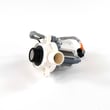
If the washer hums but will not pump water out, the drain pump or drain path is often involved. For this model, a common replacement is the GE washer drain pump assembly WH23X28418.
Why it matters
Running Drain & Spin is the fastest way to remove standing water after a stopped cycle, an out-of-balance event, or a pause. It also helps prevent odors and reduces the chance of water being left in the basket.
Last updated: January 2026
What is the most common problem with GE washers?
The most common issues we see with GE washers (including model GTW725BPN1DG) are cycle interruptions caused by lid lock or control lock conditions, plus everyday performance problems tied to detergent use and load sensing. Many “stops” are normal pauses while the washer senses and balances the load.
Most common symptoms customers report
- Washer won’t start or buttons won’t respond (control lock or a timed lock-out)
- “Lid” message and the washer won’t run until the lid is opened and closed
- Washer pauses or changes spin speed during the cycle (load sensing and rebalancing)
- Poor cleaning, oversudsing, or residue from using too much detergent
- Draining complaints (slow drain or no drain)
What to check first on GTW725BPN1DG
Start with these quick checks from the GTW725BPN1DG owner’s manual:
- If the display shows “Lid”, open and close the lid; the washer may block new cycles if multiple cycles were started without opening the lid.
- If the washer shows “CAnCELEd” or controls won’t respond, allow the 4-minute lock-out to finish; unplugging restarts the timer.
- If the washer pauses or spin speed changes, that is often normal; the washer adjusts and senses the load to distribute it.
- Use HE detergent and avoid overfilling; excessive detergent can reduce wash performance and create oversudsing.
When it points to a part problem
If the checks above do not resolve the issue, these parts are commonly involved:
| Symptom | Commonly involved part | What it affects |
|---|---|---|
| Won’t drain, drains slowly | GE washer drain pump assembly WH23X28418 | Pumps water out during drain/spin |
| Lid won’t lock or unlock, won’t start | GE washer lid lock assembly WH08X37938 | Confirms lid is closed and locks for spin |
| Won’t fill or fills slowly | Washer water inlet valve assembly WH13X26637 | Controls hot/cold water entering the tub |
Why it matters
Many “most common problems” are actually protection features (lid lock, control lock, timed lock-out) or normal operation (load sensing). Checking those first prevents unnecessary part replacement and gets the washer running faster.
Last updated: January 2026


