Installation guide
 Owner’s manual
 Error Codes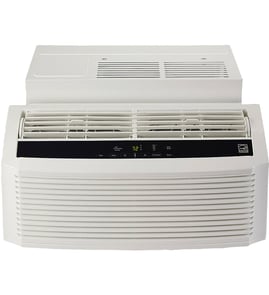



What are the most common issues with 25377120610?
The most common issues we see with the Kenmore 25377120610 room air conditioner are weak or no cooling, water leaking indoors, the unit not turning on, and excessive noise or vibration. Most problems trace back to airflow restrictions, drainage issues, or electrical control and power-supply faults.
Common symptoms and what usually causes them
- Not cooling or cooling poorly: dirty air filter, blocked condenser coils, incorrect mode/temperature setting, low airflow, or a failing compressor/capacitor
- Water dripping inside: clogged drain path, unit not tilted slightly outward, dirty evaporator coil causing icing and overflow
- Won’t power on: tripped breaker, bad outlet, damaged power cord, failed control board, or a blown internal fuse (if equipped)
- Freezing up (ice on coil): dirty filter, blocked airflow, very low outdoor temperature operation, or fan issues
- Loud buzzing/rattling: loose mounting hardware, fan blade hitting shroud, debris in blower wheel, or worn fan motor bearings
- Short cycling: dirty coils, thermostat/sensor issues, or airflow restrictions
Quick checks we recommend first
- Set Mode = Cool and lower the set temperature; confirm the fan runs.
- Clean or replace the air filter; restricted airflow is the top cause of poor cooling and icing.
- Inspect the rear (outdoor) coil for lint and debris; clean gently.
- Verify the unit has a slight outward tilt so condensate drains outside.
- Reset power: unplug for 1 minute (or turn off breaker), then restore power.
Troubleshooting guide by symptom
| Symptom | Best first action | Next likely step |
|---|---|---|
| Runs but not cold | Clean filter and coils | Check for icing; verify fan airflow |
| Leaks indoors | Confirm outward tilt | Clear drain path; clean coil |
| Dead/no lights | Check breaker and outlet | Test cord and internal electrical parts |
| Loud noise | Tighten mounting, remove debris | Inspect fan blade and motor |
Why it matters
Airflow and drainage problems make the system work harder, reduce cooling capacity, and can lead to icing, water damage, or premature compressor wear. Catching these early keeps the Kenmore 25377120610 running efficiently.
For model-specific operating details, cleaning intervals, and any reset steps, follow the 25377120610 owner’s manual. For correct window mounting and tilt requirements, use the 25377120610 installation guide.
Last updated: March 2026
What is the average lifespan of 25377120610?
A Kenmore room air conditioner like model 25377120610 typically lasts 10 years with normal seasonal use and basic maintenance. Keeping airflow unrestricted, cleaning the filter regularly, and storing the unit properly in the off-season are the biggest factors in reaching that lifespan.
Typical lifespan and what affects it
Most room air conditioners fall into a predictable range; how you use and maintain the unit determines where you land.
- Clean the air filter on schedule (restricted airflow shortens compressor life)
- Keep the condenser coil and rear vents clear of dust and lint
- Make sure the unit is level and drains correctly to prevent water issues
- Avoid running it constantly at the coldest setting in extreme heat
- Use a properly rated outlet and avoid undersized extension cords
What “end of life” usually looks like
These symptoms often show up as a unit approaches the end of its service life.
| Symptom | Common cause | What to do first |
|---|---|---|
| Runs but doesn’t cool well | Dirty filter/coil, low airflow | Clean filter and coil; verify vents are clear |
| Trips breaker or won’t start | Electrical issue, failing compressor | Check outlet and cord; consider professional diagnosis |
| Loud buzzing/rattling | Fan or mounting vibration | Tighten mounting, inspect fan area for debris |
| Water leaking indoors | Drainage or tilt issue | Re-level unit; confirm proper drainage path |
Maintenance that helps you reach 10 years
We recommend following the cleaning and seasonal care steps for Kenmore model 25377120610 in the owner's manual. For installation angle, support, and drainage setup, use the installation guide.
Why it matters
A room air conditioner’s compressor and fan motor work harder when airflow is restricted or drainage is poor; that extra load is the main reason cooling performance drops and major components fail early.
Last updated: March 2026
What size window air conditioner for a 12X12 room?
For a 12x12 room (about 144 sq. ft.), we typically recommend a window air conditioner in the 5,000 to 8,000 BTU range for steady, efficient cooling. For your Kenmore room air conditioner model 25377120610, confirm the unit’s BTU rating and operating limits in the 25377120610 owner's manual before buying or installing a different size.
Quick sizing guide (12x12 room)
Use this as a practical starting point, then adjust for real-world conditions.
- 5,000 to 6,000 BTU: well-insulated room, shaded, average ceiling height
- 6,000 to 8,000 BTU: typical 12x12 bedroom or office with moderate sun
- 8,000+ BTU: strong afternoon sun, poor insulation, high ceilings, or lots of heat sources
- Add capacity if the room has many windows, west-facing exposure, or multiple occupants
- Avoid oversizing; it can cool fast but remove less humidity, leaving the room clammy
Adjust for heat load (simple checklist)
If any of these are true, size toward the higher end of the range:
- Ceiling height above about 8 ft
- Direct sun for several hours per day
- Kitchen-adjacent room or heat-producing equipment (PCs, TVs)
- Drafty windows or older insulation
- Door frequently opened to a warmer hallway
What happens if the BTU size is wrong?
| If the unit is... | Common result | What you notice |
|---|---|---|
| Too small | Runs constantly | Room never reaches set temperature |
| Too large | Short cycles | Temperature swings, higher noise |
| Too large | Poor dehumidification | Cool but sticky or musty feeling |
Why it matters
Right-sizing a window AC helps your Kenmore unit cool evenly, control humidity, and reduce wear on the compressor and fan motor. It also helps avoid nuisance issues like icing, short cycling, and higher-than-expected energy use.
For installation best practices (support bracket, tilt, sealing gaps), follow the 25377120610 installation guide.
Last updated: January 2026