Owner’s manual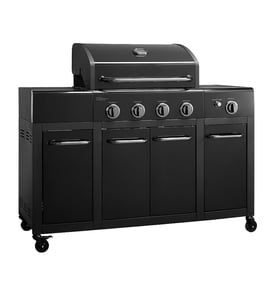



Who manufactures Kenmore grills?
Kenmore grills (including model 14646366610) are manufactured by Permasteel for the Kenmore brand. For model-specific identification details and support information, we recommend checking the 14646366610 owner's manual.
How to confirm the manufacturer on your exact grill
Look for the rating label and documentation that shipped with the grill.
- Check the data label on the grill cart, firebox, or inside a cabinet door
- Match the model number 14646366610 exactly (all digits)
- Review the brand and manufacturer fields on the label (often listed separately)
- Compare the label details to the parts diagrams and lists in the manual
- Keep the label info handy when ordering parts like burners, panels, or hardware
Why the manufacturer matters
Kenmore is the brand name, but the manufacturer is important for getting the right replacement parts and correct service procedures (especially for fuel system components like valves, regulators, and burners).
Quick reference
| What you see | What it means | What to use for parts |
|---|---|---|
| Kenmore | Brand | Use model number 14646366610 |
| Permasteel | Manufacturer | Use the manual and parts list for 14646366610 |
Related maintenance tip
If you are troubleshooting ignition, heating, or flare-ups after replacing parts, follow the cleaning and setup steps in the 14646366610 owner's manual before adjusting burners or fuel settings.
Last updated: February 2026
How do I find my Kenmore Grill model number?
Your Kenmore grill’s model number is printed on the rating label attached to the grill body, most often on the back of the grill base or inside the cabinet area. For the Kenmore gas grill model 14646366610, use that exact number when ordering parts or looking up diagrams in the 14646366610 owner's manual.
Where to look on the grill
Check these common label locations first:
- Back panel of the grill base (rear of the cabinet)
- Inside the cabinet (open the doors and look on side walls)
- Side panel near the propane tank area
- Under the control panel area (look for a sticker on the frame)
- On the cart frame near the wheels or tank holder
What to write down (and why)
Record the full information exactly as shown on the label:
- Model number (example: 14646366610)
- Serial number (if listed)
- Gas type (propane/LP or natural gas)
- Any additional code numbers on the rating label
Why it matters
The model number ensures we match the correct Kenmore gas grill parts, like burners, cabinet panels, and hardware, because similar-looking grills can use different components.
Quick ID checklist
| If the label shows | Use it for |
|---|---|
| Model number | Parts lookup and diagrams |
| Serial number | Manufacturing identification |
| Gas type | Correct regulator/orifice compatibility |
Tip for parts ordering
When you contact support or place an order, use the complete model number and match it to the part listing (for example, gas grill match holder chain 41100105) to avoid fit issues.
Last updated: February 2026
What is the average lifespan of a gas grill?
Most gas grills, including the Kenmore 14646366610, last 5 to 15 years. Lifespan depends mainly on burner and firebox condition, how often you grill, and how well you clean and protect the grill from weather; replacing wear parts can extend service life.
Typical lifespan by build and use
| Grill type/use | Typical lifespan | What usually ends it |
|---|---|---|
| Budget grill, frequent use | 3 to 7 years | Burner rust-through, thin firebox corrosion |
| Mid-range grill, average use | 5 to 12 years | Burner/ignition failures, grease corrosion |
| Heavier-duty grill, well maintained | 10 to 15 years | Firebox or lid corrosion, frame deterioration |
What shortens a grill’s life fastest
- Leaving grease buildup in the firebox and drip areas (corrosion and flare-ups)
- Storing uncovered in rain or snow (rust and burner clogging)
- Running burners on high for long preheats every cook (accelerates burner wear)
- Ignoring weak ignition and lighting issues (more stress on valves and burners)
- Using harsh chemicals or pressure washing near burners and controls
How we recommend extending the life of your Kenmore 14646366610
- Follow the cleaning and seasonal care steps in the 14646366610 owner’s manual.
- Clean grates and heat zones regularly; keep burner ports clear.
- Inspect burners for heavy rust, splits, or uneven flames; replace when needed.
- Keep cabinet panels and hardware tight so the frame stays square.
- Replace small hardware that fails early (for example, the gas grill match holder chain 41100105 if the manual-lighting chain breaks).
Why it matters
A grill usually becomes unreliable long before it becomes unusable. Preventing grease corrosion and keeping burners burning evenly helps you maintain safe ignition, steady temperatures, and consistent cooking results.
Last updated: February 2026
Is it worth fixing a gas grill?
Yes, it’s worth fixing a Kenmore gas grill model 14646366610 when the firebox and lid are structurally solid and the problem is limited to serviceable parts (burners, ignition, hardware). If the cookbox is badly rusted through or warped, replacement is the better value.
Quick decision checklist
- Fix it if the grill heats unevenly, won’t ignite, or has worn hardware but the frame and cookbox are solid.
- Replace it if the firebox is rusted through, the base is warped, or key structural panels no longer hold alignment.
- Fix it when the repair is mostly cleaning plus one or two parts.
- Replace it when multiple major components are failing at once (burners, valves, manifold, and firebox condition).
- Use the 14646366610 owner’s manual to confirm safe lighting steps, cleaning intervals, and correct reassembly.
Typical repair costs vs. replacement value
Most grill repairs are cost-effective when you’re restoring performance (lighting, heat output, stability) rather than rebuilding a corroded body.
| Situation | Usually worth fixing? | Why |
|---|---|---|
| Ignition or lighting trouble | Yes | Often cleaning or a small part restores reliable starts |
| Uneven heating or low heat | Yes | Commonly caused by clogged burners or airflow issues |
| Rusted-through firebox or severe warping | No | Structural failure shortens life and affects safe operation |
| Loose doors, panels, or hardware | Yes | Brackets, handles, and fasteners are straightforward fixes |
Parts that commonly make a repair worthwhile
If your grill is otherwise solid, replacing small, high-impact parts can extend life and improve day-to-day use.
- Gas grill sear burner base 40900114 if a burner base is damaged or no longer supports proper flame.
- Burner seal 40900142 if you’re chasing persistent leaks at a burner connection point.
- Gas grill door handle 40900076 if the handle is broken or unsafe to grip.
Why it matters
A grill that lights reliably and heats evenly cooks better, wastes less fuel, and is easier to use safely. The deciding factor is almost always the condition of the firebox and frame: solid structure means repairs pay off.
Last updated: February 2026
What is the best gas grill for the money?
If you want the best value in a gas grill, we recommend prioritizing long-term durability, even heat, and parts support over extra features. For most shoppers, a mid-priced 2 to 4 burner propane grill from a proven line delivers the best cost-per-year, and you can keep it running with model-specific parts for Kenmore 14646366610 using the 14646366610 owner's manual.
How we define “best for the money”
A grill is a great value when it holds temperature well, lights reliably, and stays serviceable for years.
- Even heating across the cooking grates
- Reliable ignition and consistent burner flame
- Corrosion resistance (firebox, lid, and burner tubes)
- Easy cleaning (grease management and accessible burners)
- Replacement parts availability (burners, grates, hardware)
Quick value comparison (what to look for)
| What you care about | Best choice type | What you get |
|---|---|---|
| Longest lifespan | Heavier build, strong warranty line | Fewer headaches, better heat stability |
| Lowest upfront cost | Feature-rich budget grill | More features, shorter typical service life |
| Best cooking results | Strong burners + good heat distribution | Better sear, fewer hot/cold spots |
| Easiest ownership | Common parts and simple design | Faster repairs, easier maintenance |
Keeping a “good value” grill running longer
For Kenmore 14646366610, routine cleaning and timely part replacement protect your investment.
- Clean burner ports and the firebox to prevent uneven heating
- Inspect seals and mounting points when you see flare-ups or weak heat
- Replace worn burner components if flames lift, yellow heavily, or heat is patchy
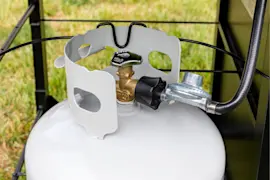
- Keep the LP tank secured and stable; replace damaged holders or brackets
- Use the correct hardware so panels and shelves stay aligned
Helpful model-related parts examples include the gas grill sear burner base 40900114 and burner seal 40900142 when heat output or burner sealing becomes an issue.
Why it matters
“Best for the money” usually means the grill that stays dependable the longest with the fewest repairs. A slightly better-built grill often costs less over time because it heats more evenly, lights more reliably, and is easier to maintain with available replacement parts.
Last updated: February 2026
Are Kenmore gas grills any good?
Kenmore gas grills, including model 14646366610, are a solid choice for everyday backyard cooking: they typically heat up quickly, offer usable cooking space, and deliver consistent results when the burners and ignition system are kept clean and properly adjusted. For model-specific operation and care, use the 14646366610 manual.
What “good” looks like on a Kenmore gas grill
A good grill is one that lights reliably, heats evenly, and holds temperature with the lid closed. On most Kenmore gas grills, performance depends more on maintenance and burner condition than on the cabinet or shelves.
- Reliable ignition with a steady click and quick flame carryover
- Even heat across the cooking grid with minimal hot spots
- Stable flame that does not lift off the burner ports
- Smooth control knob response from low to high
- Manageable flare-ups with a clean firebox and grease path
Common pros and common pain points
These are the most typical tradeoffs customers report across many Kenmore gas grills.
| Area | What’s good | What to watch for |
|---|---|---|
| Heating | Fast preheat, strong sear potential | Uneven heat if burner ports are clogged |
| Ignition | Convenient push-button lighting | Misfires if electrode area is dirty or misaligned |
| Build/fit | Practical layout and storage | Wheels/fasteners can loosen if not re-tightened |
| Upkeep | Straightforward cleaning | Grease buildup causes flare-ups and smoky cooking |
Quick checks that improve performance fast
If your grill feels “not so good,” these steps usually restore normal cooking performance.
- Clean burner ports and the area around the burner tubes (spider webs and grease are common)
- Confirm the burner-to-valve alignment and that seals are seated; replace a damaged burner seal 40900142
- Brush and wash the cooking grid regularly; preheat 10 to 15 minutes before cooking
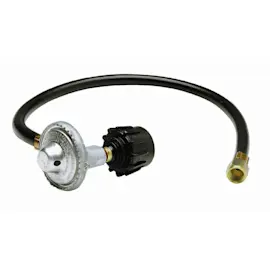
- Check propane level and regulator behavior (weak flame often traces back to fuel delivery)
- Tighten cabinet hardware and brackets if the grill feels wobbly
Why it matters
Most “bad grill” complaints come from ignition, airflow, or fuel delivery issues, not from the cooking box itself. Keeping burners clean and seals intact helps your Kenmore grill light faster, heat more evenly, and reduce flare-ups.
Last updated: February 2026
How to ignite a Kenmore gas grill?
To ignite your Kenmore gas grill model 14646366610, we recommend lighting it with the built-in igniter first; if it will not light, use the manual lighting port (match-light hole) with the lid open and the gas turned on slowly. See the exact lighting steps in the 14646366610 owner's manual.
Standard ignition (using the igniter)
- Open the grill lid before turning on gas.
- Confirm the propane tank valve is fully open.
- Turn one main burner control knob to HIGH.
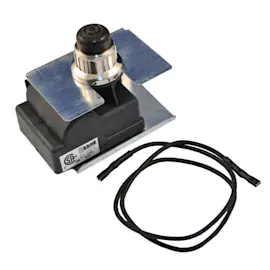
- Press the igniter button (or turn the igniter knob, depending on your control panel).
- If the burner lights, adjust to the desired heat and preheat with the lid closed.
Manual lighting (match-light) if the igniter will not spark
Use this method when the igniter is clicking but the burner will not light.
- Open the lid.
- Place a long match or long-reach lighter at the manual lighting port (match-light hole) near the burner.
- Turn the burner knob to HIGH slowly.
- Once the burner lights, remove the flame source and set the heat.
If it still will not light
These checks solve most “won’t ignite” complaints on gas grills.
- Make sure the tank has fuel and the valve is open.
- Turn gas on slowly; opening the tank too fast can trigger the regulator safety device.
- Inspect burner ports for grease or debris; clean if clogged.
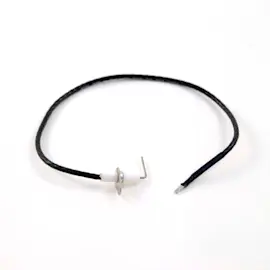
- Check for a loose wire at the igniter and electrode.
- Look for misalignment between the electrode tip and burner.
- If flames are uneven after lighting, follow the steps in how to fix uneven heating on a gas grill video.
Quick reference: what you see vs. what to do
| Symptom | Most likely cause | What to do first |
|---|---|---|
| No click/no spark | Igniter issue | Try manual lighting, then inspect igniter wiring/electrode |
| Clicks but no flame | No gas flow or clogged burner | Confirm tank level, open valve slowly, clean burner ports |
| Lights then goes out | Regulator/flow issue | Reset regulator (close tank, wait, reopen slowly) |
| One area hot, one cold | Blocked ports or burner issue | Clean ports; check burner condition |
Why it matters
Lighting with the lid open and turning gas on slowly helps prevent flare-ups and reduces the chance of a delayed ignition (a sudden “whoosh” when gas finally catches).
Last updated: February 2026