Owner’s manual
 Error Codes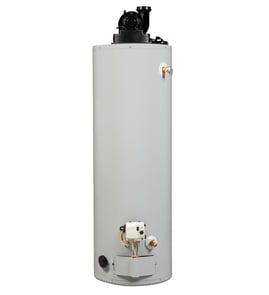





What is the typical lifespan of a gas hot water heater?
A typical gas water heater lasts 8 to 12 years. For an American gas water heater like model FG2F4040T3NOV, regular maintenance (especially draining/flushing and anode rod checks) helps you reach the upper end of that range; aggressive water conditions can shorten it.
Typical lifespan ranges
| Water heater type | Typical lifespan | Notes |
|---|---|---|
| Gas tank water heater | 8 to 12 years | Most common residential range |
| Electric tank water heater | 10 to 15 years | Often lasts longer due to fewer combustion components |
Maintenance that extends tank life
We see the biggest lifespan gains when you stay ahead of corrosion and sediment.
- Inspect the anode rod about every 3 years; replace it if it is more than 50% depleted
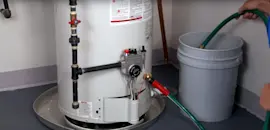
- Drain and flush the tank periodically to reduce sediment buildup
- Keep the burner area clean and make sure combustion air and venting are not restricted
- Watch for early warning signs: rusty hot water, popping/rumbling, or reduced hot water volume
- If you use a water softener, expect faster tank corrosion; plan on more frequent anode inspections
For model-specific safety and maintenance intervals, follow the FG2F4040T3NOV owner's manual.
Parts that commonly affect longevity
These parts do not change the tank’s age, but they often determine whether the heater keeps running reliably.
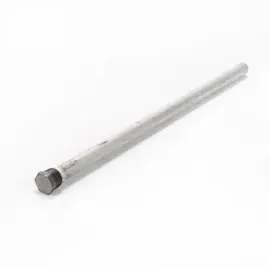
- Anode rod: protects the tank from corrosion; see water heater anode rod 100109594
- Drain valve: helps with flushing; a leaking valve can complicate maintenance
- T&P valve: critical safety device; replace if it drips continuously or will not operate correctly
Why it matters
Once a tank starts leaking internally, replacement is the practical fix. Preventive maintenance (especially anode rod inspection and flushing) delays tank failure and helps keep gas heating performance steady.
Last updated: January 2026
What is the average cost to replace a gas hot water heater?
For an American FG2F4040T3NOV gas water heater, most full replacements (new heater plus professional installation) typically run about $1,000 to $6,000. The biggest cost drivers are tank size, venting changes, gas line work, and whether code upgrades are needed; labor is often a large share of the total.
Typical cost breakdown (what you are paying for)
- New gas water heater (tank): often $500 to $2,500 depending on capacity and efficiency
- Labor and installation: often $500 to $2,500 depending on complexity
- Materials and upgrades: vent pipe, shutoff valve, gas flex connector, water piping, drain pan, seismic straps (where required)
- Disposal and haul-away: commonly an added fee
| Cost item | Typical range | What makes it higher |
|---|---|---|
| Water heater unit | $500 to $2,500 | higher efficiency, larger capacity, specialty venting |
| Labor | $500 to $2,500 | venting reroute, tight access, gas line changes, permits |
| Extra materials | $50 to $800 | new venting, piping rework, drain pan, valves |
What can push the price toward the high end
- Venting changes (draft hood or vent connector replacement, longer vent run, more elbows)
- Gas supply piping changes (pipe sizing, longer run, added shutoff)
- Water damage prevention add-ons (drain pan and drain line)
- Local permit and inspection requirements
Why it matters
A gas water heater replacement is not just a “swap”; safe venting, combustion air, and correct gas supply sizing protect your home and help the heater run efficiently. We recommend following the safety and installation requirements in the FG2F4040T3NOV owner's manual.
When repair is a better value than replacement
If the tank is not leaking, a repair can be more cost-effective than replacing the entire unit. Common service parts for this model include:
- Water heater anode rod 100109594 (helps protect the tank from corrosion)
- Drain valve 100109106 (used for draining and flushing)
- T&p valve 100108279 (safety relief valve)
Last updated: January 2026
What is the most common problem with a gas hot water heater?
The most common problem on a gas water heater like the American FG2F4040T3NOV is an ignition failure: the pilot will not light or will not stay lit, so the burner never runs and you get little or no hot water. Use the lighting, flame-check, and shutdown steps in the FG2F4040T3NOV owner's manual.
Most common causes (and what you notice)
- Pilot will not stay lit: burner never fires, water turns cold.
- Weak or abnormal flame: lazy yellow flame, soot, or repeated shutdowns.
- Sediment buildup: popping or rumbling noises, slower recovery, less hot water.
- Temperature regulation issues: water too hot, too cool, or swings during use.
- Safety shutdown conditions: heater stops operating until serviced.
Safe checks that often pinpoint the issue
- Confirm the manual gas shutoff valve is fully open.
- Observe flame characteristics; a steady blue flame with slight yellow tips is normal.
- If the heater has been unused for 2 weeks or more, run hot water at a sink for several minutes before using any electrical appliance connected to hot water.
- If any part has been under water, do not operate the heater; have a qualified technician replace the unit.
Parts that commonly address “no ignition” symptoms
For FG2F4040T3NOV, ignition problems are commonly tied to the pilot/igniter components.
| Symptom | What to inspect | Example model-matched part |
|---|---|---|
| Pilot will not light or will not stay lit | Pilot/igniter assembly and connections | Water heater pilot igniter 100110927 |
| Pilot lights but is erratic | Pilot/igniter assembly and flame quality | Water heater pilot igniter 100110936 |
| Rumbling and reduced hot water | Tank sediment (maintenance) | Drain valve 100109106 |
Why it matters
Ignition and flame-quality issues stop hot water production and can signal unsafe combustion. The manual also covers emergency shutdown steps if overheating occurs or gas fails to shut off.
Last updated: January 2026