Error Codes




Does the PGB935YP2FS have a self-cleaning feature?
Yes. The GE PGB935YP2FS gas range is a self-cleaning model, so you can run a high-heat self-clean cycle to burn off baked-on spills in the oven cavity.
How to use self-clean safely
- Remove oven racks, cookware, and any foil before starting the cycle.
- Wipe up heavy spills first; thick grease can smoke during self-clean.
- Keep the kitchen ventilated; some odor and light smoke are normal.
- Do not use commercial oven cleaners during or after a self-clean cycle.
- Let the oven cool completely before wiping out ash.
If the self-clean cycle will not start
Self-clean commonly will not run if the oven cannot confirm the door is locked or if the control does not sense safe conditions.
| What you notice | Most common cause | What to check next |
|---|---|---|
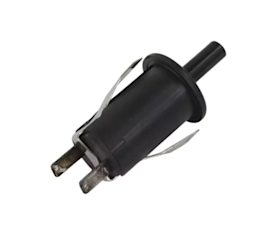
| Door will not lock | Door switch not closing | Inspect/replace the range oven door switch WB24X27550 |
| Cycle starts then stops | Temperature feedback issue | Check wiring and consider the range oven temperature sensor WB24X25557 |
| No response from controls | Control or power issue | Verify power supply, then inspect control-related wiring |
Why it matters
Self-cleaning uses very high temperatures; the door lock and temperature sensing system help keep the cycle safe and prevent damage. If either system is acting up, self-clean may be disabled until the issue is corrected.
Last updated: January 2026
How long should a GE Profile gas stove last?
A GE Profile gas range like model PGB935YP2FS typically lasts 13 to 15 years with normal household use and basic maintenance. Keeping burners clean, ensuring steady ignition, and addressing small issues early helps you reach the upper end of that lifespan.
What affects lifespan the most
- Daily heat and spill exposure on the cooktop and burner heads
- Ignition reliability (spark system and igniters)
- Gas flow consistency (valves and regulator)
- Cleaning habits (avoiding clogged ports and corrosion)
- Ventilation and moisture around controls and wiring
Signs your range is nearing end-of-life (or needs a key repair)
- Burners click constantly or do not spark reliably
- Oven takes much longer to preheat or struggles to hold temperature
- Burner flames are uneven, noisy, or frequently go out
- You smell gas or suspect a leak (shut off gas and have it checked)
- Controls act erratically or the cooktop heat feels inconsistent
Common repairs that can extend life on PGB935YP2FS
Many “old range” symptoms are actually normal wear parts. These are common fixes for performance issues:
| Symptom | Often related to | Example part for this model |
|---|---|---|
| Surface burner will not light or keeps clicking | Spark system issue | Range spark module WB13X24741 |
| Oven will not ignite or heats weakly | Igniter problem | Range oven burner igniter WB13X40206 |
| Oven temperature swings | Sensor drifting | Range oven temperature sensor WB24X25557 |
Why it matters
A gas range that is maintained and repaired as needed usually delivers better cooking results, more consistent burner flames, and fewer surprise breakdowns. Replacing a failed igniter, sensor, or spark module is often far less disruptive than replacing the entire range.
Last updated: January 2026
What are common problems with GE ranges?
Common problems on a GE gas range like model PGB935YP2FS include burners that will not ignite, weak or uneven flames, oven not heating or heating unevenly, and control or sensor-related temperature issues. Many of these symptoms trace back to ignition, gas flow, or temperature-sensing parts.
Most common symptoms customers report
- Surface burner clicks but will not light (or lights slowly)
- Burner flame is too low, too high, or uneven
- Oven bake or broil will not ignite, or takes a long time to heat
- Oven temperature seems inaccurate (overcooks or undercooks)
- Burning smell or smoke during use (often from spills, grease, or debris)
Quick checks you can do first (no parts needed)
- Make sure burner caps are seated flat and centered; a shifted cap can cause poor ignition and uneven flames.
- Clean and dry the burner head and base; clogged ports commonly cause weak or lopsided flames.
- If the igniter keeps clicking, wipe moisture off the cooktop and around the igniter area.
- For oven heating issues, confirm the oven is set to the correct mode (bake vs. broil) and allow full preheat time.
- If you smell gas, stop using the range and have the gas supply and connections checked.
Parts that commonly cause these problems on PGB935YP2FS
If cleaning and setup do not fix the issue, these model-matched parts are frequent culprits:
| Symptom | Likely area | Example model-matched part |
|---|---|---|
| Surface burner will not ignite or keeps clicking | Spark/ignition | Range spark module WB13X24741 |
| Weak/uneven surface flame | Burner head/cap alignment or clogged ports | Cooktop burner head WB16X28764 |
| Oven will not heat or heats poorly | Oven ignition | Range oven burner igniter WB13X40206 |
| Oven temperature inaccurate | Temperature sensing | Range oven temperature sensor WB24X25557 |
Why it matters
Gas ignition and flame quality affect both safety and cooking results. Fixing a misaligned burner cap, a dirty burner head, or a failing igniter can restore normal lighting, stable flames, and consistent oven temperatures.
Last updated: January 2026
What are the key features of PGB935YP2FS?
The GE PGB935YP2FS gas range is built around faster cooking and connected convenience: it commonly includes No Preheat Air Fry, true convection baking, built-in WiFi (SmartHQ), and a center oval burner for griddles. Feature sets can vary by configuration, so we recommend matching options to your exact unit.
Key features customers look for on this model
- No Preheat Air Fry cooking mode
- True convection for more even baking and roasting
- Built-in WiFi with SmartHQ app connectivity
- Center oval burner designed for an oval griddle/grill accessory
- Fingerprint-resistant stainless finish (on stainless versions)
- Multiple oven rack positions (often 3 racks)
Cooktop and oven highlights (quick comparison)
| Area | What it does | Why you care |
|---|---|---|
| Center oval burner | Supports longer cookware and griddle-style accessories | Better heat coverage for pancakes, fajitas, and meal prep |
| Convection system | Circulates hot air for more even temps | More consistent browning and multi-rack baking |
| Air fry mode | Uses high heat and airflow to crisp foods | Faster crisping with less oil than deep frying |
| WiFi features | Remote monitoring and some guided cooking features | Convenience and alerts while you multitask |
Why it matters
These features affect day-to-day results: convection and air fry improve crisping and evenness, while the oval burner expands what you can cook on the cooktop. WiFi features are mainly about convenience, not basic heating performance.
Related parts that support these features
If performance is off (uneven baking, weak ignition, or burner issues), these model-matched parts are common starting points:
- Range oven temperature sensor WB24X25557 (helps regulate oven temperature)
- Range oven burner igniter WB13X40206 (helps the oven burner light reliably)
- Range spark module WB13X24741 (supports spark ignition for surface burners)
Last updated: January 2026