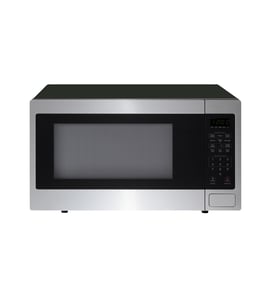

How to change power level on KitchenAid microwave?
On the KitchenAid KCMS135GSS0 countertop microwave, you typically set the cook time first, then choose a power level (percentage) before starting. The exact button names can vary by control panel, but the sequence is usually the same: time, power level, start.
Standard steps to change the power level
Most KitchenAid countertop microwaves use a workflow like this:
- Press Cook Time (or Time Cook).
- Enter the cooking time using the number pad.
- Press Power Level.
- Enter the power level (often 1 to 10, where 10 = 100%).
- Press Start.
If your microwave uses a Power button instead of Power Level, press Power repeatedly to cycle through levels, then press Start.
Common power levels (quick guide)
Use this as a practical starting point for KCMS135GSS0-STYLE controls.
| Power level | Approx. % | Best for |
|---|---|---|
| 10 | 100% | Boiling liquids, cooking most foods fast |
| 7 | 70% | Reheating leftovers, cooking eggs without overcooking |
| 5 | 50% | Defrosting more gently, softening butter |
| 3 | 30% | Melting chocolate/cheese, warming delicate foods |
| 1 | 10% | Keeping food warm, very gentle softening |
Why it matters
Lowering power reduces hot spots and overcooking by giving heat time to spread through the food. It is especially helpful for reheating dense leftovers, melting, and defrosting.
If the keypad will not accept a power level
If the microwave will not respond to Power Level selections, check these common causes:
- You are using a preset cycle (some presets lock power level)
- The control is in Timer mode instead of cooking mode
- The door is not fully closed and latched
- A stuck door-interlock can prevent normal operation (related to a door switch)
For door-latch and interlock issues on this model, the door switch is a common suspect; see the switch 4392027.
Last updated: February 2026
What is the average life of a countertop microwave?
A countertop microwave typically lasts about 7 years with normal household use. With heavy daily use (multiple heat-ups and defrost cycles every day), it’s common to see replacement closer to 4 to 5 years, especially if the door, cooling airflow, or power supply components get stressed.
Typical lifespan ranges (what we see most often)
- Light use (occasional reheating): 8 to 10 years
- Normal use (daily reheating/defrosting): about 7 years
- Heavy use (many cycles per day): 4 to 5 years
- Poor ventilation or frequent overheating: shorter lifespan
What shortens the life of a KitchenAid KCMS135GSS0 microwave
- Running the microwave empty or with very small loads
- Blocked vents or tight cabinet placement that traps heat
- Slamming the door or operating with a misaligned latch
- Repeated power surges or frequent breaker trips
- Continued use after arcing, burning smells, or loud buzzing
Parts that commonly fail first (and what symptoms look like)
| Symptom | Common cause | Example part for KCMS135GSS0 |
|---|---|---|
| Dead, no display | Blown fuse or door switch issue | Fuse WP8183507 |
| Starts then stops | Door interlock switch not closing reliably | Switch 4392027 |
| Intermittent power | Loose or heat-damaged wiring | Voltage wire WP8205489 |
Why it matters
Microwaves rely on tight door interlock safety switching, steady line power, and good airflow. When any of those degrade, you can get nuisance shutdowns, no-heat complaints, or repeated fuse failures, which usually signals it’s time to repair or replace.
Good habits that help your microwave last longer
- Keep the interior clean and wipe up splatters promptly
- Leave clearance around vents so the cooling fan can move air
- Use microwave-safe covers to reduce mess and arcing risk
- Stop using it if you see sparks; address the cause before continuing
- If it won’t power on, troubleshoot the fuse and door switches first using how to tell if a fuse is blown
Last updated: February 2026
What is the standard size of a countertop microwave?
Most countertop microwaves (including KitchenAid models like KCMS135GSS0) are built to fit standard counter depths and cabinets; typical exterior size is about 21 to 25 inches wide, 12 to 15 inches tall, and 16 to 20 inches deep, with 1.0 to 2.2 cu. ft. capacity.
Typical countertop microwave size ranges
These are the most common “standard” ranges we see across countertop microwaves:
- Width: 21 to 25 in.
- Height: 12 to 15 in.
- Depth: 16 to 20 in. (not counting handle, if equipped)
- Capacity: 1.0 to 2.2 cu. ft.
- Electrical: typically 120V, standard household outlet
| Size class | Typical capacity | Typical width | Best for |
|---|---|---|---|
| Compact | 0.7 to 1.0 cu. ft. | 17 to 20 in. | Dorms, small kitchens |
| Mid-size (most common) | 1.1 to 1.6 cu. ft. | 21 to 24 in. | Everyday family use |
| Large | 1.7 to 2.2 cu. ft. | 24 to 25+ in. | Large dishes, bigger households |
How we recommend measuring your microwave (so it fits)
Measure the space first, then the microwave:
- Measure opening width, height, and depth where it will sit.
- Leave at least 1 to 2 inches of clearance on the sides and top for airflow.
- Confirm the door swing will clear nearby walls, cabinets, and backsplash.
- If it sits under cabinets, check the cabinet-to-counter height.
- If you are replacing a broken glass tray, match the tray to your model; the turntable diameter must be correct.
Why it matters
“Standard size” is mainly about fit and ventilation. A microwave that is too tight in a cabinet opening can overheat, run louder, or shorten component life (like door switches and fuses). If you are troubleshooting power issues while checking fit and airflow, our how to replace a microwave fuse guide pairs well with ordering the correct fuse WP8183507.
Last updated: February 2026


