Owner’s manual
 View engine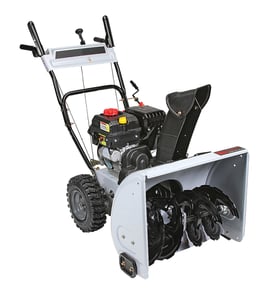




What is the typical lifespan of a gas snowblower?
A well-maintained gas snowblower like the Craftsman C950-52943-0 typically lasts 10 to 20 years. Consistent seasonal maintenance (oil changes, lubrication, and proper fuel storage) is what most often determines whether it lands closer to 10 years or closer to 20.
Typical lifespan ranges (what we see most often)
| Condition | Typical lifespan | What usually drives it |
|---|---|---|
| Light residential use + good storage | 15 to 20 years | Clean fuel system, rust prevention, regular lubrication |
| Average residential use | 10 to 15 years | Normal wear on belts, friction disc, skid shoes, scraper bar |
| Heavy use or poor storage | 5 to 10 years | Fuel varnish, corrosion, neglected oil and lubrication |
Maintenance that extends lifespan the most
We focus on the items that prevent the most common “won’t start” and “won’t drive/throw” failures.
- Change engine oil on schedule and before long-term storage
- Use fresh gasoline; don’t store old fuel in the tank for months
- Run the engine outdoors only and keep cooling areas clear (safe operation supports long engine life)
- Lubricate key moving points (auger shaft, drive hex shaft, wheels) during the season
- Inspect belts and replace when glazed, cracked, or slipping
- Store it dry and follow off-season fuel steps (drain or stabilize fuel for 30+ day storage)
For model-specific operating and storage steps, use the owner's manual.
When replacement makes more sense than repair
A gas snowblower is usually at the end of its practical life when multiple major systems need work at the same time.
- It repeatedly won’t start even after fuel and ignition checks
- Drive system slips or won’t move and also needs auger work
- Rust or damage affects the auger housing or chute function
- Repair cost approaches about half the value of a comparable replacement unit
Why it matters
Most “short lifespan” snowblowers fail from preventable issues: stale fuel deposits in the carburetor, lack of lubrication, and off-season storage problems. Following the storage guidance in the manual helps protect the engine and fuel system year after year.
Parts that commonly stop a snowblower from running
If your unit won’t start at all, confirm the safety interlock is present and intact. This model uses an lawn & garden equipment engine safety key 794696. You can order parts for your Craftsman C950-52943-0 from the parts list for this model, or search by model number on Sears PartsDirect.
Last updated: February 2026
How to tell if a snowblower auger belt is bad?
On the Craftsman C950-52943-0 snow thrower, a bad (or failing) auger drive belt shows up as poor snow discharge or augers that stop under load; the manual also points to a belt that’s loose or damaged as a key cause. Confirm by checking belt tension and inspecting the belt’s condition using the steps in the owner's manual.
Common signs the auger belt is worn or failing
- Augers do not turn when you squeeze the auger control lever
- Snow throws weakly, then improves briefly and fades again (belt slipping)
- Squealing noise when the auger is engaged
- Burning rubber smell after engaging the auger
- Belt looks cracked, frayed, glazed (shiny), or has missing chunks
- Belt feels slack even with the auger clutch engaged
Quick checks we recommend (safe, practical)
- Shut the engine off and let all moving parts stop.
- Disconnect the spark plug wire before opening covers (the manual calls this out before belt work).
- Remove the belt cover and inspect the auger drive belt for visible damage.
- Check belt tension with the auger engaged: the manual spec is about 1/2 inch (12.5 mm) of deflection with moderate pressure on the belt span opposite the idler pulley.
- If the belt is loose, follow the manual’s idler pulley adjustment procedure; if it’s damaged or still slips, replace the belt.
Belt condition vs. belt adjustment (what to do)
| What you notice | Most likely issue | What we do next |
|---|---|---|
| Cracks, fraying, glazing, missing rubber | Belt is worn out | Replace the auger drive belt per the owner's manual |
| Belt looks OK but deflects more than 1/2 inch | Belt tension is low | Adjust idler pulley, then recheck deflection |
| Auger won’t discharge snow but belt seems tight | Cable may be out of adjustment or shear pin issue | Check auger control cable adjustment; inspect shear pins |
Why it matters
A slipping auger belt reduces throwing distance and can overheat, which accelerates belt wear and can leave you without auger drive mid-storm. Keeping the belt properly tensioned also helps the auger stop promptly when you release the control.
Parts note
If your machine will not start at all, make sure the engine safety key is installed and not damaged; the lawn & garden equipment engine safety key 794696 is the correct key listed for this model.
You can order replacement parts for your Craftsman C950-52943-0 from the parts list for this model, or search by model number on Sears PartsDirect.
Last updated: February 2026
Should I spray my snowblower with WD-40?
Yes, you can lightly spray a water-displacing product like WD-40 on the Craftsman C950-52943-0 snow thrower’s chute and other bare metal areas to help reduce snow sticking and surface rust. We keep it off belts, friction-drive parts, and hot engine areas, and we clean the machine thoroughly after each use.
Where it helps (and where it does not)
WD-40 is most useful as a short-term moisture barrier and slick coating on non-friction surfaces.
- Chute interior and discharge opening (helps reduce clogging)
- Auger housing surfaces (light coating only)
- Exposed fasteners and linkages (light corrosion protection)
- Do not spray the friction wheel or disc drive plate area (slip and damage risk)
- Do not spray directly on a hot muffler, engine, or near ignition sources
Best practice for this model after snowblowing
Your owner's manual for the C950-52943-0 calls out end-of-job steps that matter more than any spray:
- Let the engine idle a few minutes to melt snow and ice on the engine
- Remove snow, slush, and debris from the entire snowblower
- Flush with water if possible to remove salt and chemicals, then wipe dry
- Inspect auger and impeller for ice or debris before the next start
Quick comparison: WD-40 vs. what we use for maintenance
| Goal | WD-40 | Better long-term approach |
|---|---|---|
| Reduce chute clogging | Good short-term | Keep chute clean and dry; apply a light protective coating as needed |
| Prevent rust on bare metal | Good | Clean, dry, then apply rust preventative before storage |
| Lubricate moving parts | Not ideal | Use the lubrication points and intervals listed in the manual |
Why it matters
On the C950-52943-0, overspray onto the drive system can cause slipping and premature wear. The manual specifically warns that grease or oil contacting the rubber friction wheel or disc drive plate can damage the friction wheel, so targeted application is the difference between “helpful” and “harmful.”
Parts tip
If your snowblower will not run because the key is missing or damaged, replace the lawn & garden equipment engine safety key 794696. You can also search by model number on Sears PartsDirect to find other maintenance and repair parts.
Last updated: February 2026
Is it worth fixing a snowblower?
Yes, fixing a snowblower is worth it when the repair is a normal wear item (oil service, spark plug, belt, cable adjustment) and the machine still runs strong; for a Craftsman C950-52943-0, routine maintenance and small part replacements typically restore reliable performance at a fraction of replacement cost. Use the owner's manual to match the repair to the recommended service schedule.
Quick decision checklist (repair vs. replace)
- Repair when it needs routine maintenance (oil change, spark plug service, lubrication).
- Repair when the auger and drive systems operate normally and the unit stops correctly when controls are released.
- Repair when the issue is fuel related (old fuel, clogged vent) and clears up with fresh fuel and basic tune-up steps.
- Consider replacing when the engine has persistent no-start or severe running issues after fresh fuel and spark checks.
- Consider replacing when the machine has repeated major failures (drive system, auger/impeller damage) season after season.
What we see most often on this model
Your manual emphasizes preventive maintenance that directly affects “is it worth it” decisions: checking that the auger stops within 5 seconds, keeping hardware tight, lubricating linkages, hex shaft and chains, and servicing engine oil and the spark plug. Those are low-cost tasks that prevent expensive breakdowns.
Common “worth fixing” items
| Symptom | Likely category | Typical fix type |
|---|---|---|
| Hard starting in cold weather | Oil viscosity, choke use | Use correct oil for temperature; follow starting steps |
| Starts then runs poorly | Fuel mixture, fouled plug | Set choke correctly; clean/gap or replace spark plug |
| Poor traction or veering | Cable adjustment, tire pressure | Adjust traction control; set tire pressure evenly |
| Excess vibration | Loose hardware | Stop and tighten hardware before further use |
Why it matters
A snowblower that is maintained on schedule costs less to keep, starts more reliably, and avoids damage to high-wear components (for example, keeping grease off the friction wheel and drive plate helps prevent drive problems).
Parts and resources that help
- If your unit will not run because the interlock is missing, replace the lawn & garden equipment engine safety key 794696.
- For step-by-step maintenance intervals and procedures (oil, spark plug access, lubrication points), follow the owner's manual.
- For ordering additional parts by model number, use the parts list for C950-52943-0 or search on Sears PartsDirect.
Last updated: February 2026
How to tell what year a Craftsman snowblower is?
For your Craftsman snow thrower model C950-52943-0, the owner’s manual shows a Rev. Date of 07/2009, which places the manual (and typically this model’s documentation) in July 2009. To pinpoint your unit’s exact build year, we use the serial number from the product ID label on the machine and match it to the format shown in the C950-52943-0 owner's manual.
Where to find the model and serial number
Most Craftsman snowblowers have an identification label on the rear of the frame or on the housing near the wheels.
- Look for a label that lists Model and Serial No.
- Wipe off snow, salt, and oil film so every character is readable
- Write the serial number exactly as shown (letters and numbers)
- Take a photo before the label fades further
How to interpret the “year” correctly
There are a few different “dates” people mean. Here is how we separate them:
| What you’re trying to date | What to use | What it tells you |
|---|---|---|
| Your exact machine | Serial number on the ID label | Most accurate build date indicator |
| The model’s documentation | Manual revision date | When the manual was issued/updated |
| The engine itself | Engine model/type/code tag | Engine manufacture date (can differ from snowblower build year) |
Quick checks that help narrow it down
If you are trying to estimate the year without decoding the full serial number, these checks still help:
- Compare your decals and control panel layout to the diagrams in the C950-52943-0 owner's manual
- Check whether parts lists match what’s installed (for example, the engine safety key is listed for this model)
- Confirm the engine brand and model stamped on the engine shroud (engine dates can be earlier than the snowblower)
Why it matters
Knowing the correct year helps us match the right parts and specs for your C950-52943-0, especially for wear items like belts, friction drive components, and control linkages. It also prevents ordering a look-alike part that does not fit.
Last updated: February 2026