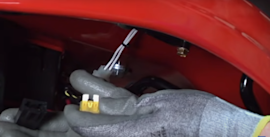
Installation guide
 Owner’s manual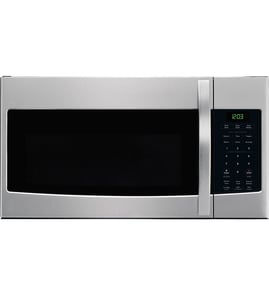



When to change Whirlpool microwave vent hood combo filter?
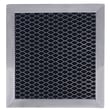
For the Whirlpool WMH76718AS0 microwave/hood combo, we replace the vent hood filter on a schedule based on the filter type: wash the grease filter regularly and replace the charcoal (odor) filter about every 6 months if you use recirculating venting. Confirm your exact setup in the installation guide.
Which filter you have (and what to do)
Most microwave/hood combos use one or both of these:
- Grease filter (metal mesh): remove and wash; replace only if damaged or won’t come clean.
- Charcoal filter (carbon): replace on a time schedule; it cannot be washed effectively.
- Recirculating venting: uses charcoal filtration to reduce odors.
- Wall or roof venting: typically relies on grease filters only (air is exhausted outside).
Recommended replacement and cleaning schedule
Use this as a practical maintenance plan for WMH76718AS0:
| Filter type | What it does | What to do | Typical interval |
|---|---|---|---|
| Grease filter (mesh) | Captures grease from cooking | Wash and reinstall | Every 1 to 3 months |
| Charcoal filter (carbon) | Reduces odors in recirculation mode | Replace | About every 6 months |
Quick checks that tell you it’s time
- Grease filter looks sticky, dark, or airflow seems reduced even after cleaning.
- Fan sounds louder than normal because airflow is restricted.
- Odors linger during recirculating operation.
- Smoke is not clearing as well as it used to.
- You cook frequently with high heat (more frequent cleaning helps).
Why it matters
A clean vent hood filter helps your Whirlpool microwave/hood combo move air properly, reduces grease buildup on cabinets and the vent grille, and keeps the vent fan working efficiently.
Last updated: February 2026
What is the average lifespan of a Whirlpool microwave?
Most Whirlpool microwaves, including over-the-range microwave/hood combos like model WMH76718AS0, typically last 7 to 10 years with normal household use. Heavy daily use, poor airflow, and grease buildup shorten life; routine cleaning and proper venting help you reach the full lifespan.
Typical lifespan and what affects it
A microwave’s life is mostly driven by heat, vibration, and electrical wear on high-use components.
- Daily run time: multiple long cook cycles per day reduces lifespan faster than occasional reheats
- Ventilation and grease: clogged filters trap heat and grease, stressing the fan and electronics
- Door use: slamming the door can damage interlock switches and mounts
- Power quality: frequent power surges can damage the control board and relays
- Maintenance: keeping the cavity and vents clean prevents overheating and arcing
For model-specific care and venting details, follow the installation guide.
Signs your microwave is nearing end of life
These symptoms usually point to a failing heating circuit, door safety circuit, or control issue.
- Runs but does not heat food
- Intermittent heating or uneven cooking
- Loud buzzing/humming that is new or getting worse
- Dead display or keypad that stops responding
- Fan or light works, but cooking stops when the door is moved (door switch/interlock issue)
If it runs but will not heat, our troubleshooting steps in why is my microwave not heating match the most common causes.
Repair vs. replace: quick decision guide
| What you’re seeing | Common area involved | Typical next step |
|---|---|---|
| No heat, everything else works | High-voltage circuit | Diagnose diode, capacitor, magnetron |
| Completely dead (no display) | Fuse or power supply path | Check fuse and door switches |
| Starts then stops when door is touched | Door interlock circuit | Inspect/replace door switches |
| Poor venting, greasy airflow | Grease filter/venting | Clean or replace filter |
Parts that commonly fail on WMH76718AS0
When a Whirlpool microwave/hood combo stops heating or loses power, these parts are frequent culprits:
- Diode W11256462 (high-voltage diode in the heating circuit)
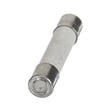
- Microwave fuse W11707984 (opens if there is an overcurrent condition)
- Microwave magnetron W10245183 (creates microwave energy for heating)
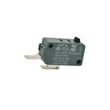
- Microwave door interlock switch W10269458 (door safety switch)
- Filter W10208631A (grease filter that helps airflow and reduces grease buildup)
Why it matters
A microwave/hood combo has to manage cooking heat plus cooktop exhaust. When airflow is restricted or the door safety circuit gets unreliable, the unit runs hotter and components like the fuse, switches, and high-voltage parts wear out faster.
Last updated: February 2026
How can I tell what size my microwave is?
For your Whirlpool WMH76718AS0 microwave/hood combo, “size” usually means two things: the outside dimensions (the space it takes up under the cabinet) and the inside capacity (how much cooking room you have). We use the measurements and installation clearances in the installation guide to confirm fit.
What to measure (and what it tells you)
- Width, height, depth (exterior): confirms it will fit your cabinet opening and align with your venting.
- Interior cavity size (capacity in cu. ft.): tells you how large a dish you can heat.
- Mounting and clearance requirements: ensures the door opens fully and the unit is supported correctly.
- Cooktop width compatibility: this model type is designed for use above cooking products up to 36 in. wide.
Quick measuring steps
- Measure the outside width across the front of the microwave.
- Measure height from the bottom to the top of the cabinet.
- Measure depth from the back wall to the front edge (include the door if you need total projection).
- Open the door and measure the interior cavity (width x height x depth) to estimate usable space.
- Compare your numbers to the minimum installation dimensions and clearances in the installation guide.
Common “size” terms (simple comparison)
| What people call it | What it means | Why you care |
|---|---|---|
| 30-inch microwave | Approx. exterior width class | Cabinet fit and alignment |
| Capacity (cu. ft.) | Interior cooking volume | Dish size and cooking flexibility |
| Over-the-range fit | Mounting plate, templates, clearances | Safe install and door clearance |
Why it matters
Getting the size right prevents cabinet interference, venting problems, and door clearance issues. For example, installations near a left sidewall typically need about 6 in. of clearance so the door can open fully, and the mounting location must support the unit’s installed weight.
Last updated: February 2026
What are common problems with Whirlpool microwaves?
Common problems we see with Whirlpool microwaves like model WMH76718AS0 include no heat, no power, not starting (often door-switch related), sparking/arcing, loud buzzing or humming, and vent fan or light issues. Many symptoms start with simple power, door, or airflow checks before any part replacement.
Most common symptoms and what they usually point to
- Runs but does not heat: high-voltage circuit issue (magnetron, diode, capacitor) or a control problem
- Dead or intermittent power: blown internal fuse, loose power connection, or a tripped house breaker
- Will not start when door closes: door interlock switch or latch alignment issue
- Sparking or burning smell: food splatter, damaged waveguide cover area, or metal contacting the cavity
- Vent fan weak or noisy: grease buildup, blocked venting, or damper not opening freely
Quick checks we recommend first (safe, no disassembly)
- Confirm the outlet has power; reset the household breaker if needed.
- Make sure the door closes firmly and evenly; do not slam it.
- Run the standard 1-cup water test for 1 minute on High (a basic operational check referenced in the installation guide).
- Check airflow: the damper should move freely and open fully in vented setups (also covered in the installation guide).
- Clean the grease filter and confirm the vent grille is not blocked.
Parts that commonly fix these problems on WMH76718AS0
If troubleshooting points to a failed component, these are common replacements for this model:
| Symptom | Common suspect part | Example part for this model |
|---|---|---|
| No heat (unit runs) | High-voltage diode | Diode W11256462 |
| No heat (unit runs) | Magnetron | Microwave magnetron W10245183 |
| Dead/no power | Internal fuse | Microwave fuse W11707984 |
| Won’t start, door-related | Door interlock switch | Microwave door interlock switch W10269458 |
Why it matters
Microwave/hood combos combine cooking power with ventilation. A “no heat” complaint can be a high-voltage failure, while a “won’t start” complaint is often a door interlock safety issue. Correct diagnosis prevents repeat failures and avoids replacing the wrong part.
Last updated: February 2026