Owner’s manual
 Error Codes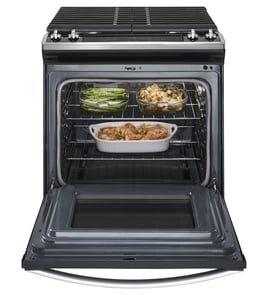




What is the life expectancy of an LG range?
Most LG gas ranges, including the LG LSGL5831F slide-in gas range, typically last 10 to 15 years with normal home use and basic maintenance. You can often extend service life by keeping burners clean, avoiding overheating, and addressing ignition or temperature problems early using the LSGL5831F owner's manual.
A range’s life is usually limited by wear items and heat-stressed components, not the cabinet itself.
- Cooking frequency: daily high-heat use shortens lifespan
- Cleaning habits: heavy buildup can stress igniters, valves, and airflow
- Power quality: surges can damage control boards and displays
- Ventilation: poor airflow increases heat exposure to electronics
- Early repairs: replacing a failing igniter or sensor prevents bigger failures
On gas ranges, these parts most often cause no-heat, weak heat, or temperature complaints.
| Symptom | Common suspect | Example part for LSGL5831F |
|---|---|---|
| Oven will not ignite or takes too long to light | Oven burner igniter | LG range oven burner igniter MEE61841401 |
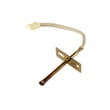
| Oven temperature is inaccurate | Oven temperature sensor | Range oven temperature sensor EBG61305805 |
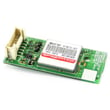
| Display issues or unresponsive controls | Display/control electronics | LG range display board EAV64012008 |
We recommend these practical habits for LG slide-in gas ranges:
- Wipe spills promptly; avoid letting sugary spills bake on
- Use the gentler cleaning cycle for light soils and reserve high-heat cleaning for heavy buildup (per the manual)
- Keep burner caps seated correctly after cleaning
- Do not slam the oven door; it can stress hinges and door glass
- If ignition becomes slow, troubleshoot and repair promptly instead of repeatedly retrying
A 10 to 15 year life expectancy helps you plan whether a repair is cost-effective. If the range is under 10 years old, replacing a key part (like an igniter or sensor) often restores reliable baking and broiling for years.
Last updated: February 2026
What model is my LG range?
Your LG range model number is printed on the appliance’s rating label; for this parts page, the model is LSGL5831F (an LSGL5831* series slide-in gas range). Use the model number to match the correct LG parts, owner’s manual, and wiring information.
Check these common locations first (they are the most typical for LG ranges):
- On the oven frame behind the storage or warming drawer (open the drawer and look along the frame)
- Around the oven door opening (check the front frame when the door is open)
- On a side frame area near the lower front of the range
- Sometimes on the back panel (if the range is pulled out safely)
For label location details and model-series coverage, use the LSGL5831F owner’s manual.
The rating label usually shows both a model number and a serial number.
- Model number: identifies the exact design so you get the right parts (example: LSGL5831F)
- Serial number: identifies your specific unit and production run
- Suffixes (such as “/00”): can indicate a revision; keep it with the model when ordering parts
| What you see on the label | What it means | When you need it |
|---|---|---|
| LSGL5831F (or LSGL5831F/00) | Model number | Parts lookup, manual match, troubleshooting |
| A long mix of letters and numbers | Serial number | Warranty and service identification |
LG ranges often share a family name (like LSGL5831*), but parts can still vary by revision. Using the exact model from the label helps us match items like an oven igniter, temperature sensor, or display board correctly.
If your oven is not heating and you are confirming the model before ordering, a common repair part is the LG range oven burner igniter MEE61841401.
Last updated: February 2026
How do I troubleshoot my LSGL5831F?
For your LG LSGL5831F slide-in gas range, we troubleshoot by matching the symptom to the system involved (power and display, oven ignition, temperature control, or door switches), then confirming operation using the steps in the LSGL5831F owner's manual. Many “no heat” complaints come down to power loss (the oven cannot ignite without electricity) or an ignition part issue.
- If you smell gas: turn off the range, ventilate the area, and do not attempt to ignite burners.
- Confirm the range has power; the oven uses an electrical ignition system and will not light during a power outage.
- Make sure the oven door is fully closed; Bake and Broil ignition checks require the door closed.
- Clear the control by pressing CLEAR/OFF, then retry the function.
- If the clock colon is flashing, press Clock and reset the time (or press any key to stop the flashing).
| Symptom | What to check first | Likely parts to inspect |
|---|---|---|
| Oven will not heat on Bake or Broil | Power to range; door closed; correct key sequence | Igniter, gas valve |
| Oven takes a long time to start heating | Normal ignition delay of 30 to 90 seconds | Igniter |
| Oven temperature seems off | Verify set temp; allow full preheat; check sensor | Temperature sensor |
| Display or controls act erratic | Reset power; check wiring connections | Display board |
Use these exact LSGL5831F steps:
- Bake test: Press Bake (350°F shows), confirm door closed, press START. Allow 30 to 90 seconds for ignition.
- Broil test: Press Broil (Hi shows), confirm door closed, press START. Allow 30 to 90 seconds for ignition.
If the oven does not ignite after the normal delay, these parts are common causes:
- Weak or failed igniter: range oven burner igniter MEE61841401 or range oven burner igniter MEE63084901
- Temperature regulation problems: range oven temperature sensor EBG61305805
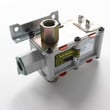
- No gas flow to the bake burner (after confirming power and ignition): range oven gas valve MJX62571702
On gas ranges like the LG LSGL5831F, the oven’s electrical ignition and temperature feedback work together. A small issue (no power, door not fully closed, weak igniter, or a drifting sensor) can prevent ignition, cause long preheat times, or create uneven baking.
Last updated: March 2026