 Installation guide
 Owner’s manual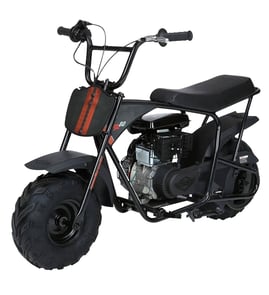

How much does a DB30 weigh?
The Baja DB30 doodle bug minibike has a deadweight of 35.38 kg (78 lb.). That is the minibike’s weight by itself (no rider, fuel load, or cargo), as listed in the specifications in the owner's manual.
- Deadweight (bike only): 35.38 kg (78 lb.)
- Payload (rider/cargo capacity): 68.04 kg (150 lb.)
- Total on the bike while riding: deadweight + rider and gear (stay within the 150 lb. payload limit)
| Spec | Value |
|---|---|
| Deadweight | 35.38 kg (78 lb.) |
| Payload capacity | 68.04 kg (150 lb.) |
| Overall length | 1295 mm (51 in.) |
| Overall width | 622 mm (24.5 in.) |
| Overall height | 863 mm (34 in.) |
Knowing the DB30’s weight helps with safe transport (ramps, carriers, tie-down points) and handling expectations. It also helps you avoid overloading the minibike; exceeding the 150 lb. payload can increase wear on the frame, wheels, and brakes.
For diagrams, maintenance intervals, and specs for the Baja DB30, use the owner's manual. For replacement parts shopping by model number, start with the parts list for DB30 or search by model on Sears PartsDirect.
Last updated: February 2026
How fast is a Doodlebug DB30?
A Baja DB30 Doodle Bug minibike typically tops out around 30 to 40 mph in stock condition; modified bikes can run faster. For safe operation details (age requirement, riding rules, and maintenance checks), use the DB30 owner's manual.
Top speed varies a lot because small changes in setup and rider load make a big difference.
- Rider weight (manual lists 150 lb capacity)
- Tire pressure and tire size
- Chain condition and chain tension
- Throttle cable adjustment and full-throttle travel
- Carburetor condition and idle speed setup
- Clutch engagement and wear (centrifugal clutch)
We recommend confirming the bike is operating correctly first; many “slow” complaints are basic adjustment or maintenance issues.
- Check engine oil level on the dipstick before each ride
- Verify the engine stop switch works correctly
- Inspect for loose bolts and nuts (no rattles, no visible damage)
- Check throttle free play; the manual calls for 2 to 6 mm of free movement
- Check chain tension before each use
- Test ride at low speed in an open area after storage or repairs
These are practical ranges for a DB30-STYLE minibike; use them as a baseline.
| Setup | Typical top speed | Notes |
|---|---|---|
| Stock, well-tuned | 30 to 40 mph | Most common real-world range |
| Poorly tuned or dragging drivetrain | 15 to 30 mph | Often throttle, chain, clutch, or carb issues |
| Modified (governor removed, gearing, engine mods) | 40+ mph | Higher risk; keep maintenance tight |
Higher speed increases stopping distance and the consequences of a small mechanical issue. The DB30 manual also specifies one rider only, recommends a certified rider course, and warns against riding at night; following those guidelines helps prevent accidents.
Use the DB30 parts diagrams for your exact configuration, then shop by model number on Sears PartsDirect if you need additional components.
Last updated: February 2026
Is 30 mph fast for a mini bike?
Yes. On a Baja DB30 doodle bug minibike, 30 mph is fast because the short wheelbase, small tires, and simple suspension and brakes make bumps and steering inputs feel much more aggressive than on a full-size motorcycle; ride only at a speed you can control and stop from.
Even if 30 mph sounds modest, it reduces your traction and stability margin on a minibike.
- Small tires react sharply to potholes, ruts, and loose gravel
- Braking distance increases quickly as speed rises
- Steering can feel twitchy if tire pressure is off or the front end is loose
- A loose chain or sticking clutch can cause unexpected takeoff or surging
The DB30 documentation stresses inspection and maintenance before each ride; use the DB30 owner’s manual for the full checklist and specifications.
- Verify fuel and oil level before starting
- Check tire condition; set tire pressure to the manual’s specification
- Confirm the throttle snaps back and does not bind when turning the handlebars
- Test brakes for strong stopping power and free cable movement
- Inspect chain tension; lubricate the chain lightly (avoid over-lubing)
| Speed range | Typical feel on a minibike | What to prioritize |
|---|---|---|
| 10 to 15 mph | Manageable for most riders | Brake and throttle control |
| 15 to 25 mph | “Quick” on hardpack or pavement | Tire pressure, chain condition |
| 25 to 30 mph | Fast; mistakes happen quickly | Full pre-ride inspection, smooth surfaces |
At higher speeds, small setup issues become big problems. Improper tires or incorrect tire pressure can reduce control, and a dirty clutch can stick and make the minibike want to move before you apply throttle.
For replacement parts, use the diagrams and parts list for DB30, or search by model number on Sears PartsDirect.
Last updated: February 2026
Why are Baja mini bikes discontinued?
We do not treat the Baja DB30 as “discontinued” based on the information in our DB30 documentation; the DB30 owner's manual focuses on safe operation, limits, and maintenance rather than production status. If you are trying to keep a DB30 running, the practical focus is correct setup, routine service, and matching parts by model.
The DB30 manual and setup instructions emphasize operating limits and maintenance tasks that keep the minibike reliable.
- Minimum rider age: 16
- Weight capacity: 150 lb
- Chain care: light oil or chain grease; adjust correctly
- Clutch care: clean and lubricate regularly (the manual notes about every 5 hours of use)
- First-start prep: drain packing oil and refill with the correct oil type and amount
When a mini bike is no longer offered, it is usually due to product lifecycle decisions rather than one single cause.
- Product line changes (newer models replace older designs)
- Supplier and parts sourcing changes
- Cost to manufacture versus demand
- Updates to safety or emissions requirements that drive redesigns
- Brand strategy changes (fewer models, different engine platforms)
| Topic | What to follow | Best source |
|---|---|---|
| Rider limits | 16+ years; 150 lb max | DB30 owner's manual |
| Before first start | Drain packing oil; refill with correct oil | DB30 installation guide |
| Drive system | Adjust and lubricate chain | DB30 owner's manual |
| Clutch | Clean and oil clutch bearing | DB30 owner's manual |
“Discontinued” mainly affects long-term parts availability and how you identify compatible replacements. Using the DB30 model number and the diagrams, then verifying specs in the manual, prevents ordering the wrong chain, clutch, or hardware.
Start with the DB30 parts diagrams for the most accurate match. If you need to broaden your search by model number, use Sears PartsDirect.
Last updated: February 2026