Installation guide
 Owner’s manual
 Error Codes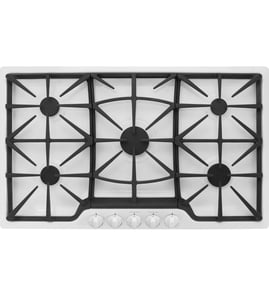



Can a GE glass cooktop be replaced?
Yes. On the GE ZGU384LSM2SS gas cooktop, the glass maintop can be replaced, but it is a detailed repair because the burners, igniters, and gas components mount through the top. We recommend following the ZGU384LSM2SS installation guide for safe shutoff and reassembly steps.
What the replacement involves
Replacing the glass top typically means transferring multiple components from the old top to the new one, then verifying ignition and flame.
- Shut off gas at the supply valve and unplug the cooktop (it uses a 120-volt grounded outlet).
- Remove grates, burner caps, and burner heads.
- Disconnect and label wiring to igniters and switches as needed.
- Remove mounting screws/clips and lift off the glass top.
- Move burners and hardware to the new top, then reassemble and test.
Parts that are commonly handled during this job
Depending on what is worn or damaged, these parts are often inspected or replaced while the top is off:
| Part | What it affects | Common symptom if failing |
|---|---|---|
| Cooktop burner igniter WB13T10077 | Spark at the burner | Clicking but no spark, weak spark |
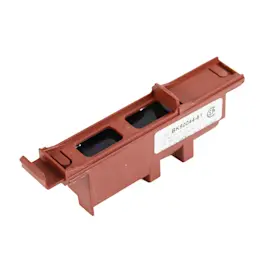
| Range spark module WB13T10078 | Sends spark to igniters | No burners spark, intermittent ignition |
| Range surface burner cap WB29T10131 | Flame pattern and stability | Uneven flame, lifting flame |
Safety and fit checks we use
A glass-top replacement is successful when the cooktop lights reliably and flames look correct.
- Confirm the cooktop is set up for the correct gas type (natural gas vs LP) before operating.
- Make sure burner heads and caps sit flat and are centered.
- Verify each knob lights its burner quickly and the flame is steady.
- If you smell gas at any point, stop and have the gas connection checked.
Why it matters
The glass top is the mounting surface for burners and ignition parts; if it is cracked, warped, or mis-seated, you can get poor ignition, unstable flames, and heat damage to surrounding components.
Last updated: February 2026
How do you measure for a gas cooktop replacement?
To measure for a replacement gas cooktop, we measure the countertop cutout (width and depth), the clearance to the back wall and front edge, and the cabinet depth below; then we compare those numbers to the cutout and clearance requirements in the ZGU384LSM2SS installation guide.
What to measure (in order)
- Cutout width: left to right opening in the countertop
- Cutout depth: front to back opening in the countertop
- Back clearance: cutout back edge to the backsplash or wall
- Front clearance: cutout front edge to the front of the countertop
- Cabinet opening below: depth and any obstructions (rails, drawers, braces)
- Gas and electrical access: location of shut-off valve and 120-volt grounded outlet
Quick checklist before you buy
- Confirm the new cooktop’s cutout size range matches your measurements.
- Confirm required clearances to combustibles and adjacent cabinets.
- Verify your fuel type (natural gas vs LP) and follow the conversion instructions if needed.
- Make sure there is a grounded 120-volt outlet available (no extension cord).
- Plan for a reachable manual gas shut-off valve.
Typical measurement targets (helpful ranges)
These are common for many 36-inch class gas cooktops; always use the installation specs for the exact model.
| Item | Typical range | Why you check it |
|---|---|---|
| Cutout width | ~33 to 34 in. | Ensures the cooktop drops into the opening |
| Cutout depth | ~19 to 21 in. | Prevents interference with the front rail or back wall |
| Back clearance | ~2 in. or more | Protects wall surfaces and allows service access |
Why it matters
Accurate cutout and clearance measurements prevent gaps, countertop rework, and unsafe installations. They also help ensure the gas connection and grounded power supply can be reached without strain on the line or cord.
For model-specific cutout dimensions, clearances, and gas orifice conversion notes, use the ZGU384LSM2SS installation guide and the ZGU384LSM2SS owner’s manual.
Last updated: February 2026
How to replace GE spark module?
On the GE ZGU384LSM2SS gas cooktop, replacing the spark module means shutting off power, labeling and moving each igniter wire one at a time to the same terminal on the new module, then mounting the new module securely so ignition works reliably on every burner. Use the ZGU384LSM2SS installation guide for access and safety details.
Before you start (safety and prep)
- Turn off power to the cooktop at the breaker (spark modules are powered).
- Shut off the gas supply valve as an added safety step.
- Take a clear photo of the wire routing and terminal positions.
- Label wires (masking tape works) so each lead returns to the same spot.
- Use needle-nose pliers on connectors (not the wire) to prevent damage.
Replacement steps (typical for this GE cooktop)
- Remove grates, burner caps, and burner heads to access the top as needed.
- Lift the cooktop top panel enough to reach the ignition components.
- Locate the spark module and note each wire position.
- Move wires one at a time from the old module to the matching terminal on the new module.
- Release the old module from its mounting tabs or bracket; install the new one.
- Reassemble burners and restore power; test ignition on every knob position.
What part is usually replaced?
For this model, the ignition control is commonly the range spark module WB13T10078. If you have weak or no spark on multiple burners, this is the first part we check.
| Symptom | Most likely cause | What to check next |
|---|---|---|
| No clicking or spark anywhere | Spark module not powered or failed | Breaker, wiring, module mounting |
| Constant clicking even when off | Moisture or stuck switch | Dry area, inspect switch harness |
| One burner won’t spark | Igniter or wiring issue | Igniter tip, wire connection, burner head seating |
Why it matters
Correct wire placement and solid mounting prevent misfires, continuous clicking, and uneven ignition. A loose connector or swapped lead can make burners spark inconsistently or not light at all.
Last updated: February 2026
Where can I find my cooktop model number?
On the GE gas cooktop model ZGU384LSM2SS, the model and serial numbers are on a label under the cooktop, and the serial plate is on the bottom of the burner box. Use these numbers any time you order parts or schedule service; they identify the exact configuration.
Where to look on ZGU384LSM2SS
Check these common locations (in this order):
- Under the cooktop: look for a label you can read from below once you access the underside
- Bottom of the burner box: the serial plate is mounted here
- Inside the cabinet below the cooktop: use a flashlight and look up along the underside edges
- Near the gas manifold area: sometimes the label is easiest to spot from the front underside
If you need diagrams or access steps for your installation style, use the ZGU384LSM2SS installation guide.
What the label tells you (and why it matters)
The identification label typically includes more than just the model number.
| Item on label | Why we use it |
|---|---|
| Model number (ZGU384LSM2SS) | Matches parts to your exact cooktop design |
| Serial number | Helps confirm production details for correct replacement parts |
| Fuel type and pressure info | Confirms whether the cooktop is set up for natural gas or LP |
| Burner ratings | Helps ensure you replace the correct burner-related components |
Tips for reading it safely
- Turn all burner knobs to OFF and let the cooktop cool completely
- Use a flashlight; take a photo and zoom in to read small print
- Avoid pulling on wires or moving gas tubing while searching
- If you remove anything for access, reinstall it exactly as found
Why it matters
We use the model and serial information to prevent wrong-part orders, especially for ignition and gas-delivery components like the range spark module WB13T10078 and burner hardware.
Last updated: February 2026
Where is the igniter on my GE profile stove top?
On the GE ZGU384LSM2SS gas cooktop, the igniter (electrode) sits at each burner, positioned above the burner base and next to where the burner head aligns. You typically see it after lifting off the grate, burner cap, and burner head.
Where to look (burner stack-up)
Once you remove the top pieces, the igniter is the small white ceramic post with a metal tip near the burner base.
- Remove the grate(s) to access the burner area.
- Lift off the burner cap.
- Lift off the burner head.
- Look at the burner base; the electrode is right beside the gas outlet area.
- Reinstall with the burner head hole aligned to the electrode.
Quick identification guide
| Burner part | What it does | What you’ll notice |
|---|---|---|
| Burner cap | Spreads flame pattern | Sits on top; must be seated flat |
| Burner head | Mixes gas and air, routes flame | Has ports/slits; aligns to electrode |
| Electrode (igniter) | Creates spark to light gas | White ceramic with metal tip |
| Burner base | Supports burner parts, routes gas | Electrode mounts here |
Why alignment and cleanliness matter
If the burner head is not seated correctly, the burner may click but not light, or the igniters may keep sparking after ignition. Keeping the igniter dry and the burner parts properly seated helps the spark jump consistently and light the gas quickly.
Tips when reassembling and troubleshooting
- Make sure the burner cap is properly seated (not rocking).
- Align the burner head correctly so the electrode sits in the intended opening.
- Keep the white ceramic igniter clean and dry; wipe only the metal tip gently.
- Do not snag or bump the igniter while cleaning.
- If ignition is weak or intermittent across burners, the spark system may need attention (for example, the range spark module WB13T10078).
Reference for your model
For diagrams and the correct burner assembly order, follow the ZGU384LSM2SS installation guide.
Last updated: February 2026
Why does my GE gas cooktop igniter keep clicking?
On the GE ZGU384LSM2SS gas cooktop, some clicking is normal during lighting because the electronic ignition system can spark at multiple burners even when you turn on just one. Clicking that continues after the burner lights is usually caused by a wet or dirty electrode, or a burner head/cap that is not seated correctly.
What’s normal on ZGU384LSM2SS
GE designed this cooktop so the igniters click and spark during ignition; you may hear ticking from more than one igniter while lighting a single burner. Review the normal ignition behavior in the ZGU384LSM2SS owner’s manual.
What to check first (fast fixes)
- Turn the knob to OFF and wait for clicking to stop.
- Remove the grate, burner cap, and burner head; reinstall them so they sit flat and centered.
- Make sure the burner head opening aligns with the electrode.
- Dry the white ceramic igniter area completely after cleaning or boil-overs.
- Wipe only the metal tip of the electrode with a soft cloth (no abrasives).
- Do not press in any control knob while cleaning; that can trigger sparking.
Burner parts seating checklist
If the cap or head is mis-seated, the flame may not stabilize correctly and the system can keep sparking.
| Item | Correct fit | What causes clicking to continue |
|---|---|---|
| Burner head | Fully seated on the base; aligned to the electrode | Rotated, lifted, or not seated |
| Burner cap | Flat, stable, centered | Rocking, off-center, or tilted |
| Electrode | Clean, dry metal tip | Moisture, residue, or damage |
When it points to a part problem
If everything is clean, dry, and seated correctly and the igniter still clicks after the flame is steady, the issue is typically in the ignition circuit.
Parts commonly involved:
- Range spark module WB13T10078 (controls spark output)
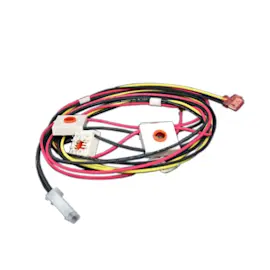
- Switch harness WB18X23941 (ignition switch circuit that can stick or short)
Why it matters
Continuous sparking can make burners harder to light and can shorten the life of the spark module, igniters, and switch components.
Last updated: February 2026
Why is my GE cooktop not working?
If your GE ZGU384LSM2SS gas cooktop is completely dead or the burners will not ignite, the most common causes are a power supply problem (tripped breaker, bad outlet, loose wiring) or an ignition failure (spark module, igniter, or switch circuit). Start with power and grounding checks, then move to ignition parts.
Quick checks we recommend first
- Confirm the cooktop is plugged into a 120-volt grounded outlet (no extension cord). See the ZGU384LSM2SS owner’s manual.
- Reset the circuit breaker or replace the fuse for the cooktop’s dedicated circuit.
- Verify the outlet has power (test with a lamp or meter).
- Make sure burner caps and heads are seated correctly and dry.
- Check that gas is on at the shutoff valve and other gas appliances work.
What the symptoms usually mean
| What you notice | Most likely cause | What to check next |
|---|---|---|
| No lights, no clicking, nothing works | No power to cooktop | Breaker, outlet, wiring connection, grounding |
| Clicking but no spark at any burner | Failed ignition control | Consider the range spark module WB13T10078 |
| One burner won’t spark, others do | Local igniter issue | Inspect/replace the cooktop burner igniter WB13T10077 |
| Sparks but burner won’t light or is weak | Gas flow or burner ports issue | Clean ports, confirm cap alignment, check for drafts |
Parts that commonly fix “not working” complaints
These are frequent ignition-related culprits on gas cooktops like the ZGU384LSM2SS:
- Spark module (controls the clicking and spark output)
- Burner igniter (creates spark at the burner)
- Switch harness (sends the “spark now” signal when you turn the knob)
- Control transformer (supplies proper voltage to controls on some designs)
Why it matters
This cooktop relies on household electricity for ignition and safe operation. A missing ground, incorrect wiring, or a failing spark module can stop all burners from lighting and can also create intermittent ignition that is frustrating and unsafe to troubleshoot without a plan.
For wiring, grounding, and circuit requirements, follow the ZGU384LSM2SS installation guide and use a qualified technician for any hard-wiring or internal electrical testing.
Last updated: February 2026