Error Codes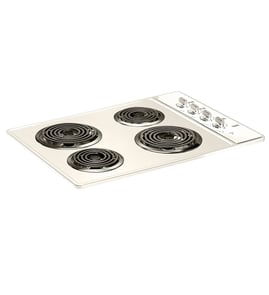



What is the standard size of an electric cooktop?
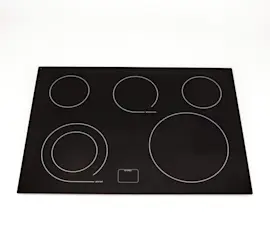
Most electric cooktops are designed to fit standard cabinet cutouts, with 30-inch and 36-inch widths being the most common. For Kenmore model 22311, the exact cutout and overall dimensions depend on the specific trim and chassis, so we recommend sizing to your countertop opening, not just the nominal width.
Most households will see these “standard” widths when shopping for a replacement cooktop:
- 30 inches wide (most common)
- 36 inches wide (common upgrade size)
- 15 to 24 inches wide (compact kitchens)
- 45 to 48 inches wide (large, specialty installations)
To avoid a cooktop that will not drop into the countertop, we recommend measuring these items:
- Countertop cutout width and depth (the opening in the counter)
- Cooktop overall width and depth (includes trim or lip)
- Clearance below the cooktop (for wiring box and burner housings)
- Electrical supply (typical electric cooktops use a 240V circuit)
- Location of the junction box (so the conduit reaches without strain)
| Nominal cooktop width | Typical use case | What usually changes most |
|---|---|---|
| 30 in | Standard replacement | Cutout size and trim lip |
| 36 in | More cooking space | Cutout width and cabinet clearance |
| 15 to 24 in | Compact spaces | Cutout depth and burner spacing |
Cooktop “standard size” is mainly about cabinet and countertop compatibility. A cooktop can be labeled 30 inches but still require a different cutout, so measuring first prevents countertop modification.
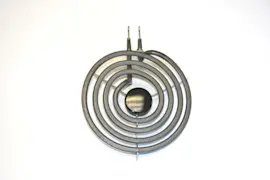
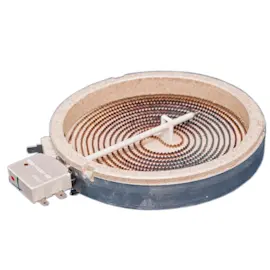
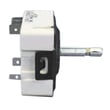
If you are checking fit because a burner is not heating, the issue is often a failed surface element, receptacle, or infinite switch. For this model, common replacement parts include the element receptacle 330031 and switch W11121640.
Last updated: January 2026
What is the size of a standard cooktop cutout?
Most “standard” cooktop cutouts are designed around 30-inch or 36-inch cooktops, but the exact countertop opening varies by brand and model. For Kenmore electric cooktop model 22311, plan on confirming the required cutout from the installation specs for your exact unit before you cut.
These are common industry ranges for many 30-inch and 36-inch electric cooktops (always verify your model’s template/specs):
- 30-inch cooktop cutout: roughly 28 1/2 to 29 1/2 inches wide
- 36-inch cooktop cutout: roughly 33 7/8 to 34 7/8 inches wide
- Front-to-back cutout depth: often 19 to 21 inches
- Countertop thickness supported: commonly 1 to 1 1/2 inches
- Minimum cabinet width: typically matches the cooktop class (30-inch or 36-inch)
Cutout dimensions are not universal because they depend on:
- Cooktop chassis size (not just the glass or trim size)
- Mounting bracket style and clamp locations
- Required clearances to side walls, backsplash, and drawers
- Whether the unit is a “drop-in” style with a rim or a flush-mount design
- Electrical junction box location and strain relief routing
| Cooktop class | Common cutout width (approx.) | Common cutout depth (approx.) |
|---|---|---|
| 30-inch | 28 1/2 to 29 1/2 in. | 19 to 21 in. |
| 36-inch | 33 7/8 to 34 7/8 in. | 19 to 21 in. |
A cutout that is too small prevents the cooktop from seating correctly; a cutout that is too large can leave gaps that clamps cannot secure. If you are troubleshooting burner fit or heating issues after a move, also inspect the burner connection points such as the element receptacle 330031 for heat damage or looseness.
Last updated: January 2026
Are Electric Cooktops 120 or 240?
Most electric cooktops, including Kenmore model 22311, are designed to run on a 240-volt (often 208/240V) circuit, not a standard 120V outlet. That higher voltage is needed to deliver enough wattage for the surface elements to heat properly.
- Voltage: 208/240 VAC (most common)
- Circuit: Dedicated branch circuit (cooktops are not plug-and-play like small appliances)
- Wiring: Hardwired or cord-connected depending on installation setup
- Breaker size: Commonly 30A to 50A depending on total cooktop wattage
- Neutral: Some cooktops use hot-hot-ground only; others may also use a neutral depending on features
| Item | 120V circuit | 240V circuit |
|---|---|---|
| Typical use | Small appliances, some gas ranges | Electric cooktops, electric ranges, wall ovens |
| Heating performance | Limited for large elements | Designed for high-watt heating |
| Common connection | Standard receptacle | Dedicated breaker, heavier gauge wiring |
- Check your electrical panel for a 2-pole breaker labeled “cooktop” or “range.”
- Look for a junction box under the cooktop (hardwired installs are common).
- If a surface element is not heating correctly, inspect the element connection points; a loose or burned connection at the element receptacle can mimic a power problem.
If you’re troubleshooting heat issues on this model, the element receptacle 330031 is a common wear item, and a failing receptacle can cause intermittent heating or arcing at the element terminals.
Using the correct voltage and circuit size prevents weak heating, nuisance breaker trips, and overheated wiring. It also helps you diagnose correctly: a “dead burner” is often a failed element, switch, or receptacle rather than the home’s voltage.
Last updated: January 2026
How to measure for an electric cooktop?
To measure for a replacement electric cooktop like Kenmore model 22311, we measure the countertop cutout (the hole) first, then confirm the cooktop’s overall size and clearance needs. Accurate cutout measurements prevent gaps, fit issues, and unsafe contact with cabinets or wiring.
- Cutout width: measure the opening left-to-right at the front and back; use the smaller number.
- Cutout depth: measure the opening front-to-back on the left and right; use the smaller number.
- Countertop thickness: measure the thickness at the cutout edge.
- Cabinet clearance: note distance to side walls, backsplash, and any overhead cabinets.
- Electrical access: confirm where the junction box or outlet is located under the cooktop.
- Measure in inches and write down each number.
- Measure the cutout in multiple spots; also check if the opening is out of square.
- Do not measure only the glass or top trim; the cutout is what controls fit.
- If you are replacing a unit, remove the old cooktop first when possible to see the true opening.
| Measurement | What it tells you | Common issue if wrong |
|---|---|---|
| Cutout width/depth | Whether it drops into the countertop | Cooktop will not fit or leaves gaps |
| Overall cooktop width/depth | Whether trim covers the opening | Exposed cutout edges |
| Clearance | Safe spacing from cabinets and heat | Scorching, code issues |
Electric cooktops need the right cutout size and safe clearances so the chassis sits correctly, the mounting brackets hold securely, and wiring is not strained or pinched.
A poor fit is not usually the cause; we typically check the surface element circuit first:
- Inspect the element prongs and receptacle for burning or looseness
- Check for heat damage on wiring connections
- Test the element and switch with a meter
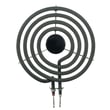
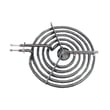
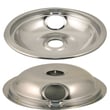
Helpful parts for this model include the element receptacle 330031 and surface elements such as element WP3191454.
Last updated: January 2026