 Owner’s manual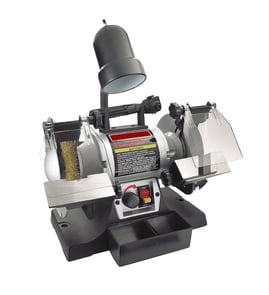

What is a Craftsman bench grinder?
A Craftsman bench grinder like model 152211240 is a stationary power tool designed for hand-held grinding, sharpening, and cleaning tasks using rotating grinding wheels. It’s commonly used to sharpen tool edges, remove rust, and shape metal while the tool is securely mounted to a work surface.
What you can do with a bench grinder
Common uses for a Craftsman bench grinder include:
- Sharpening chisels, mower blades, and other cutting tools
- Grinding and shaping metal edges
- Cleaning metal with wire wheels (when approved for the grinder)
- Light polishing or buffing (with the correct buffing wheel)
- Deburring after cutting or drilling
Key features and setup basics (model 152211240)
This model is built to be used with safety guards and adjustable supports.
| Feature | What it does | Why it helps |
|---|---|---|
| Tool rests | Support the workpiece close to the wheel | Improves control and accuracy |
| Eyeshields and spark arrestors | Help block debris and sparks | Reduces injury risk |
| Work light (bulb not included) | Improves visibility at the wheel | Helps you see the grind line |
For proper operation, the tool rests are adjusted close to the wheel (typically about 1/16 inch) and the grinder should be permanently mounted to a solid bench to prevent tipping.
Safety and operating tips we recommend
Bench grinders throw sparks and debris, so safe habits matter.
- Wear eye protection every time you grind
- Mount the grinder firmly to a solid work surface
- Stand to the side at startup and let the wheels run for at least a minute before grinding
- Use light pressure; forcing the work can stall the motor and overheat the wheel
- Use only accessories recommended for this bench grinder
Why it matters
A bench grinder is one of the most useful shop tools, but it’s also one where correct setup (tool rest gap, guards, and stable mounting) directly affects both results and safety. For model-specific assembly and use details, follow the 152211240 owner's manual.
Last updated: February 2026
What is the difference between 6inch and 8inch bench grinder?
A 6-inch bench grinder like the Craftsman 152211240 uses 6-inch wheels and is built for general sharpening, light grinding, and cleaning. An 8-inch bench grinder uses larger wheels that run cooler and create a shallower hollow grind, which is better for frequent tool sharpening and heavier-duty work. See the 152211240 owner's manual for the wheel size and electrical requirements for your exact grinder.
Key differences that affect results
- Wheel diameter: 6-inch vs 8-inch wheels (bigger wheel has a larger contact arc)
- Grind shape: 8-inch wheels leave a shallower hollow grind; 6-inch wheels leave a deeper hollow
- Heat control: 8-inch wheels typically run cooler at the edge for the same pressure
- Working clearance: 8-inch grinders usually give more room between the wheel and motor housing
- Footprint and weight: 6-inch grinders are usually more compact and easier to mount on smaller benches
What we know about Craftsman 152211240 (model-specific)
From the manual for this model, the Craftsman 152211240 is a 6-inch bench grinder with these listed specs:
| Spec | Craftsman 152211240 (from manual) | What that means for you |
|---|---|---|
| Wheel size | 6" x 3/4" x 1/2" | Standard 6-inch replacement wheel sizing |
| Speed | 3450 RPM (no-load) | Fast material removal; use light pressure for sharpening |
| Power | 120V, 60 Hz | Typical household circuit use |
Which size should you choose?
Use this quick guide:
- Choose 6-inch if you do occasional sharpening (lawn tools, chisels), light deburring, and general DIY metal cleanup.
- Choose 8-inch if you sharpen edge tools often (woodworking turning tools, plane irons, shop production work) and want cooler grinding with less hollowing.
Why it matters
Wheel diameter changes the grinding geometry and heat buildup at the cutting edge. For sharpening, less heat and a shallower hollow grind help you keep tool temper and reduce how much metal you remove over time.
Last updated: February 2026
What can a bench grinder be used for?
A bench grinder like the Craftsman 152211240 is designed for hand-held grinding, sharpening, and cleaning tasks. In a home shop, we use it to shape metal, sharpen tool edges, and clean parts, as long as the grinder is securely mounted and used with proper eye and wheel guarding (see the 152211240 owner's manual).
Common uses in a workshop
A bench grinder is a go-to power tool for quick material removal and surface cleanup, including:
- Sharpening hand tools (chisels, punches, lawn and garden blades)
- Touching up drill bits and other cutting edges
- Deburring sharp metal edges after cutting or drilling
- Cleaning rust, paint, and scale (often with a wire wheel accessory)
- Light shaping of small metal parts (bevels, chamfers, rounding corners)
Safe-use basics that matter for these jobs
Because grinding throws sparks and debris, safe setup is part of “what it’s used for.” For this Craftsman bench grinder, we follow these essentials:
- Wear safety goggles that meet ANSI Z87.1
- Keep wheel guards and eye shields installed and adjusted
- Let the wheels reach full speed for at least 1 minute before grinding
- Use a light touch; move the workpiece back and forth across the wheel face
- Replace cracked or damaged grinding wheels immediately
- Mount the grinder firmly to a solid work surface to prevent tipping
Quick “job to setup” guide
| Job | Typical wheel/accessory | Key tip |
|---|---|---|
| Sharpening | Grinding wheel | Use the tool rest for control and consistent angles |
| Deburring | Grinding wheel | Use light pressure to avoid gouging |
| Rust/paint removal | Wire wheel (if equipped) | Keep hands clear; debris can eject at speed |
| Light shaping | Grinding wheel | Avoid overheating; take short passes |
Why it matters
Using the right technique and guarding is what makes a bench grinder effective for sharpening and cleanup without damaging the workpiece or the wheel. A securely mounted grinder also prevents movement that can pull fingers into the wheel.
Last updated: February 2026