Installation guide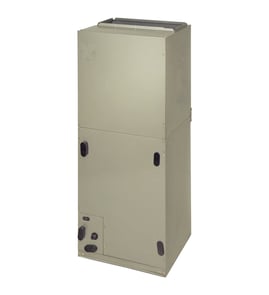


What is the required clearance around an air handler?
For the Carrier FX4CNF030000 air handler, the required clearance depends on access for service plus any local code requirements; the installation instructions call out a minimum of 24 inches of clearance at the access panels in certain applications and also note to allow space for wiring, piping, and servicing (see the FX4CNF030000 installation instructions).
Clearances we recommend you plan for
Use these as practical targets unless your local code or your installer specifies more.
- Service/access side: plan for 24 inches minimum where access panels must be opened
- Filter access: keep the filter access area unobstructed so the filter can be removed
- Wiring and refrigerant/condensate connections: leave working room for routing and future service
- Above finished ceilings or living areas: allow space for a secondary condensate pan if required
- Duct connections: leave room to attach, seal, and insulate ductwork
Model-specific notes from the installation instructions
The Carrier FX4CNF030000 installation instructions include these clearance-related points:
- The unit can stand, lie on the floor, or hang from a ceiling or wall.
- You should allow space for wiring, piping, and servicing.
- For manufactured/mobile home applications, the instructions specify a minimum of 24 inches (610 mm) clearance from access panels.
- Condensate drain routing should avoid blocking the filter access panel.
Quick clearance guide (typical planning)
| Area around the air handler | What to allow | Why |
|---|---|---|
| Access panel side | 24 in. minimum (where applicable) | Lets you open panels and service blower, coil, controls |
| Filter access | Enough to slide filter out | Prevents restricted airflow and makes maintenance possible |
| Condensate drain area | Room for trap and slope | Helps prevent leaks and overflow issues |
| Supply duct near electric heat (if equipped) | Clearance to combustibles may apply | Reduces heat risk at the duct connection |
Why it matters
Clearance is not just about fitting the cabinet into a closet. It affects serviceability (blower, coil, control board), airflow (filter removal), and water management (condensate trap and secondary drain/pan). Tight installs often lead to higher labor costs later and more nuisance water or airflow problems.
Last updated: January 2026
Is an air handler the same as a fan coil?
Yes, for Carrier model FX4CNF030000, “air handler” and “fan coil” are often used interchangeably to describe the indoor unit that moves air with a blower across an evaporator coil (and sometimes electric heat) to condition your home’s air. See the FX4CNF030000 installation instructions for how this fan coil style unit is mounted, ducted, and wired.
What the terms usually mean in HVAC
In most residential split systems, these terms overlap a lot:
- Air handler: the indoor cabinet that contains the blower and coil, and may accept an electric heater kit.
- Fan coil: emphasizes the “fan + coil” function; it is commonly used when the indoor unit is paired with an outdoor AC or heat pump.
- Air handler vs furnace: a furnace typically creates heat with gas or oil; an air handler typically relies on the outdoor heat pump or electric heat strips.
How to tell what you have on FX4CNF030000
We recommend using the unit rating plate and wiring label conventions described in the FX4CNF030000 installation instructions. Practical identifiers include:
- Refrigerant tubing connections at the indoor coil (paired with an outdoor condenser or heat pump)
- A condensate drain pan and primary/secondary drain connections
- A blower motor with selectable speed taps
- Optional electric heater package provisions
Quick comparison
| Term you hear | What it points to | Typical pairing |
|---|---|---|
| Air handler | Indoor blower cabinet (often with coil) | AC or heat pump |
| Fan coil | Indoor fan blowing across a coil | AC or heat pump |
| Furnace | Indoor blower plus fuel-fired heat exchanger | AC (cooling) and gas/oil heat |
Why it matters
Using the right term helps you match the correct parts and installation requirements, especially for wiring, airflow setup, and condensate drainage. If you are troubleshooting low-voltage issues, a common service item is the central air conditioner air handler transformer HT01CN241.
Last updated: January 2026
How many CFM do I need for a 3 ton air handler?
For a 3-ton system, we typically target about 1,200 CFM (about 400 CFM per ton). On the Carrier FX4CNF030000 air handler, the best way to confirm the right airflow is to match your blower speed to your duct system’s total external static pressure using the FX4CNF030000 installation guide.
Rule of thumb (and the practical limits)
A common design range is 350 to 450 CFM per ton; for many systems, 450 CFM per ton is an upper-end limit, not a routine target.
- 350 CFM/ton (about 1,050 CFM): sometimes used to improve dehumidification
- 400 CFM/ton (about 1,200 CFM): typical target for balanced comfort and efficiency
- Up to 450 CFM/ton (about 1,350 CFM): only when ducts, filtration, and noise goals support it
What the FX4CNF030000 airflow table shows (model-specific)
The FX4C size 030 airflow performance table in the installation guide lists these approximate airflows at 0.10 in. wc total external static pressure:
| Blower speed | Approx. CFM (size 030 at 0.10 in. wc) | What it means for a 3-ton target |
|---|---|---|
| High | 1130 | Below 1,200 CFM target; may be acceptable depending on design goals |
| Medium | 1033 | Lower airflow; can increase dehumidification but may reduce capacity |
| Low | 840 | Typically too low for 3 tons unless intentionally designed that way |
How we recommend setting airflow
Use the airflow tables and then verify performance (static pressure and temperature split) after setup.
- Identify your cooling size (3 tons) and a target CFM (often ~1,200)
- Measure or estimate total external static pressure (TESP)
- Select the blower speed tap that lands closest to the target at your TESP
- Confirm the selected speed is not below the minimum fan speed required for the unit configuration
Why it matters
Too little airflow can reduce cooling capacity and contribute to coil icing; too much airflow can increase noise and reduce dehumidification. Correct CFM helps your Carrier air handler and ductwork deliver comfort efficiently.
Last updated: January 2026