Installation guide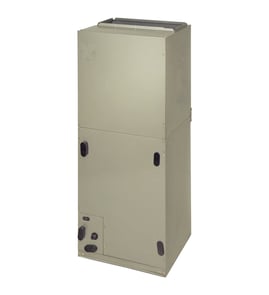



How do I find the model number on my FY4ANF048000?
Your Carrier air handler’s model number is printed on the unit’s rating plate (data tag). On the FY4ANF048000, the tag is typically on the inside of the access panel or on the cabinet near the blower compartment; match the full model number exactly when ordering parts.
Where to look on the air handler
- Turn off power at the breaker before opening any panel.
- Check the outside cabinet sides for a silver or white rating plate.
- Remove the front access panel and look along the inner frame rails.
- Look near the blower housing area and control compartment cover.
- If your unit is in a closet or attic, use a flashlight and take a photo for readability.
What the rating plate usually shows
| Label item | What it’s used for |
|---|---|
| Model number | Ensures correct part fit and wiring compatibility |
| Serial number | Identifies production run for service history |
| Electrical data (V/Hz/FLA) | Confirms correct power and breaker sizing |
| Heater kit info (if installed) | Matches electric heat components |
Tips to avoid ordering the wrong part
- Copy the model number character-for-character (letters and numbers).
- If there are suffixes or revision codes, include them.
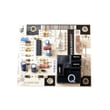
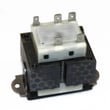
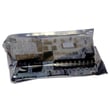
- Use the model number to match parts like the central air conditioner air handler fan control board HK61EA006 or the central air conditioner air handler transformer HT01CN241.
- For label and panel-location details, follow the safety and access steps in the installation guide.
Why it matters
Air handlers often have multiple control boards, transformers, and motor options that look similar but wire differently. Using the exact model number keeps parts selection accurate and prevents repeat repairs.
Last updated: March 2026
How do I troubleshoot my FY4ANF048000?
To troubleshoot a Carrier FY4ANF048000 air handler, start with the basics: verify thermostat demand, confirm power to the air handler, then check low-voltage control power and blower operation. Most no-run issues trace to power, a failed transformer, a control board problem, or a blower motor fault.
Safety first
- Turn off power at the breaker before removing panels.
- If you smell burning insulation or see melted wiring, stop and have a technician service the unit.
- Restore power only when covers are in place and wiring is secured.
Step-by-step checks (most common first)
- Thermostat: Set to COOL/HEAT and lower/raise setpoint to force a call.
- Breaker/disconnect: Confirm the air handler breaker is on.
- Door switch/panel fit: Make sure the access panel is fully seated.
- 24VAC control power: If the thermostat is blank or nothing responds, suspect the central air conditioner air handler transformer HT01CN241 or a low-voltage short.
- Blower operation: If you have 24VAC but no blower, suspect the central air conditioner air handler fan control board HK61EA006 or the blower motor.
Quick symptom guide
| Symptom | Most likely causes | What to check next |
|---|---|---|
| No blower, no sound | No line power, door switch open | Breaker, panel alignment, wiring connections |
| Thermostat blank | No 24VAC | Transformer output, low-voltage fuse (if equipped) |
| Blower runs, no cooling | Outdoor unit issue, airflow restriction | Filter, coil cleanliness, outdoor condenser operation |
| Blower noisy or intermittent | Motor/bearing issue, wheel imbalance | Motor mounts, wheel set screw, debris |
When wiring is suspected
Use a meter and follow a logical path from power in to the control circuit. Our video guide, how to use a multimeter to test electrical parts video, helps you test voltage and continuity safely and accurately. For model-specific wiring and blower speed tap notes (SPT terminals and related connections), reference the installation guide.
Why it matters
Air handlers combine high voltage and low-voltage controls; a structured troubleshooting sequence prevents unnecessary parts replacement and helps you pinpoint whether the issue is power, controls, or the blower assembly.
Last updated: March 2026
What is the average lifespan of FY4ANF048000?
The average lifespan of a Carrier FY4ANF048000 air handler is 15 years. Keeping airflow clean (filter changes), maintaining the blower assembly, and preventing water damage in the drain pan area are the biggest factors in reaching that service life.
What affects air handler life the most
- Filter maintenance and unrestricted return air
- Blower motor run time and overheating from dirty coils
- Moisture control (condensate drain clogs, rust, corrosion)
- Electrical health (stable voltage, tight wiring connections)
- Correct thermostat setup and staging (avoids short cycling)
Typical lifespan by component
| Component | Typical service life | Notes |
|---|---|---|
| Blower motor | 10 to 15 years | Bearings and heat are common wear points |
| Control board | 8 to 15 years | Sensitive to moisture and power issues |
| Transformer | 10 to 20 years | Often fails after shorts in low-voltage wiring |
Maintenance that extends lifespan
- Replace or clean the air filter on schedule (most homes: every 1 to 3 months).
- Keep supply and return vents open to reduce static pressure.
- Flush the condensate drain line periodically to prevent overflow.
- Inspect wiring for heat discoloration and loose terminals.
- If you suspect an electrical issue, use the steps in the FY4ANF048000 installation guide to confirm safe access and service clearances.
Why it matters
Air handlers are the indoor half of your HVAC system; when airflow or drainage is neglected, the blower, controls, and insulation degrade faster, raising energy use and increasing the chance of no-heat or no-cool calls.
Last updated: March 2026