


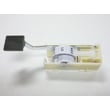
Why won't my Kenmore vacuum brush spin?
If the brush on your Kenmore Power-mate attachment model C50XDDY0B047 will not spin, the most common causes are a broken or slipped belt, a jammed brush roll, or a blockage in the nozzle. Fixing the belt and clearing the brush area usually restores brush rotation.
Quick checks (start here)
- Unplug the vacuum before working on the nozzle.
- Remove the nozzle bottom plate or brush cover.
- Cut away hair, string, or debris wrapped around the brush roll.
- Spin the brush roll by hand; it should turn with only light resistance.
- Check for a burnt-rubber smell; that often points to a stalled brush roll or slipping belt.
What to inspect and what it means
| What you see | Likely cause | What to do |
|---|---|---|
| Brush roll is hard to turn by hand | Hair wrap, seized end caps, debris in bearings | Clean the ends, remove debris, recheck free spin |
| Brush roll turns, but not when vacuum is on | Belt slipped, stretched, or broken | Reinstall belt on the motor shaft and brush roll, replace if worn |
| Brush roll stops on carpet but works on hard floor | Belt weak, brush roll drag, height setting too low | Clean brush roll, check height, replace belt if it slips |
| No suction at the nozzle and brush does not spin | Clog in nozzle, wand, or hose | Clear blockage and recheck brush operation |
Belt and brush roll tips that prevent repeat failures
- Make sure the belt sits centered on the brush roll and fully on the motor shaft.
- Clean the brush roll ends; packed lint at the end caps can stall the brush.
- If the belt looks shiny, cracked, loose, or leaves black dust, replace it.
- After reassembly, test on a small area first to confirm the brush stays spinning.
Why it matters
A non-spinning brush reduces carpet agitation, so pickup drops fast. If the brush is stalled while the motor is trying to drive it, the belt can overheat and fail again, and debris can build up in the nozzle.
Getting the right replacement parts
We recommend matching parts to the exact Kenmore model number C50XDDY0B047 when you shop. Start with the parts list for your model, or search by model number on Sears PartsDirect.
Last updated: February 2026
What model is my Kenmore vacuum?
Your Kenmore vacuum’s model number is printed on the model and serial number plate (rating label) on the vacuum body. Once you find it, match that number exactly when searching parts for your Kenmore vacuum or Powermate attachment, including model C50XDDY0B047.
Where to look on the vacuum
Check these common label locations (the exact spot varies by Kenmore design):
- Bottom of the vacuum near the brush roll or base plate
- Back of the main body near the cord wrap
- Under the dust cup or bag door
- On the canister body (for canister vacuums), near the hose connection
- On the underside of a handheld unit or charging base
What the model number looks like (and what to write down)
Record the model number exactly as shown, including letters, numbers, and any dashes.
| What to capture | Example | Why it matters |
|---|---|---|
| Model number | C50XDDY0B047 | Ensures correct parts diagrams and fit |
| Serial number | (varies) | Helps identify production run details |
| Attachment model (if separate) | (varies) | Some tools and attachments use their own model ID |
Tips to avoid common mix-ups
These quick checks prevent ordering the wrong vacuum cleaner parts:
- Use the model number from the vacuum itself, not the box (boxes can get swapped)
- Don’t use a “series name” (like Progressive or Intuition) as the model number
- If you have a Powermate attachment, check for a separate label on the attachment housing
- Write the model number in uppercase and include every character
Why it matters
Kenmore vacuums often have multiple versions that look similar but use different belts, brush rolls, hoses, or filters. Using the exact model number is the fastest way to get compatible parts and avoid returns.
To search by model number and shop parts, use the parts list for your model or search on Sears PartsDirect.
Last updated: February 2026
How to change the belt on a Kenmore vacuum?
A vacuum belt is replaced on the vacuum’s power nozzle or upright base, not on Kenmore model C50XDDY0B047 (this model number is for tools and attachments). Use your vacuum’s full model number from the main unit or power nozzle to get the correct belt and steps; you can search by model on Sears PartsDirect.
What to check first (so you get the right belt)
- Confirm whether you have an upright vacuum or a canister with a powered floor nozzle.
- Find the model number on the vacuum body and, if separate, on the power nozzle head.
- Look for signs of a belt issue: brush not spinning, burning rubber smell, weak carpet pickup.
- Inspect the brush roll area for hair, string, or debris that can overload a new belt.
- Match the belt style to your exact model; belts are not universal.
Typical belt-change steps (upright or powered nozzle)
- Unplug the vacuum.
- Turn the nozzle/base over and remove the bottom plate (screws or latches).
- Lift out the brush roll; note how the end caps and height settings sit.
- Remove the old belt from the motor shaft and brush roll.
- Install the new belt on the motor shaft, then stretch it onto the brush roll.
- Re-seat the brush roll fully in its holders; spin it by hand to confirm smooth movement.
- Reinstall the bottom plate and test on carpet.
Quick diagnosis after you install the belt
| Symptom | Most common cause | What we do |
|---|---|---|
| Belt breaks quickly | Brush roll jammed or end caps mis-seated | Clear debris; re-seat brush roll and end caps |
| Burning smell | Belt misrouted or rubbing | Refit belt centered on shaft and brush roll |
| Brush still not spinning | Belt not on motor shaft | Reopen base and reinstall belt correctly |
Why it matters
A stretched or slipping belt slows the brush roll, which reduces agitation and pickup on carpet. Replacing the belt and cleaning the brush roll restores normal cleaning performance and helps protect the motor.
Last updated: February 2026
