


How to check furnace model?
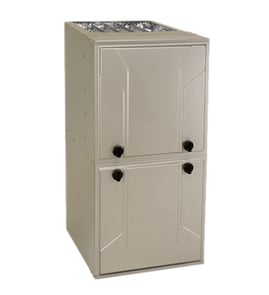
To check the furnace model on your York furnace, we look for the rating plate or data label on the cabinet (often inside the front access panel). For your unit, record the full model number exactly as printed, including all letters and numbers (for example, P3HUB16N08001).
Most furnaces place the model and serial information in one of these spots:
- Inside the blower compartment behind the lower front panel
- Inside the burner compartment behind the upper front panel
- On the inside edge of the cabinet near the door opening
- On an exterior side panel of the furnace cabinet
- Occasionally near the control board cover area
Because you may be removing an access panel, we use basic electrical safety.
- Turn off power to the furnace at the service switch or breaker
- Remove the front access panel(s) carefully
- Locate the rating plate or white/silver data label
- Write down the model number and serial number exactly
- Reinstall the panel(s) before restoring power
Use the full, exact text from the label so you get the right furnace parts and diagrams.
| Label item | What it’s used for | Example format |
|---|---|---|
| Model number | Matching parts to your exact furnace | P3HUB16N08001 |
| Serial number | Identifying production run details | Letters and numbers |
| Product/series | Helps narrow down diagrams | Varies |
York furnaces can look similar across multiple series, but parts like the igniter, flame sensor, pressure switch, control board, and blower components can vary by model and revision. Using the exact model number prevents ordering the wrong replacement.
Last updated: February 2026
What is the lifespan of a York furnace?
A York furnace like model P3HUB16N08001 typically lasts 15 to 30 years. Lifespan depends most on annual maintenance, correct sizing, clean airflow (filter and ducts), and avoiding repeated overheating or short-cycling.
| Furnace type | Typical lifespan | Notes |
|---|---|---|
| Standard gas furnace | 15 to 20 years | Most common range with normal use and maintenance |
| High-efficiency/condensing gas furnace | 15 to 25 years | More components; maintenance matters more |
| Well-maintained furnace in mild climate | 20 to 30 years | Best-case scenario with consistent upkeep |
- Skipping yearly inspection and cleaning
- Running with a clogged air filter or blocked return vents
- Oversized furnace that short-cycles (more starts and stops)
- Overheating from restricted airflow or dirty blower wheel
- Corrosion or water issues around the venting/condensate system (on high-efficiency units)
- Heat cycles are getting shorter or the furnace struggles to keep temperature
- Frequent service calls for ignition, flame sensing, or limit switch trips
- Unusual noises (rattling, booming, or persistent squealing)
- Rising heating bills without a change in thermostat settings
- Visible rust, soot, or recurring burner issues
A furnace that is nearing the end of its service life can become less efficient and less reliable, especially during peak heating season. Catching airflow problems early (filter, blower, ducts) often prevents overheating and protects major components like the heat exchanger and control board.
For safe basics on testing electrical components during troubleshooting, use our guide: how to use a multimeter to test electrical parts video.
Last updated: February 2026
What is the most common part to fail on a furnace?
On most gas furnaces (including York model P3HUB16N08001), the hot surface ignitor is the most common part to fail because it heats to very high temperatures every time the furnace starts. When it cracks or burns out, the burners will not light and you get no heat.
- Furnace inducer motor runs, but burners never light
- Repeated clicking or repeated ignition attempts, then shutdown
- Short cycling (starts, tries to light, stops)
- Blower may run with no heat (depending on control board logic)
- A visible crack or white spot on the ignitor (if you can safely inspect it)
Even though ignitors are the top failure item on many gas furnaces, these parts also fail often and can cause similar symptoms.
| Part that commonly fails | What it does | Typical symptom when it fails |
|---|---|---|
| Flame sensor | Proves flame is present | Burners light briefly, then shut off in 2 to 5 seconds |
| Pressure switch | Confirms inducer draft | Inducer runs, but ignition never starts |
| Control board | Manages ignition sequence and safety | Random lockouts, no response, or inconsistent operation |
| Blower capacitor (PSC motors) | Helps blower motor start/run | Weak airflow, blower hums, overheating shutdown |
We recommend these steps first because they often pinpoint whether the issue is ignition, flame proving, airflow, or power.
- Replace the furnace filter and make sure supply and return vents are open
- Confirm the thermostat is calling for heat (set to HEAT, raise setpoint)
- Check the furnace power switch and circuit breaker
- Watch the ignition sequence through the burner view port (if equipped)
- If you use a meter, follow a proven test method such as how to use a multimeter to test electrical parts video
The ignitor is a wear item; it cycles hot and cold every heat call, so it fails more frequently than many other furnace components. Correctly identifying the failed part prevents repeat shutdowns and avoids replacing good parts.
Last updated: February 2026
What is the most expensive part to replace in a furnace?
In most furnaces, including the York P3HUB16N08001, the heat exchanger is typically the most expensive component to replace because it is central to safe heating and is labor-intensive to access. Other high-cost repairs often involve the blower motor or the control board.
Costs vary by furnace size, efficiency, and labor time, but these are the parts that most often drive the highest total repair bill:
- Heat exchanger: major disassembly; critical safety component
- Blower motor: expensive motor assembly; may include module or capacitor
- Furnace control board: electronics can be costly; diagnosis time matters
- Inducer motor assembly: common on modern furnaces; replacement is usually straightforward but parts can be pricey
- Gas valve: less common, but can be expensive depending on the exact valve type
| Part | Typical total repair cost range | What drives the cost |
|---|---|---|
| Heat exchanger | $500 to $1,500+ | High labor; major teardown |
| Blower motor | $400 to $1,200 | Motor type; access time |
| Control board | $300 to $650 | Correct diagnosis; board availability |
| Inducer motor | $250 to $900 | Assembly style; venting setup |
| Gas valve | $200 to $1,000 | Valve type; setup and testing |
Because the “most expensive part” question is usually really about value, we use these checks before ordering parts:
- Confirm the exact model number P3HUB16N08001 from the rating plate so the part match is correct.
- Get a clear diagnosis (symptoms plus electrical tests) before replacing electronics.
- Compare the repair total to the furnace’s age and overall condition.
- If the issue is intermittent, inspect wiring connections and harnesses first.
- If you are testing live voltage, use proper safety practices and tools.
A helpful reference for safe electrical testing is our how to use a multimeter to test electrical parts video.
High-cost furnace parts are tied to either (1) core heating safety (heat exchanger) or (2) major airflow and control functions (blower motor, control board). Correct diagnosis prevents replacing expensive parts that are not actually failing.
Last updated: February 2026
How to reset furnace flame sensor carrier?
A flame sensor does not have a reset button on York model P3HUB16N08001. If the furnace shuts down for “no flame sensed,” the fix is usually cleaning the flame sensor rod and then cycling power to clear the lockout; manual-reset buttons are typically on rollout or high-limit switches, not on the flame sensor.
- Set the thermostat to OFF.
- Turn OFF power to the furnace at the switch or breaker.
- Wait 2 to 5 minutes, then restore power.
- Set the thermostat back to HEAT and call for heat.
- If it locks out again, stop repeated resets and troubleshoot the cause.
A dirty flame sensor is the most common reason a furnace will light briefly and then shut off.
- Turn off power to the furnace.
- Remove the burner compartment door.
- Locate the flame sensor (a small metal rod with a porcelain base near the burners).
- Remove the mounting screw and gently pull the sensor out.
- Lightly polish the rod with fine abrasive (typical: very fine sandpaper or an abrasive pad), then wipe clean.
- Reinstall the sensor, restore power, and test heat.
On many furnaces, the manual reset is on a safety limit, not the flame sensor.
| Item you are looking at | Typical “reset” action | What it usually means |
|---|---|---|
| Flame sensor rod | Clean sensor; cycle power | Dirty sensor or weak flame signal |
| Rollout switch (near burners) | Press small center button (if equipped) | Flame rollout or venting/combustion issue |
| High-limit switch | Usually auto-reset | Overheating, airflow restriction |
A flame-sensing failure can be a simple maintenance issue (dirty sensor), but repeated lockouts can also point to airflow problems, burner issues, or venting concerns. Fixing the root cause prevents nuisance shutdowns and protects furnace components.
For DIY electrical checks (like verifying power is off and testing circuits), we use the same basics shown in how to use a multimeter to test electrical parts video.
Last updated: February 2026