Owner’s manual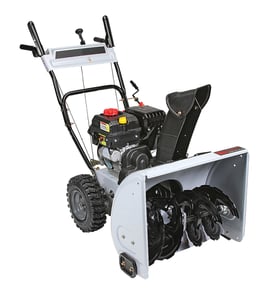



How to find snowblower model number?
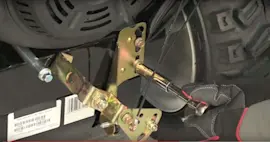
On an MTD gas snowthrower like model 31AH5DTH793, the model number is printed on the equipment ID label. Most snowblowers place that label on the rear of the unit, often between the wheels, so you can read it without removing parts.
Where to look on the snowblower
Check these common label locations first:
- Rear of the snowblower frame, between the wheels
- Back of the auger housing (front bucket area)
- Near the engine mounting area on the frame
- On the handle support or behind the dash/control panel
- Under a removable service cover (if equipped)
What you should write down
For accurate parts lookup and manual matching, record:
- Model number (example: 31AH5DTH793)
- Serial number (if shown)
- Any product ID or manufacturing code on the same label
Quick ID tips (so you do not misread it)
- Clean the label with a dry rag; packed snow, salt, and grime can hide characters
- Look for zeros vs the letter O, and ones vs the letter I
- Copy the full string exactly as printed, including dashes
Why it matters
MTD uses model numbers to match the correct parts diagrams and OEM replacement parts (like shear pins, drive cables, and chute components). Using the exact model number prevents ordering the wrong auger, friction wheel, or cable length.
Model number vs serial number
| Item | What it identifies | Used for |
|---|---|---|
| Model number | The exact snowblower design | Correct parts and manuals |
| Serial number | Your specific unit | Manufacturing run tracking |
For model-specific label examples and documentation, use the 31AH5DTH793 owner's manual.
Last updated: January 2026
How many years should a snowblower last?
A typical gas snowblower lasts 10 to 20 years with regular maintenance. For the MTD 31AH5DTH793, the operator guidance also references an average useful life of 7 years or 60 hours; after that point, annual inspection and upkeep become especially important for safe, reliable operation (see the 31AH5DTH793 operator’s manual).
What “useful life” vs. “how long it lasts” means
“Useful life” is a safety and inspection benchmark, not an automatic failure date. Many machines run well beyond it when wear items are maintained and the unit is stored correctly.
| Term | What it’s used for | What to do |
|---|---|---|
| Average useful life (7 years or 60 hours) | Safety and wear guidance | Inspect yearly; replace worn parts |
| Typical lifespan (10 to 20 years) | Real-world ownership expectation | Maintain, store properly, repair as needed |
What makes a snowblower last longer
We see the longest life when owners stay ahead of fuel, lubrication, and wear parts.
- Change engine oil on schedule and before off-season storage
- Use fresh fuel and avoid storing fuel in the tank long-term
- Clear snow from the auger and housing before parking to prevent freeze-up
- Lubricate the drive system as specified (for example, the hex shaft is typically lubricated at least once per season or every 25 hours)
- Replace wear items promptly (shear pins, cables, friction wheel components)
Quick signs it’s time for service or parts
If any of these show up, addressing them early usually adds years of life.
- Auger does not fully stop when you release the control (cable needs adjustment)
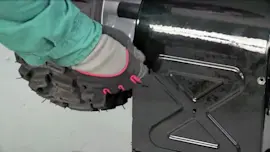
- Drive slips, surges, or will not move consistently (often friction wheel related)
- Frequent shear pin breaks or auger binding (impact damage or obstruction)
- Fuel leaks, cracked fuel line, or hard starting after storage
Parts that commonly affect longevity on this model
- MTD snowblower friction wheel assembly 935-04054A
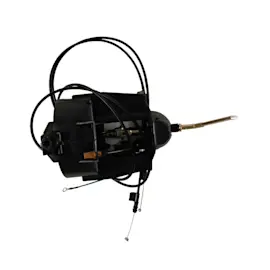
- MTD snowblower auger clutch cable 946-04230B
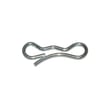
- Craftsman snowblower shear pin 738-04124A
Why it matters
A snowblower that is maintained and inspected after heavy seasons is safer to operate and cheaper to own long-term; small fixes (like a cable adjustment or friction wheel replacement) prevent bigger drivetrain and gearbox wear.
Last updated: January 2026
Is it worth fixing an old snowblower?
Yes, it’s usually worth fixing an older MTD gas snowthrower like model 31AH5DTH793 when the problem is a normal wear item (shear pins, cables, friction wheel, shave plate) and the machine is otherwise solid; if the engine or drivetrain needs major work and it has frequent breakdowns, replacement is typically the better value.
Quick decision checklist
- Fix it if it’s a single, clear failure (for example, augers stopped after a jam and a shear pin broke).
- Fix it if the repair is a common wear part and you can do the labor yourself.
- Fix it if the machine starts reliably and drives normally after basic adjustments.
- Replace it if it has repeated issues every storm (hard starting, poor drive, constant belt or gearbox problems).
- Replace it if the repair requires major engine work or multiple high-cost assemblies.
Common “worth fixing” repairs on 31AH5DTH793
Many problems on this model are designed to be inexpensive to correct:
| Symptom | Likely cause | Typical fix type |
|---|---|---|
| Augers won’t turn after hitting ice/object | Shear pin(s) sheared | Replace correct OEM shear pins |
| Unit won’t drive with drive control engaged | Worn/cracked friction wheel rubber | Inspect and replace friction wheel assembly |
| Scraping poorly, leaving snow behind | Worn shave plate or skid shoes | Replace or rotate wear edges |
Parts that often make sense to replace
- Use the correct OEM shear pin for your auger design; the manual calls out 738-04124A for round-head shear pins on certain 2-stage setups.
- If you need the OEM shear pin listed for this model’s parts, use craftsman snowblower shear pin 738-04124A.
Why it matters (cost and safety)
A snowblower is built with “sacrificial” parts (like shear pins) to protect expensive components such as the auger gearbox. Replacing the correct shear pin after a jam can prevent much larger damage and keep the machine safe to operate.
Tips before you spend money on parts
- Turn the engine OFF and remove the key before servicing moving parts.
- If the auger won’t turn, check shear pins first before assuming a gearbox failure.
- If it won’t drive, inspect the friction wheel rubber for wear or cracking.
- For storage longer than 30 days, run the engine until it stops to remove fuel from the tank and help prevent fuel system issues.
For model-specific procedures (shear pin replacement, shave plate/skid shoe service, friction wheel inspection, and storage steps), use the 31AH5DTH793 owner’s manual.
Last updated: January 2026