Error Codes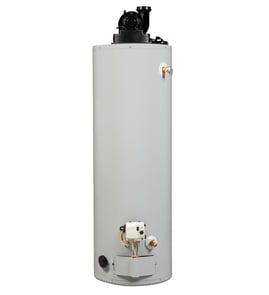




What are the most common issues with GPSH50100?
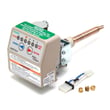
For the Ao Smith GPSH50100 gas water heater, the most common problems are ignition failures (no hot water), burner issues (weak or delayed heating), and control or wiring faults that cause intermittent operation. Many fixes start with checking the igniter, burner assembly, and safety switches.
Common symptoms and what they usually point to
- No hot water or pilot will not light: often ignition or gas control related; check the igniter and gas valve operation.
- Burner lights but shuts off quickly: commonly a safety switch opening, airflow/combustion issue, or burner/NOx screen restriction.
- Slow recovery (runs out of hot water fast): burner not firing at full rate, restricted combustion air, or heavy sediment in the tank.
- Intermittent operation: loose connections, damaged wiring, or a failing switch.
- Rumbling or popping sounds: sediment buildup on the tank bottom.
Parts that commonly solve these issues
If troubleshooting points to a failed component, these model-matched parts are commonly involved:
- Igniter 100109355 for no-ignite or repeated ignition attempts
- Burner 100111651 for poor flame, delayed ignition, or uneven heating
- Nox screen 100111088 for restricted combustion and unstable burner operation
- Switch 100110013 for shutdowns tied to safety/limit switching
- Wiring harness 100110825 for intermittent power or loose/burned connectors
Quick checks we recommend before replacing parts
- Confirm the gas shutoff valve is fully open and other gas appliances work normally.
- Verify venting and combustion air are not blocked (lint, dust, stored items).
- Inspect wiring for heat damage, corrosion, or loose spade terminals.
- Look for error/status indications on the control (if equipped) and note the pattern.
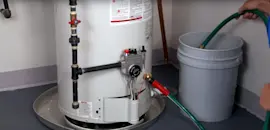
- Flush a few gallons from the drain valve to check for sediment.
Symptom-to-part guide
| Symptom | Most likely area | Common part to inspect |
|---|---|---|
| No ignition | Ignition circuit | Igniter 100109355 |
| Burner drops out | Safety/combustion | Switch 100110013, nox screen 100111088 |
| Weak heating | Combustion/burner | Burner 100111651 |
| Random shutdowns | Electrical connections | Wiring harness 100110825 |
Why it matters
Gas water heater ignition and combustion problems can stop hot water and can also indicate unsafe operating conditions. Addressing burner, switch, and wiring issues quickly helps restore reliable heating and supports safe operation.
Last updated: March 2026
What is the average cost of a 50 gallon gas water heater?
A 50-gallon gas water heater typically costs about $700 to $2,000 for the unit, with installed totals commonly around $1,500 to $3,500 depending on venting, gas-line work, and local labor rates. For an Ao Smith GPSH50100, the final price is driven more by installation requirements than the tank size alone.
Typical price ranges (unit vs. installed)
- Unit only (50-gallon gas): $700 to $2,000
- Installed total (common range): $1,500 to $3,500
- Higher-end installs can run more when venting changes, code upgrades, or tight access add labor
| Cost category | What it usually includes | Typical range |
|---|---|---|
| Unit only | Water heater tank, basic controls | $700 to $2,000 |
| Basic install | Swap-out, reconnect water and gas, start-up | $1,500 to $3,500 |
| Add-on work | Venting changes, gas piping, permits, disposal | Varies |
What changes the price the most
- Venting type and condition (existing vent compatibility, chimney vs. power vent)
- Gas line and shutoff updates (pipe sizing, sediment trap, valve condition)
- Local permit and inspection requirements
- Labor access (attic, crawlspace, tight closet, stairs)
- Water quality and maintenance history (sediment buildup can shorten life and raise service needs)
Why it matters
A “50-gallon gas water heater cost” quote can look low until installation details are included. Matching the replacement to your Ao Smith GPSH50100 setup (especially venting and gas connections) helps avoid rework, delays, and unexpected add-on charges.
Parts cost note (when you are repairing instead of replacing)
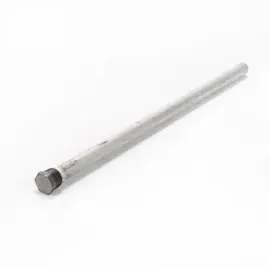
If your tank is sound, repairing a component can be far less than replacement. Common repair-related parts for this model include the anode 100109624 (helps protect the tank from corrosion) and the igniter 100109355 (supports burner ignition).
Last updated: January 2026
What is the life expectancy of a 50 gallon gas water heater?
Most 50-gallon gas water heaters, including the Ao Smith GPSH50100, typically last 8 to 12 years with normal water quality and routine maintenance. Hard water, high temperature settings, and skipped maintenance can shorten that lifespan.
Typical lifespan and what changes it
Here are the biggest factors that affect how long a 50-gallon gas water heater lasts:
- Water quality: hard water and sediment buildup increase tank wear
- Maintenance: flushing and anode-rod checks help prevent early tank failure
- Temperature setting: higher temps increase scale and stress on components
- Usage level: heavy daily demand cycles the burner more often
- Installation conditions: poor venting or combustion air issues can strain the system
Maintenance that helps you reach the full lifespan
These steps are the most practical ways to extend service life:
- Flush the tank periodically to reduce sediment
- Inspect and replace the anode rod when it is heavily depleted (a common life-extender)
- Keep the burner area clean and unobstructed
- Watch for small leaks at fittings and address them early
- Maintain safe, consistent temperature settings
If you are planning proactive maintenance for this model, the anode 100109624 is one of the key wear items that protects the tank.
Quick guide: repair vs. replace
| Situation | What it usually means | Typical next step |
|---|---|---|
| 0 to 5 years old | Often economical to repair | Diagnose ignition, gas valve, wiring |
| 6 to 10 years old | Mixed; depends on tank condition | Repair if no tank corrosion/leaks |
| 10 to 12+ years old | Near end of typical life | Replace if performance is declining |
| Any age with tank leak | Tank integrity is compromised | Replace the water heater |
Why it matters
A water heater’s tank is the expensive, non-serviceable core. Simple upkeep (especially anode-rod protection and sediment control) helps you avoid premature tank corrosion and keeps hot water recovery consistent.
Last updated: January 2026