Owner’s manual
 Error Codes



What's the lifespan of a bottom freezer fridge?
A bottom-freezer refrigerator typically lasts 15 to 20 years with normal household use and basic maintenance. For your Samsung RF30BB69006M, keeping temperatures stable, cleaning airflow areas, and minimizing door openings during outages helps you reach the full expected service life (see the owner's manual).
Typical lifespan and what affects it
Most bottom-mount (bottom-freezer) refrigerators land in the 15 to 20 year range. Lifespan is mainly influenced by usage and operating conditions.
- Room temperature and ventilation around the cabinet
- How often doors are opened and how long they stay open
- Power outage frequency and duration
- Ice maker and water system usage (if equipped)
- Routine cleaning (condenser area, door gaskets, drain path)
Quick expectations by component
Some parts wear sooner than the sealed system. Planning for occasional repairs is normal over a 15 to 20 year life.
| Component area | Common wear timing | What you may notice |
|---|---|---|
| Water filtration | Every 6 months (typical) | Slow water flow, taste/odor changes |
| Fans and sensors | Mid-life repairs are common | Warm temps, noise, inconsistent cooling |
| Drain system | As needed | Water puddles, ice buildup near drain |
| Compressor/sealed system | Usually longest-lasting | Poor cooling in both sections |
Maintenance that extends life
We recommend these practical habits for Samsung bottom-freezer models like RF30BB69006M:
- Keep the doors closed as much as possible to reduce temperature swings.
- During a power failure, minimize door openings; if the outage exceeds 24 hours, discard frozen food per the owner's manual.
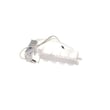
- Replace the water filter on schedule; a clogged filter can reduce dispenser performance (example: Samsung refrigerator water filter HAF-QIN).
- Address puddles or ice buildup early; drain issues can worsen cooling performance over time.
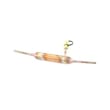
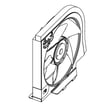
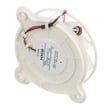
- If you see temperature problems, check for airflow blockage and consider common cooling components such as the refrigerator temperature sensor DA32-00070A or refrigerator fan motor DA97-20025A when troubleshooting.
Why it matters
A refrigerator can still “run” while food temperatures drift into unsafe ranges. Consistent temperatures protect food quality, reduce compressor run time, and help your bottom-freezer fridge reach the full 15 to 20 year lifespan.
Last updated: February 2026
What are the disadvantages of a bottom freezer?
Bottom-freezer refrigerators like the Samsung RF30BB69006M make fresh-food items easier to reach, but the tradeoffs are a lower, drawer-style freezer that can be harder to access and organize, plus more chances for drain and defrost-related water issues if maintenance is neglected. See the RF30BB69006M owner's manual for model-specific use and care details.
Common disadvantages (what you notice day to day)
- You bend more to reach frozen foods, especially items at the bottom of deep baskets.
- Freezer drawers can hide items; food gets buried and forgotten.
- Heavy frozen items (bulk meat, large bags) are harder to lift up and out.
- Kids can access the freezer more easily; keep heavy items secured and avoid letting children play with the ice maker or dispenser.
- If you open the freezer often, you may feel it is less convenient than a top-freezer layout.
Organization and access: drawer freezer vs shelf freezer
| Feature | Bottom freezer (drawer) | Top freezer (shelves) |
|---|---|---|
| Access | More bending | More eye-level access |
| Visibility | Items stack and bury | Items are easier to scan |
| Bulk storage | Great for large bags, but heavy to lift | Easier to lift, less deep |
| Best for | People who use the fridge most | People who use the freezer most |
Maintenance-related downsides to watch for
Bottom-freezer designs commonly route defrost water to a drain system; when that drain area gets restricted, you can see puddles, ice buildup, or water under drawers.
- Keep door openings brief to reduce frost and moisture load.
- Clean spills quickly so they do not freeze into the drawer tracks.
- If you see recurring water pooling, inspect the drain path and related components.
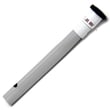
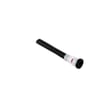
If you are dealing with water collecting or icing, the refrigerator drain tube kit DA97-04049E is one of the model-listed parts often associated with drain routing and drain-related service.
Why it matters
Choosing a bottom freezer is mostly about priorities: you gain easier access to refrigerated foods, but you accept more bending for frozen foods and you need to stay on top of basic care (especially around ice and water management) to prevent nuisance issues.
Last updated: February 2026
What is the most common problem with Samsung refrigerators?
The most common problems we see with Samsung refrigerators (including bottom-mount and French door styles like model RF30BB69006M) are cooling performance issues and ice maker or water system troubles. These often trace back to airflow restrictions, frost buildup from defrost/drain issues, or a failed fan or sensor; see the RF30BB69006M owner's manual for model-specific operating and safety guidance.
Most common symptoms customers notice
- Fresh food section gets warm while the freezer still seems cold
- Frost or ice buildup on the back wall or around vents
- Loud humming, rattling, or fan noise that comes and goes
- Water under the crisper drawers or puddles under the refrigerator
- Ice maker slows down, stops making ice, or cubes clump together
What usually causes those problems
In many Samsung refrigerators, cooling and ice issues come down to a few repeat causes: blocked air vents, an evaporator fan that is iced up or failing, a temperature sensor reading incorrectly, or a drain system that is restricted and refreezing.
| Problem area | What it affects | Common clue |
|---|---|---|
| Airflow (blocked vents, overpacked shelves) | Fridge temps, uneven cooling | Warm spots, long run times |
| Evaporator fan system | Cooling in fridge section | Fan noise, weak airflow |
| Defrost and drain path | Frost buildup, leaks | Ice on back wall, water puddles |
| Temperature sensing/control | Cycling and temperature stability | Temps swing, error indications |
Quick checks we recommend first (no tools)
- Confirm interior air vents are not blocked by food packages (the manual warns not to block vents).
- Set temperatures to normal targets (most households use about 37°F for the fridge and 0°F for the freezer).
- If you recently unplugged the unit, wait at least 5 minutes before plugging it back in.
- Look for frost buildup that could be choking airflow.
- Check for water near the bottom that can indicate a drain issue.
Parts that commonly relate to cooling complaints
If troubleshooting points to a failed component, these are common suspects for cooling symptoms:
- Refrigerator temperature sensor DA32-00070A (temperature feedback)
- Refrigerator fan motor DA97-20025A (air movement)
- Refrigerator evaporator fan motor DA31-00334D (evaporator airflow)
- Refrigerator drain tube kit DA97-04049E (drain path repair)
Why it matters
Cooling and airflow problems can lead to food spoilage, excessive frost, and water leaks. Catching a blocked vent, icing condition, or failing fan early helps prevent bigger issues like extended warm temperatures and heavy ice buildup.
Last updated: February 2026