Owner’s manual
 View engine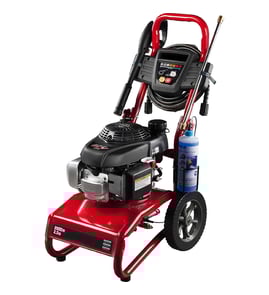



What type of gas does my pressure washer use?
For the Craftsman pressure washer model 580768210, we recommend using clean, fresh unleaded gasoline. Fill the tank with the correct fuel before starting, and always refuel only after the engine has cooled; see the 580768210 owner's manual for fuel and safety details.
Use gasoline that matches these common small-engine requirements:
- Unleaded gasoline
- Minimum 87 octane (87 AKI)
- Up to 10% ethanol is typically acceptable (E10)
- Do not use old or contaminated fuel (stale gas is a common no-start cause)
Gasoline is flammable, so we follow the same basic safety steps every time:
- Shut the engine off and let it cool before refueling
- Refuel outdoors, away from sparks, flames, and smoking
- Wipe up spills before starting
- Add the recommended engine oil before the first start
- Turn the water supply fully on before starting the engine
The 580768210 pressure washer typically holds about the amount below:
| Item | Specification |
|---|---|
| Gasoline tank capacity | 1.5 quarts |
Using the right unleaded fuel and safe refueling habits helps the engine start easier, run smoother under load, and reduces common problems like hard starting, surging, and power loss.
Last updated: January 2026
Are pressure washers 2 stroke or 4?
Most gas pressure washers are 4-stroke engines, and the Craftsman 580768210 is a 4-stroke style setup because it uses straight SAE 30 engine oil in the crankcase (not a gas/oil mix). For oil and fuel details specific to your unit, follow the 580768210 owner's manual.
- 4-stroke: separate oil fill and gasoline fill; uses straight engine oil (commonly SAE 30)
- 2-stroke: requires premixed fuel (gasoline mixed with 2-cycle oil)
- If the fuel cap or tank label mentions “mix,” it is typically 2-stroke
- If there is an oil drain/fill procedure and oil-change interval, it is typically 4-stroke
The manual for this model calls out these engine-related specs:
| Item | What to use | Why it matters |
|---|---|---|
| Engine oil | SAE 30 | Protects the crankcase and prevents rapid engine wear |
| Gasoline | Straight gasoline (no oil mix) | Prevents plug fouling and smoke from incorrect fuel |
Using a 2-stroke fuel/oil mixture in a 4-stroke pressure washer can cause heavy smoke, poor running, and spark plug fouling. Running a 4-stroke engine without the correct oil level can quickly damage the engine.
- Add the recommended oil before starting the engine
- Keep the unit level when checking or adding oil
- Connect the garden hose and turn water on before running the pump
- Avoid letting the engine run 3 to 5 minutes with the spray trigger off; the pump can heat up and discharge warm water through the thermal relief system
Last updated: January 2026
Where is the unloader valve on a gas pressure washer?
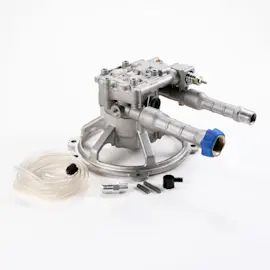
On the Craftsman 580768210 gas pressure washer, the unloader valve is located on the pump assembly, typically near the high-pressure outlet/manifold where the hose connects. It’s the pump component that diverts water flow to control pressure when you release the spray-gun trigger; see the pump diagram in the 580768210 owner's manual.
Look for these common identifiers on the pump body:
- A valve body or cap assembly on the pump manifold (often held in with a cap/retainer)
- Positioned close to the high-pressure discharge port (where the high-pressure hose attaches)
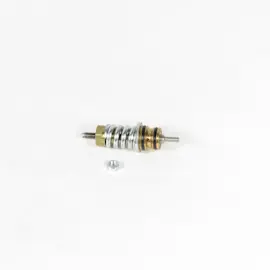
- Associated with a spring and piston style internal parts (common unloader design)
- Often serviced as a kit (cap, O-ring, spring, piston, seat)
If you are troubleshooting pressure surging or pressure that will not regulate, the unloader is one of the first pump components to inspect.
Before touching anything on the pump, we recommend these basics:
- Shut the engine off and let it cool
- Turn the water supply on, then squeeze the spray-gun trigger to relieve trapped pressure
- Disconnect the spark plug wire so the engine cannot start accidentally
- Work in open air; never run the engine in an enclosed area
These issues commonly trace back to the unloader valve sticking, leaking, or wearing:
| Symptom | What it often means | What to check first |
|---|---|---|
| Pressure surges (pulsing) | Unloader sticking or debris in pump | Inlet screen, spray tip, unloader movement |
| Low pressure | Unloader bypassing too much | Unloader seals, spring, piston condition |
| Pressure stays high when trigger released | Unloader not shifting | Unloader piston, spring, cap O-ring |
For step-by-step repair guidance, use our how to replace a pressure washer unloader valve guide.
The unloader valve protects the pump and hose by managing pressure changes when you stop spraying. A sticking unloader can cause surging, overheating, and premature pump wear.
Last updated: January 2026