Owner’s manual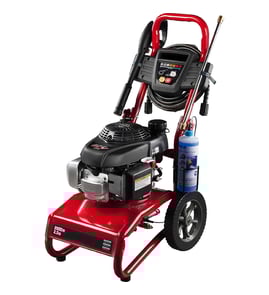



What is a good PSI for a gas pressure washer?
For typical home cleaning, a good gas pressure washer range is about 2,000 to 3,200 PSI; it is strong enough for driveways, siding, and decks without being unnecessarily aggressive. Your Craftsman 580753400 is rated at 3400 PSI, which is a heavy-duty homeowner level (and can damage surfaces if you use the wrong tip or get too close). See the 580753400 owner's manual for the rated specs and safe operating guidance.
Quick PSI guide for common jobs
- 1,300 to 2,000 PSI: cars, patio furniture, grills, delicate surfaces
- 2,000 to 2,800 PSI: decks, fences, most home exterior washing
- 2,800 to 3,400 PSI: concrete, brick, heavy mildew, tougher prep work
- 3,500+ PSI: frequent concrete cleaning, commercial-style use (more risk of etching and damage)
What your Craftsman 580753400 is designed to deliver
The manual lists these key performance specs:
| Spec | What it means for cleaning |
|---|---|
| 3400 PSI | High cleaning force; use wider spray tips and more distance on wood and siding |
| 4.0 GPM | Strong rinsing power; helps flush dirt faster than lower-flow units |
| Water supply requirement | Needs a steady supply; low flow can cause poor performance and pump stress |
How to use high PSI safely (and get better results)
- Start with a wider spray tip and increase pressure only if needed.
- Keep the nozzle moving; do not “park” the spray in one spot.
- Increase distance first (often 12 to 24 inches) before switching to a narrower tip.
- Purge air from the pump by squeezing the trigger before you begin spraying.
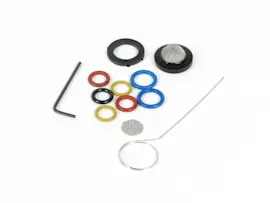
- Make sure the high-pressure hose connection is tight; a worn seal can cause leaks and pressure loss (a common fix is replacing an O-ring such as the snapper pressure washer o-ring 235B2327GS).
Why it matters
Choosing the right PSI helps you clean faster while avoiding surface damage (etched concrete, splintered wood, stripped paint) and reduces strain on the pump, hose, and spray gun.
Last updated: January 2026
Can you put 87 gas in a pressure washer?
Yes. For the Craftsman 580753400 gas pressure washer, regular unleaded gasoline (87 octane) is the standard choice; the key is using fresh fuel and following the fueling safety steps in the 580753400 owner's manual.
Fuel type and best practices
- Use fresh, clean unleaded gasoline; avoid old fuel that has been sitting for weeks or months.
- If you use ethanol-blended fuel, do not store it in the tank long-term; it can attract moisture and contribute to fuel system issues during storage.
- Do not mix oil into the gasoline (this is a 4-cycle style setup).
- Keep the fuel cap area clean so dirt does not fall into the tank.
- If the engine runs rough after refueling, drain and replace with fresh fuel and check the air filter and spark plug.
Safe fueling steps (important)
The manual’s safety guidance is clear: fuel vapors ignite easily.
- Turn the pressure washer OFF and let it cool at least 2 minutes before removing the gas cap.
- Fill the tank outdoors.
- Do not overfill; leave room for fuel expansion.
- Keep fuel away from sparks, open flames, pilot lights, and heat sources.
- Do not smoke while fueling.
Quick reference table
| Fuel question | What we recommend for 580753400 | Notes |
|---|---|---|
| Can I use 87 octane? | Yes | Regular unleaded is the go-to fuel |
| Can I use higher octane? | Yes | It typically will not improve cleaning power |
| Can I store fuel in the tank? | Only short-term | Use a fuel additive for storage and avoid long storage with ethanol blends |
Why it matters
Using the right fuel and safe fueling habits helps the engine start easier, run smoother under load, and reduces carburetor and fuel-system problems that show up after storage.
If you are troubleshooting performance after refueling, use pressure washer engine losing power for targeted checks.
Last updated: January 2026
Should I use 1/4 or 5/16 pressure washer hose?
For the Craftsman 580753400 gas pressure washer, we recommend choosing hose size based on your pressure and flow needs: 1/4-inch is easier to handle and works well for most homeowner cleaning, while 5/16-inch is better when you want higher flow and longer runs with less pressure drop. Always use a hose rated above your washer’s maximum pressure and replace it if it shows damage (never repair a high-pressure hose). See the 580753400 owner's manual.
How to choose between 1/4-inch and 5/16-inch
- Choose 1/4-inch if you want a lighter hose that’s easier to coil, carry, and maneuver around vehicles, decks, and patios.
- Choose 5/16-inch if you want better flow support, especially with longer hose lengths or when you notice performance drop at the gun.
- If your current hose kinks easily, prioritize kink resistance and quality couplers over diameter.
- If you see cuts, leaks, bulges, abrasion, or loose couplings, replace the hose immediately.
Quick comparison
| Feature | 1/4-inch hose | 5/16-inch hose |
|---|---|---|
| Handling | Lighter, more flexible | Heavier, stiffer |
| Flow support (GPM) | Good for typical homeowner use | Better for higher flow and longer runs |
| Pressure drop over distance | Higher | Lower |
| Best use | General cleaning, shorter runs | Longer runs, performance-focused setups |
What matters most for this model
The manual emphasizes checking the high-pressure hose for wear, kinking, and leaks before each use, and replacing it if damaged. A hose that stays unkinked and seals tightly at the pump and spray gun will deliver more consistent pressure than a larger hose that kinks or leaks.
If you’re replacing the hose, match the fittings and consider the model-listed hose 84006753 if it fits your setup.
Why it matters
Hose diameter and condition directly affect cleaning performance and pump life. A restricted or damaged hose can reduce pressure at the spray gun, cause surging, and increase wear on the pump and couplers.
Last updated: January 2026
How to tell if your pressure washer pump is bad?
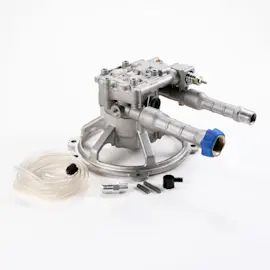
On the Craftsman pressure washer model 580753400, a “bad pump” usually shows up as low or surging pressure even with a steady water supply and a clean spray tip. Before condemning the pump, we verify water flow, purge air from the system, and rule out a clogged nozzle or inlet screen using the steps in the 580753400 owner's manual.
Quick checks that often look like a bad pump
- Confirm the garden hose supply is at least 20 PSI and over 5.0 GPM at the washer end.
- Make sure you have at least 10 feet of unrestricted garden hose between the inlet and any shut-off device.
- Turn water ON, then squeeze the trigger to purge air and impurities before starting.
- Inspect the inlet screen; clean it if clogged.
- Try a different spray tip; a restricted tip can cause pulsing and low flow.
What “bad pump” symptoms look like
| Symptom | Most common cause | What to do first |
|---|---|---|
| Pressure spikes then drops | Internal pump wear or valve issue; sometimes air in system | Purge air; verify water supply; clean tip |
| Pulsing at the gun | Clogged/restricted spray tip | Clean the spray tip and in-line filter |
| Low pressure all the time | Inlet restriction, worn pump, or bypass/unloader issue | Check inlet screen, hose kinks, tip |
| Leaks at connections | Worn seal or O-ring | Inspect fittings; replace damaged seals |
A simple pressure test (most direct way)
- Connect a pressure gauge at the pump outlet or at the spray gun inlet (rated for your washer’s maximum pressure).
- Start with a known-good spray tip and steady water supply.
- Run the washer and watch the gauge.
If pressure is consistently far below normal and you have already ruled out tip clogs, inlet screen blockage, hose kinks, and air in the line, the pump has an internal problem (valves, pistons, seals, or unloader-related bypassing).
Parts that commonly get replaced during diagnosis
- High-pressure hose: replace if it leaks, bulges, or has damaged couplings (never repair a high-pressure hose)
- Spray gun: replace if the trigger does not spring back or it leaks
- O-rings at fittings: replace if you see seepage at quick-connects (example: snapper pressure washer o-ring 235B2327GS)
Why it matters
Running the 580753400 with poor water supply or with the water turned off can damage the pump quickly. Verifying water flow and clearing restrictions first prevents unnecessary pump replacement and protects the pump from repeat failure.
Last updated: January 2026