


Are rear discharge mowers any good?
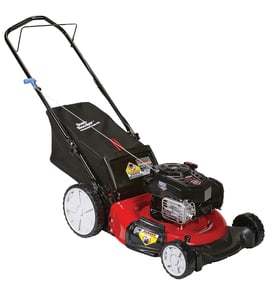
Yes. Rear-discharge mowers are a solid choice for many lawns because they direct clippings behind the Craftsman rotary power mower (including model 13181183), which helps reduce blowback toward the operator and can make trimming along beds, fences, and sidewalks cleaner.
When a rear-discharge mower is a good fit
- You mow near sidewalks, driveways, patios, or flower beds and want fewer clippings thrown sideways.
- You prefer a more controlled discharge pattern when mowing around obstacles.
- You bag clippings sometimes and want a deck style that typically pairs well with bagging setups.
- You mow in tighter areas where side discharge would spray clippings into landscaping.
Trade-offs to know before you choose
Rear discharge is not “better” for every yard; it depends on grass type, mowing frequency, and conditions.
| Feature | Rear discharge | Side discharge |
|---|---|---|
| Clipping direction | Behind the mower | Out the side |
| Cleanup along edges | Often cleaner | Can throw clippings into beds/paths |
| Heavy, wet grass | Can clump if you mow too low | Often disperses more widely |
| Best mowing habit | Frequent mowing, small cuts | Handles longer cuts a bit better |
Tips to get the best results (any discharge style)
- Mow when grass is dry to reduce clumping.
- Follow the 1/3 rule: remove no more than one-third of the grass height per pass.
- Keep the blade sharp; a dull blade tears grass and increases clumps.
- Check deck buildup and clear packed grass (engine off, spark plug wire disconnected).
- Tighten loose hardware so the deck stays aligned; replace worn fasteners such as the nut 532050675 when needed.
Why it matters
Discharge style affects where clippings land, how evenly they spread, and how much cleanup you do afterward. For many homeowners, rear discharge is “good” because it improves control around obstacles and reduces mess along edges.
Last updated: February 2026
How many acres can a 72 inch mower cut in an hour?
A 72-inch (6-foot) mower typically cuts about 2.5 to 6 acres per hour, depending on ground speed and how much time you lose to turning, overlap, and obstacles. This is a general productivity estimate; Craftsman model 13181183 is a walk-behind rotary mower and does not use a 72-inch deck.
Quick way we estimate acres per hour
Use this standard field-capacity formula:
- Acres/hour = (cut width in feet × mph × efficiency) ÷ 8.25
- 72 inches = 6 feet
- Typical mowing efficiency: 0.70 to 0.85
Typical results for a 72-inch deck
These examples show how speed and efficiency change output:
- 5 mph at 0.75 efficiency: about 2.7 acres/hour
- 7 mph at 0.80 efficiency: about 4.1 acres/hour
- 10 mph at 0.85 efficiency: about 6.2 acres/hour
Productivity table (common scenarios)
| Deck width | Speed (mph) | Efficiency | Estimated acres/hour |
|---|---|---|---|
| 72 in (6 ft) | 5 | 0.75 | 2.7 |
| 72 in (6 ft) | 7 | 0.80 | 4.1 |
| 72 in (6 ft) | 10 | 0.85 | 6.2 |
What changes acres per hour the most
- Ground speed (rough terrain forces slower mowing)
- Obstacle density (trees, beds, gates increase turning time)
- Overlap (more overlap reduces missed strips but lowers output)
- Grass height and moisture (tall or wet grass reduces speed)
- Blade condition (dull blades can require slower passes)
Why it matters
Acres-per-hour helps you plan mowing time and compare deck sizes realistically. If your results are low, the cause is almost always efficiency loss from overlap, turning, or slowing in heavy grass.
If you are servicing Craftsman 13181183 hardware while tuning performance, match fasteners by size and thread; a verified replacement option is the nut 532050675.
Last updated: February 2026
Is it cheaper to repair or replace a lawn mower?
For a Craftsman rotary power mower model 13181183, it’s cheaper to repair when the fix is routine and the total cost stays under about 50% of the price of a comparable new mower. Replacing makes more sense when the engine or drive system has major failure, or when repairs keep repeating.
Quick rule of thumb we use
- Repair if the mower still starts reliably and the issue is a wear item (blade, belt, cable, fasteners).
- Repair if the estimate is under half the cost of a similar new walk-behind mower.
- Replace if the engine has low compression, throws a rod, or smokes heavily after basic service.
- Replace if the self-propel/drive system is failing and multiple parts are worn at once.
- Replace if the deck is rusted through or cracked (structural damage).
Cost comparison guide
| Situation | Typical cost range | Usually best choice |
|---|---|---|
| Tune-up (oil, plug, blade sharpen/replace) | Low | Repair |
| One-off small part (nut, bolt, cable adjustment) | Low | Repair |
| Carburetor or fuel system rebuild | Medium | Repair if overall condition is good |
| Drive system overhaul (multiple worn parts) | Medium to high | Depends on mower value |
| Major engine internal damage | High | Replace |
What to check before deciding
- Overall condition: deck integrity, wheel bearings, handle mounts
- Engine health: starts cold, idles smoothly, no heavy smoke
- Drive performance: consistent pull, no slipping or grinding
- Parts availability: whether the needed items are common wear parts
- Total repair cost: parts plus labor (or your time if DIY)
If your repair involves missing or loose hardware, matching the correct fastener matters; for example, the nut 532050675 is a model-listed part that can be used where that specific nut is required.
Why it matters
A walk-behind mower that’s mechanically sound but needs basic maintenance is almost always worth repairing. Replacing too early costs more than necessary, while repairing a mower with major engine or deck damage often turns into repeated downtime and rising costs.
Last updated: February 2026
What are the common problems with Craftsman lawn mowers?
Common problems on a Craftsman walk-behind mower like model 13181183 usually come down to fuel issues, ignition problems, blade and deck wear, and control-cable or safety-bail faults; these show up as hard starting, stalling, uneven cutting, or poor self-propel (if equipped).
Most common symptoms and likely causes
- Won’t start: stale fuel, clogged carburetor jet, fouled spark plug, dirty air filter
- Starts then dies: restricted fuel cap vent, dirty carburetor, water in fuel
- Runs rough or surges: partially clogged carburetor, air leak at intake, old fuel
- Cuts unevenly: bent/dull blade, low tire pressure, deck packed with wet grass
- Vibration: damaged blade, loose blade bolt, debris wrapped on crank area
- Poor bagging or mulching: clogged deck, worn blade, incorrect cutting height
Quick checks we recommend (10 to 20 minutes)
- Drain old gas and refill with fresh fuel (use the correct oil level before starting).
- Inspect and replace the spark plug if it’s black, wet, or cracked.
- Clean or replace the air filter.
- Tip the mower safely (spark plug wire off) and clean packed grass from the deck.
- Check blade condition and tightness; replace a damaged blade immediately.
Wear items vs. “fix now” issues
| What you notice | Usually a maintenance item | Usually a repair issue |
|---|---|---|
| Hard starting after storage | Fuel, spark plug, air filter | Carburetor cleaning/rebuild |
| Uneven cut | Blade sharpening, deck cleaning | Bent blade or deck damage |
| Excess vibration | Blade tightening | Blade damage or crankshaft damage |
Parts that commonly get replaced
Small fasteners and hardware can loosen or corrode over time on outdoor power equipment. If you’re replacing missing or damaged hardware on this model, match it exactly to the diagram and part listing; for example, the nut 532050675 is one of the hardware items used on Craftsman 13181183.
Why it matters
Catching fuel and blade problems early prevents hard-start complaints, reduces engine strain, and helps you avoid deck damage and unsafe vibration during mowing.
Last updated: February 2026
What year is a Craftsman 13181183 riding mower?
Craftsman model 13181183 is a walk-behind rotary power mower, not a riding mower; the model number by itself does not map to one single “year.” We identify the build date by matching the full model and serial information on the mower’s ID label to the correct parts breakdown.
How to find the date information on model 13181183
Look for the product ID label on the mower deck or rear housing (common spots are near the engine mounting area or on the back of the deck). Use these details:
- Model number: 13181183 (confirm it matches exactly)
- Serial number: write it down exactly as shown
- Engine model/type/code: often on the engine shroud (helps narrow the production window)
- Any date code stamped or printed on the label
- Product number or additional prefix/suffix characters (if present)
What “year” usually means for Craftsman mowers
For walk-behind Craftsman mowers, the “year” customers ask for is typically one of the following:
| What you want to know | Where it comes from | What we use it for |
|---|---|---|
| Manufacturing date | Serial/date code on the mower label | Confirms correct parts list and revisions |
| Engine build date | Engine code on the engine | Helps match tune-up and ignition parts |
| Model generation | Parts diagrams and supersessions | Avoids ordering the wrong hardware |
Why it matters (parts fit and safety)
Small changes across production runs can affect fitment for common items like blade hardware, deck fasteners, and shields. When you are replacing missing or stripped hardware, matching the exact model and serial range prevents ordering the wrong thread size or length.
If you are replacing a fastener on this model, our nut 532050675 is one example of a model-listed hardware part; match the original nut’s thread and location before ordering.
Quick checks before you order parts
- Confirm you are working on a walk-behind mower deck (not a tractor frame)
- Compare the old part’s size and thread to the replacement
- Check for wear around the mounting hole (elongation can cause loosening)
- Use proper torque; overtightening can strip threads
- Replace any damaged washers or locking hardware at the same time
Last updated: February 2026
Where can I find the Craftsman mower model number?
On a Craftsman walk-behind mower like model 13181183, the model number is printed on the mower’s product ID label (not the engine label). We use that mower model number to match the correct Craftsman 13181183 walk-behind mower parts.
Common places to check on a walk-behind mower
Look for a sticker or metal tag on the mower deck or handle area. Check these spots first:
- Rear of the mower deck, near the discharge chute
- Top of the deck, behind the engine (on the deck surface)
- Side of the deck near a rear wheel height adjuster
- Handle support brackets where the handle bolts to the deck
- Under the rear flap (near the bagging opening)
Mower model number vs. engine model number
Many mowers have two different ID labels. Use the mower label for most non-engine parts.
| Label you find | What it identifies | Use it for |
|---|---|---|
| Mower model label (example: 13181183) | The mower assembly | Deck, wheels, handle, bagger, hardware |
| Engine label (varies by engine brand) | The engine only | Carburetor, ignition, starter, engine gaskets |
Tips to read the label correctly
- Wipe dirt and grass off the label; use a damp rag and mild soap
- Take a clear photo and zoom in to confirm each digit
- Write down the full model number exactly as shown (numbers and any dashes)
- If the label is damaged, check for a second tag on the deck or handle bracket
Why it matters
The Craftsman mower model number narrows parts to the exact deck and hardware configuration. That prevents ordering a nut, bolt, wheel, or bracket that looks similar but does not fit.
If you are replacing missing or stripped hardware, match the part by the mower model and the exact location on the mower; for example, a common hardware item is the nut 532050675.
Last updated: February 2026