Owner’s manual

What is the average lifespan of a gas grill?
Most gas grills last 5 to 15 years. For the Kenmore Elite 640-87102234-9 gas grill, lifespan depends mainly on how often you cook, how well you clean and protect it, and whether you replace normal wear items like burners and the igniter as needed; regular maintenance pushes you toward the high end.
- Budget grills: 2 to 5 years
- Mid-range grills: 5 to 10 years
- Higher-end grills with good care: 10 to 15 years (sometimes longer)
| What you do | What it affects | What you may notice over time |
|---|---|---|
| Keep the cook box and burners clean | Burner life, heat consistency | Fewer flare-ups, steadier temps |
| Store covered and dry | Rust and corrosion | Longer life for firebox and hardware |
| Replace wear parts when symptoms start | Overall performance | Faster ignition, more even heating |
Your grill’s Use and Care Guide highlights safe outdoor use and proper setup, including using a standard 20 lb. LP tank and maintaining clearances; following those basics helps prevent damage and keeps the grill operating correctly. Use the maintenance and troubleshooting sections in the 640-87102234-9 owner’s manual to stay ahead of common wear issues.
- Leaving the grill exposed to rain, snow, or salty air
- Grease buildup in the firebox or drip areas
- Running burners on high for long periods without cleaning
- Ignoring early symptoms (hard starting, uneven heat, low flame)
A grill usually does not “wear out” all at once; performance drops first. If you treat burners, ignition, and grease management as routine maintenance, you get safer operation, better cooking results, and a longer overall service life.
Last updated: January 2026
What gas grill grates last the longest?
For your Kenmore Elite gas grill model 640-87102234-9, stainless steel cooking grates typically last the longest because they resist rust and hold up well to repeated high-heat cooking when they are cleaned and lightly protected after use. See the 640-87102234-9 owner's manual for care and safety basics.
- Stainless steel: Best overall longevity; strong rust resistance and easy maintenance.
- Cast iron (porcelain-coated): Long-lasting when the coating stays intact; can rust quickly if chipped.
- Plain cast iron: Can last a long time with consistent seasoning; rusts fast if stored damp.
- Porcelain-coated steel: Budget-friendly; tends to wear and flake sooner than stainless.
| Grate material | Longevity (typical) | Rust risk | Maintenance level |
|---|---|---|---|
| Stainless steel | Longest | Low | Low to medium |
| Porcelain-coated cast iron | Long | Medium (if coating chips) | Medium |
| Cast iron (uncoated) | Long (with seasoning) | High | High |
| Porcelain-coated steel | Medium | Medium to high | Medium |
- Preheat, then brush grates while warm (not red-hot).
- After cooking, lightly oil grates with a high-smoke-point oil.
- Avoid long soaks in harsh degreasers; they can shorten coating life.
- Keep the grill dry and covered only after it cools; moisture drives corrosion.
- Follow safe operation basics: outdoor use only, keep clearances, and shut off gas at the tank after use (outlined in the 640-87102234-9 owner's manual).
Grates are a wear item that directly affect heat transfer, flare-ups, and food sticking. Choosing a durable material (and maintaining it) reduces replacement frequency and helps your Kenmore grill cook more evenly.
Last updated: January 2026
What setting is 400 degrees on a gas grill?
On the Kenmore Elite gas grill model 640-87102234-9, 400°F is typically a medium to medium-high heat level once the grill is fully preheated. Because knob positions vary with wind and outdoor temperature, the most accurate way to hit 400°F is to preheat with the lid closed and use the lid thermometer.
Most gas grills land in these ranges after preheating:
| Heat level | Typical grill temp range | Common knob position |
|---|---|---|
| Low | 250 to 300°F | Low |
| Medium-low | 300 to 350°F | Between low and medium |
| Medium | 350 to 400°F | Medium |
| Medium-high | 400 to 450°F | Between medium and high |
| High | 450 to 550°F | High |
- Open the lid and confirm all control knobs are OFF before lighting.
- Light the grill, then close the lid to preheat.
- Preheat about 10 to 15 minutes (many grills stabilize best in this window).
- Start with burners at medium, then adjust in small steps.
- Wait 2 to 3 minutes after each adjustment before judging temperature.
- Use medium to low settings for most cooking (fish, lean cuts, smoking), and reserve high for fast warm-up, searing, and burn-off.
For model-specific operating notes and safety warnings (including lighting and burn-off guidance), follow the 640-87102234-9 owner's manual.
Cooking at the right heat helps you avoid burnt exteriors with undercooked centers, reduces flare-ups, and improves consistency across different weather conditions.
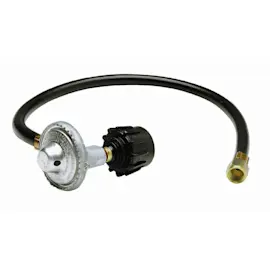
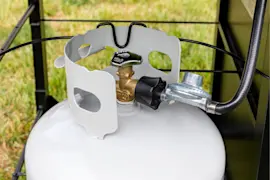
If the grill suddenly seems weak after connecting a new LP tank, resetting the regulator excess gas flow device (by shutting off, disconnecting, waiting, and reconnecting, then opening the tank valve slowly) often restores normal flame strength; the step-by-step procedure is in the manual.
Last updated: January 2026
Is there a gas grill that won't rust?
No gas grill is truly “won’t rust” forever; even premium stainless steel can corrode from salt air, harsh cleaners, and trapped grease. With a Kenmore Elite gas grill like model 640-87102234-9, the best approach is choosing corrosion-resistant materials and following the cleaning, inspection, and storage steps in the 640-87102234-9 owner's manual.
Most grills use a mix of materials, and each behaves differently outdoors:
| Grill area | Common material | Rust risk | What helps most |
|---|---|---|---|
| Firebox | Cast aluminum or coated steel | Low to medium | Keep grease off, avoid standing water |
| Lid and exterior panels | Stainless steel or painted steel | Medium | Gentle cleaning, dry after washing |
| Burners and heat plates | Stainless steel or coated steel | Medium to high | Regular inspection, replace when pitted |
| Grates | Cast iron or stainless steel | Medium | Season cast iron; keep grates clean and dry |
Use these habits year-round, especially if you grill often:
- Keep the grill at least 24 inches from combustible surfaces and in open airflow so moisture does not get trapped around the cabinet.
- After cooking, run burners a few minutes to burn off drippings; then brush grates and wipe surfaces.
- Clean grease buildup so it does not hold moisture against metal.
- Inspect burners at least twice a year; insects and debris can disrupt gas flow and create unsafe conditions.
- Cover only after the grill is fully cool and dry; covering a warm, greasy grill traps moisture.
- If you live near saltwater, rinse exterior surfaces with fresh water and dry them regularly.
Rust is not just cosmetic. Corrosion can weaken the firebox, clog burner ports, and shorten the life of burners, grates, and fasteners, which affects heat output and safe operation.
If you ever smell gas or hear hissing, shut off the gas supply, turn control knobs off, open the lid, move away from the LP tank, and follow the emergency steps in the 640-87102234-9 owner's manual.
Last updated: January 2026