
How to attach things to a power drill?
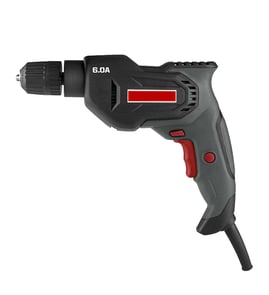
To attach accessories to your Craftsman 31510280 1/2" electric drill, open the chuck, insert the bit or adapter straight, then tighten the chuck evenly so the accessory is centered and secure before you pull the trigger.
- Unplug the drill before changing anything.
- Open the chuck by turning it counterclockwise (by hand on keyless chucks, or with a chuck key on keyed chucks).
- Insert the accessory shank fully and straight (bit, driver, or adapter).
- Tighten the chuck evenly:
- Keyless chuck: hand-tighten firmly.
- Keyed chuck: tighten in all keyholes (if present) for best centering.
- Tug-test the accessory; it should not slip or wobble.
- Start at low speed to confirm it runs true.
Most add-ons connect one of these ways:
| Accessory you want to use | What you typically need | What to watch for |
|---|---|---|
| Socket (nuts/bolts) | 1/4 in hex socket adapter | Use low speed; high torque can twist wrists |
| Hole saw | Arbor (mandrel) with pilot bit | Keep it square; back out to clear chips |
| Wire wheel/brush | Mandrel or threaded arbor | Wear eye protection; avoid loose clothing |
| Mixing paddle | 3/8 in or 1/2 in round shank paddle | Use side handle if equipped; mix slowly |
A properly tightened, centered chuck reduces wobble, prevents bits from slipping, and helps protect the drill’s chuck jaws and motor under load.
For safe electrical troubleshooting and tool testing practices, use how to use a multimeter to test electrical parts video.
Last updated: February 2026
How do I change the drill bit on a Craftsman drill?
To change the drill bit on your Craftsman 31510280 1/2" electric drill, loosen the chuck, remove the old bit, insert the new bit fully, then tighten the chuck securely before drilling. Always unplug the drill first so the trigger cannot start it unexpectedly.
- Unplug the drill (or remove the battery on cordless models).
- Set the direction switch to forward, then center it (lock) so the trigger cannot run.
- Open the chuck:
- Keyless chuck: hold the rear sleeve and turn the front sleeve counterclockwise.
- Keyed chuck: insert the chuck key and turn counterclockwise in each keyhole position.
- Pull the old bit straight out.
- Insert the new bit all the way into the jaws, then pull it back about 1/16 inch so it seats evenly.
- Tighten the chuck firmly:
- Keyless: hand-tighten hard; then give it an extra snug twist.
- Keyed: tighten in all keyholes for the most secure grip.
- Make sure the bit shank is straight and clean (no oil or sawdust).
- Tighten the chuck more; most slipping is from under-tightening.
- Use the correct bit shank size for a 1/2 inch chuck.
- If the chuck jaws look rounded or won’t clamp evenly, the chuck may be worn.
| What you see | Most likely cause | What to do |
|---|---|---|
| Bit spins but doesn’t drill | Bit slipping in chuck | Re-seat bit and tighten harder |
| Bit wobbles | Bit not centered in jaws | Reinsert and tighten evenly |
| Chuck won’t open/close | Debris or rust in jaws | Clean jaws; add a small drop of light oil |
A properly tightened chuck prevents bit slippage, reduces wobble, and helps protect the drill motor and gears from extra strain during drilling.
For more DIY safety guidance before working on electrical tools, review are diy appliance repairs safe.
Last updated: February 2026
What are the parts of a drill called?
On a Craftsman 31510280 1/2" electric drill, the main parts are the housing (body), trigger and switch, motor, chuck, and power cord; on the drill bit itself, you will commonly hear terms like shank, flutes, and tip (cutting edges).
These names are what we use most often when troubleshooting, ordering parts, or describing a symptom:
- Housing (body): the outer shell that supports and protects internal components
- Trigger switch: turns the drill on and controls speed on variable-speed models
- Forward/reverse selector: changes rotation direction (if equipped)
- Motor: armature and field that create rotation
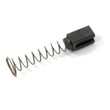
- Brushes: carbon contacts that feed power to the armature (common wear item)
- Chuck: clamps the drill bit (keyed or keyless)
- Power cord and strain relief: supplies power and prevents cord pullout
If you are talking about the bit (not the drill), these are the standard terms:
- Shank: the smooth end held by the chuck
- Neck: the transition area between shank and body (often where size markings appear)
- Body: the main length of the bit
- Flutes: spiral grooves that carry chips out of the hole
- Lands: the raised areas between flutes that guide the bit
- Point (tip): the cutting end; includes cutting edges and the chisel edge
| If you mean... | You will usually say... | What it does |
|---|---|---|
| The drill (power tool) | chuck, trigger switch, motor, brushes, cord | holds the bit, powers rotation, controls speed/direction |
| The drill bit | shank, flutes, lands, point | cuts material and clears chips |
Using the right term speeds up diagnosis. For example, a drill that runs but will not hold a bit points to the chuck, while heavy sparking or intermittent power often points to brushes, the switch, or a damaged cord.
For safe electrical checks on a cord, switch, or motor circuit, use how to use a multimeter to test electrical parts video.
Last updated: February 2026