Owner’s manual
 Error Codes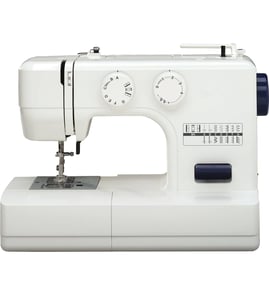

What is the difference between a sewing machine and a mechanical sewing machine?
A “mechanical sewing machine” (like the Kenmore 15812520) is a sewing machine that uses manual knobs and levers to set stitch type, stitch length, and stitch width, instead of electronic buttons and computerized settings. Mechanical models are simpler to operate and service, while electronic models offer more built-in features and automation.
- Controls: mechanical uses dials and levers; electronic uses buttons and a display
- Stitch selection: mechanical typically has fewer built-in stitches; electronic usually has many more
- Adjustments: mechanical adjustments are fully manual; electronic often has preset stitch programs
- Power and feel: mechanical machines often feel more direct and “analog”; electronic machines can feel smoother and more assisted
- Serviceability: mechanical machines are often easier to troubleshoot for basic issues (threading, tension, feed dogs)
| Feature | Mechanical sewing machine (Kenmore 15812520) | Electronic sewing machine |
|---|---|---|
| Stitch settings | Manual dials/knobs | Buttons, presets, memory (varies) |
| Stitch variety | Basic to moderate | Moderate to very high |
| Best for | Straightforward sewing, learning fundamentals | Decorative stitches, convenience features |
| Typical repairs | Belts, motor, switch, tension, cleaning | Same items plus electronics (boards, sensors) |
If you want a dependable machine with straightforward stitch control and fewer electronics to manage, a mechanical model like the Kenmore 15812520 is a strong fit. If you want lots of stitch options and easier fine-tuning through presets, an electronic machine usually delivers that.
- Use the owner's manual to confirm stitch controls and recommended settings
- Clean lint from the bobbin area regularly to prevent binding and uneven feeding
- Re-thread the upper thread with the presser foot raised to seat the thread correctly in the tension discs
- If fabric is not feeding, check feed dog position and presser foot pressure (if equipped)
Last updated: February 2026
What is the most trouble-free sewing machine?
The most trouble-free sewing machines are typically simple, well-built mechanical models with fewer electronics to fail. If you already own the Kenmore 15812520, keeping it clean, correctly threaded, and properly oiled (per the owner's manual) is the most reliable way to minimize jams, skipped stitches, and tension problems.
A low-hassle sewing machine is one that:
- Starts and runs consistently (motor and foot pedal respond normally)
- Feeds fabric smoothly (feed dogs move the fabric evenly)
- Holds thread tension without constant re-adjustment
- Makes consistent stitches without frequent rethreading
- Stays in time (needle and hook stay synchronized)
In general, these traits matter more than any single brand name:
| What to look for | Why it helps | Best for |
|---|---|---|
| Mechanical controls | Fewer electronic boards and sensors | Everyday sewing, long-term durability |
| Solid internal frame (often metal) | Better stability and alignment | Heavier fabrics, frequent use |
| Easy access for cleaning | Lint removal prevents jams and lockups | Quilting, denim, high-lint fabrics |
| Common needle system and bobbins | Easier setup and fewer compatibility issues | Beginners and general repairs |
Most “machine problems” come from setup, lint, or a worn needle. We recommend:
- Install a new needle regularly (and match needle type/size to fabric)
- Rethread the upper thread with the presser foot up (helps tension discs seat the thread)
- Use good-quality thread and a correctly wound bobbin
- Clean lint from the bobbin area and feed dogs after projects
- Oil only the points and intervals listed in the owner's manual
A “trouble-free” machine is usually a well-maintained machine. Correct threading, routine cleaning, and proper lubrication reduce the most common issues: fabric not feeding, thread breaking, and the machine locking up.
Last updated: February 2026
Who made Kenmore 15812520 sewing machines?
Kenmore sewing machines were sold under the Kenmore name by Sears, but they were typically built by a contract manufacturer. For Kenmore model 15812520, the 158 prefix is widely associated with Japanese-made machines, most commonly produced for Sears by Maruzen (a maker later linked with the Jaguar brand), with some 158-series production also attributed to other Japanese factories depending on the exact submodel and production run. For model-specific identification details, check the ID plate and the manufacturer markings referenced in the owner's manual.
Because Kenmore used multiple factories over time, the most reliable way is to verify what is stamped on your machine.
- Look for a metal or foil ID plate on the back or underside of the machine
- Check for a “Made in Japan” marking (common on many 158-series units)
- Note any factory code or additional numbers near the model tag
- Review the front casting and bed for brand marks beyond “Kenmore”
- Compare your machine’s features (stitch selector style, bobbin type, motor housing) to the diagrams in the owner's manual
The “158” prefix is best treated as a manufacturing family identifier used on many vintage Kenmore mechanical sewing machines.
| Marking you see | What it usually indicates | Why it helps |
|---|---|---|
| 158.XXXXXX format | A Kenmore 158-series machine | Narrows the likely factory group |
| Made in Japan | Japanese contract production | Strong clue for common 158 sourcing |
| Extra factory code/letters | Specific production run details | Helps match parts and service info |
Knowing who built the machine helps you match the correct bobbin system, needle system, belt style, and motor or foot control style when troubleshooting or sourcing replacement parts for the Kenmore 15812520.
If you’re diagnosing a performance issue (fabric not feeding, lockups, sluggish running), our symptom guides can help you narrow the cause before ordering parts.
Last updated: February 2026
Are old sewing machines worth any money?
Yes; old sewing machines can be worth money, but most common household models sell for modest amounts unless they are rare, complete, and fully working. For a Kenmore 15812520 mechanical sewing machine, value is usually driven more by condition and usability than “antique” status.
- Working condition: smooth handwheel rotation, consistent stitching, and a running motor
- Completeness: foot pedal, power cord, bobbins, presser feet, and original case
- Cosmetic condition: minimal rust, no cracked plastic, clean decals and paint
- Service history: recently cleaned and oiled tends to sell faster
- Local demand: vintage sewing communities can raise prices for certain models
These are common ranges we see for mechanical machines of this era; rare collector models can exceed these.
| Condition | What it usually means | Typical range |
|---|---|---|
| Parts/repair | Won’t sew, seized, missing pedal | $0 to $40 |
| Working | Sews basic stitches, normal wear | $40 to $150 |
| Excellent | Clean, serviced, accessories included | $150 to $300 |
- Confirm the exact model number: 15812520 on the ID plate.
- Do a basic function check: needle moves, feed dogs advance fabric, reverse works.
- Inspect common deal-breakers: seized handwheel, burning smell, cracked wiring.
- List included accessories (feet, bobbins, manual, case).
- Use the parts diagrams and maintenance steps in the owner's manual to verify what “complete” looks like for this model.
A sewing machine that is clean, correctly threaded, and properly maintained is worth more because buyers can use it immediately. Even when resale value is modest, a dependable mechanical Kenmore can be a long-lasting “workhorse” for denim, canvas, and everyday repairs.
Last updated: February 2026
How do I tell how old my sewing machine is?
To estimate the age of your Kenmore sewing machine model 15812520, we use the machine’s serial number and compare it to the serial number format and dating information listed for that model family. Start by locating the serial number on the machine, then confirm where to look and how to interpret it in the owner's manual.
On most mechanical Kenmore sewing machines, the serial number is commonly found in one of these places:
- On a label or plate on the back of the machine body
- On the underside of the base (tilt the machine carefully)
- Near the power cord connection area
- Inside the front or side cover (after removing an accessory compartment)
Write the serial number down exactly as shown.
- Include any letters at the beginning
- Keep leading zeros (if any)
- Note dashes or spaces only if they appear on the label
| What you see | What it usually means | What to do next |
|---|---|---|
| Letters plus numbers (example: Y########) | A coded production sequence | Use the letter prefix to narrow the date range |
| Numbers only | A production sequence without a prefix | Use the manual’s identification section and compare formatting |
| Worn or partial label | Missing characters | Re-check underside and rear label areas for a clearer tag |
Kenmore model numbers (like 15812520) identify the machine design; the serial number is what helps narrow down when your specific unit was produced.
- Confirm the model number matches the badge or label (15812520)
- Match the serial number format to the identification guidance
- If your machine has a letter prefix, that prefix is typically the key to narrowing the production period
Knowing the approximate age helps us choose the right maintenance approach (cleaning and lubrication intervals), and it improves parts matching when you’re looking up items like a foot pedal, motor, belt, bobbin winder tire, or needle plate for Kenmore mechanical sewing machines.
If you’re trying to date the machine because it is acting up, these guides help you diagnose common symptoms first:
Last updated: February 2026