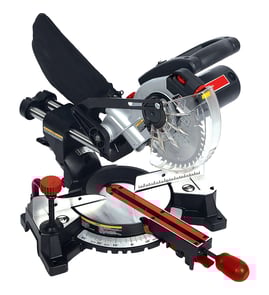

What does code DW713 mean?
On a Dewalt miter saw, DW713 is the model code that identifies the saw family and helps match the correct diagrams and replacement parts for your Dewalt DW713 miter saw. It is not an error code; it is the tool’s model identifier.
What “DW713” tells you (and what it does not)
- It identifies the saw model (Dewalt DW713) used for parts lookup and service info.
- It is not a fault or diagnostic code like you might see on an appliance display.
- It is different from “TYPE2”; TYPE2 indicates a specific production version within the DW713 model line.
- It is not related to phone area codes; for this page, DW713 is strictly a Dewalt model designation.
Where to find the DW713 and TYPE2 markings
You’ll typically see the model and type on the tool’s rating label. Common locations include:
- The rear of the motor housing
- The base or fence area near the pivot
- Near the handle or trigger housing
- On a sticker/plate that also lists voltage and amperage
Why TYPE2 matters when ordering parts
TYPE numbers can change which components fit (even when the model number is the same). Use both identifiers when you compare diagrams and parts.
| Marking | What it means | Why you should use it |
|---|---|---|
| DW713 | Model number | Gets you to the correct miter saw parts breakdown |
| TYPE2 | Version/type | Helps ensure the right fit for switches, guards, and hardware |
Why it matters
Using the exact model and type prevents ordering the wrong Dewalt parts and reduces downtime when you are replacing common wear items like brushes, switches, cords, or blade guards.
Helpful related info
Last updated: February 2026
What is a DW713 compound miter saw?
A Dewalt DW713 compound miter saw is a 10-inch miter saw that pivots (miters) and tilts (bevels) to make accurate crosscuts, miters, and compound angle cuts for trim and framing. It is commonly equipped with a 15-amp motor and is built for repeatable angle settings and jobsite durability.
What “compound” means on the DW713
A standard miter saw rotates the table left and right for miter cuts. A compound miter saw also tilts the blade for bevel cuts, so you can combine both adjustments for compound angles.
Common cut types:
- Crosscut: straight cut across the board
- Miter cut: angled cut left or right (good for corners)
- Bevel cut: angled cut through the thickness of the board
- Compound cut: miter + bevel together (common for crown molding)
Typical features you will see on this model
While exact specs can vary by type/version, most DW713 saws are known for features like:
- 10-inch blade capacity for trim and dimensional lumber
- Detent stops for common miter angles (repeatable setup)
- A miter lock to hold the angle securely
- Tall fences to help support molding and wider stock
- A high-speed motor designed for clean cuts in wood and composites
Quick reference: what it’s used for
| Task | Why a compound miter saw helps |
|---|---|
| Baseboard and casing | Fast, repeatable miter angles |
| Crown molding | Compound angles for tight corners |
| Framing blocks | Accurate, square crosscuts |
| Picture frames | Clean miters with fine-tooth blades |
Why it matters
Knowing that the Dewalt DW713 is a compound miter saw helps you choose the right blade, set the correct miter and bevel angles, and troubleshoot accuracy issues (like out-of-square cuts) before replacing parts.
Helpful related DIY reading
Last updated: February 2026
What should you never cut with a miter saw?
You should never cut anything you cannot hold and control safely on your Dewalt DW713 miter saw, especially tiny offcuts, loose short pieces, or material that will not sit flat against the fence and table. Those situations commonly cause binding, kickback, or the workpiece getting thrown.
Never cut these materials or setups
- Very small pieces that cannot be clamped or held with a safe distance from the blade
- Freehand cuts (workpiece not supported flat on the table and tight to the fence)
- Metal unless you have the correct blade and the saw is set up for that use (most wood miter saw setups are not)
- Bowed, twisted, or warped lumber that rocks or lifts during the cut
- Round stock (dowel, pipe) unless it is secured in a V-block or clamped so it cannot roll
- Stacked pieces unless they are clamped as a single, stable bundle
Safe alternatives that work better
| If you need to cut this | Use this approach instead | Why it’s safer |
|---|---|---|
| Tiny trim returns, short blocks | Clamp the piece; use a stop block for repeat cuts | Prevents the piece from shifting or launching |
| Metal trim or conduit | Use a metal-cutting saw or correct abrasive/carbide metal blade setup | Reduces grabbing and overheating |
| Warped lumber | Joint/plane first, or cut on a saw with better work support | Keeps the cut stable and predictable |
| Round stock | V-block cradle plus clamp | Stops rolling and pinching |
Setup checks before every cut
- Keep the workpiece flat on the table and tight to the fence
- Use a clamp whenever your hands would be close to the blade path
- Let the blade reach full speed; then cut with steady pressure (no forcing)
- Keep the blade guard working normally; never tie it up or block it open
- Support long boards so they do not tip or lever upward during the cut
Why it matters
A miter saw is designed for controlled crosscuts and miters with the material fully supported. When the stock is loose, too small, or not seated flat, the blade can pinch and kick back, which is when most injuries and damaged workpieces happen.
For general DIY safety basics that apply to power tools like a miter saw, we recommend reviewing are diy appliance repairs safe.
Last updated: February 2026