 Owner’s manual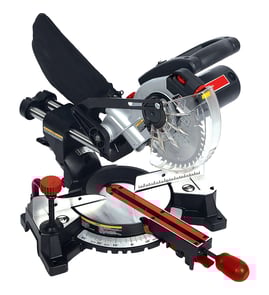

Where can I buy Craftsman replacement parts?
For your Craftsman miter saw model 137212260, we recommend buying replacement parts through Sears PartsDirect using the model-based parts lookup and the parts list in the owner's manual. This helps you match the correct components (like switches, cord parts, and guards) to your exact saw.
Best way to get the right part for model 137212260
Use the parts list and schematic in the manual to identify the part description and any listed identifiers before ordering.
- Find the exact model number on the saw’s data label: 137212260
- Use the manual’s parts list/schematic to confirm the part name (example: trigger, cord clamp, arbor bolt)
- Match the part by description and location on the diagram, not by appearance alone
- Replace electrical parts only if you are qualified; this saw is double insulated
- Use identical replacement parts when servicing
Common parts customers replace on this miter saw
These are frequently needed items for a 10-inch miter saw like the Craftsman 137212260.
| Part type | What it affects | Typical symptom |
|---|---|---|
| Switch/trigger components | Power on/off control | Won’t start, intermittent power |
| Power cord/cord clamp | Safe power delivery | Cuts out when cord moves |
| Guard springs/guard parts | Blade guarding | Guard sticks or won’t return |
| Arbor bolt/washer hardware | Blade mounting | Blade loosens, vibration |
Why it matters
Ordering by model number prevents fit issues and safety problems. The manual for the Craftsman 137212260 also calls out safety requirements like using identical replacement parts and taking extra care with electrical servicing on a double-insulated tool.
Last updated: February 2026
How thick of wood can you cut with a 10-inch miter saw?
A 10-inch miter saw like the Craftsman 137212260 is sized for common framing and trim stock; in practice it crosscuts boards up to about a 2x6 in a single pass on many non-sliding saws, and it often needs a flip-cut to finish a 4x4. For exact cut capacity, use the cut-capacity diagrams in the 137212260 owner's manual.
Typical cut capacity you can expect
Actual capacity depends on whether the saw is sliding, the fence design, and the blade thickness (kerf). Most 10-inch compound miter saws fall into these ranges:
- At 90 degrees miter / 0 degrees bevel: about 2x6 (roughly 5-1/2 in. wide) in one pass
- At 45 degrees miter: about 2x4 to 2x6 depending on the saw
- 4x4 posts: commonly not fully in one pass on non-sliding 10-inch saws; you typically cut, flip, and finish
- Wide boards (1x8, 1x10, 1x12): usually require a sliding miter saw or a different tool setup
Quick reference: what “thick” really means on a miter saw
On a miter saw, the limiting factor is usually cut depth (how tall a board can stand against the fence) and crosscut width (how wide a board can lay flat).
| Common lumber | Actual size (approx.) | Typical result on a 10-inch non-sliding miter saw |
|---|---|---|
| 2x4 | 1-1/2 in. x 3-1/2 in. | Cuts easily |
| 2x6 | 1-1/2 in. x 5-1/2 in. | Often max one-pass crosscut |
| 4x4 | 3-1/2 in. x 3-1/2 in. | Often needs flip-cut |
Tips to cut thicker stock safely and cleanly
We recommend these best practices from the Craftsman compound miter saw safety guidance:
- Clamp the workpiece when your hands would be within about 6 inches of the blade path
- Hold the work firmly against the fence and table; do not cut freehand
- Let the motor reach full speed before starting the cut
- Keep the saw stable and the work supported, especially on long boards
- Use only 10-inch blades (the manual warns against using larger blades)
Why it matters
Trying to cut stock that exceeds the saw’s capacity increases the chance of binding, kickback, and inaccurate cuts. Matching your board size to the saw’s real cut capacity helps you get square, repeatable crosscuts and safer handling.
Last updated: February 2026
What should you never cut with a miter saw?
For the Craftsman 137212260 miter saw, never cut metals or masonry products, and never cut any workpiece that forces your hands within 6 inches of the blade. Also avoid any cut you cannot clamp or hold firmly against the fence and table; that is when binding and kickback happen.
Materials you should not cut
The 137212260 is designed for wood and wood-like products; cutting the wrong material can shatter, bind the blade, or damage the guard.
- Masonry and masonry products (brick, tile, cement board)
- Ferrous metals (steel, iron, rebar)
- Metal that must be hand-held (always clamp)
- Any stock with embedded nails or fasteners (remove them first)
- Anything that creates excessive vibration or an unfamiliar noise (stop and correct the cause)
Cuts you should not make (workpiece control rules)
Even with the right material, the unsafe situation is a piece you cannot keep flat, flush, and secured.
- Never cut small pieces if your fingers would be within 6 in. of the blade
- Never cut freehand; use a clamp whenever possible
- Never cut with the work not held firmly against the fence and table
- Never cut long boards without side support (use stands or supports)
Quick safety checklist (before you pull the trigger)
| Check | What “good” looks like | Why it matters |
|---|---|---|
| Workpiece position | Flat on the table, tight to the fence | Prevents binding and kickback |
| Hand distance | Hands stay 6 in. or more from the blade path | Reduces injury risk |
| Blade condition | Sharp, no cracks, runs smoothly | Prevents vibration and grabbing |
| Start/stop control | Motor at full speed before cutting; blade fully stops before moving the work | Prevents sudden movement and contact |
Why it matters
A miter saw is safest when the blade cuts a stable, supported workpiece. The biggest hazards come from unsupported long stock, tiny offcuts, and cutting materials the saw was not designed to handle; those conditions increase binding, kickback, and loss of control.
For model-specific safety instructions (including blade size limits and hand-position guidance), follow the owner's manual.
Last updated: February 2026
What are the parts of a miter saw?
A miter saw is made up of cutting, guarding, and angle-setting parts that work together to make accurate crosscuts, miters, and bevel cuts. On the Craftsman 137212260 miter saw, key components include the blade and guards, the fence and table, and the miter and bevel locks (see the owner's manual).
Main parts you will see on the saw
- Blade: does the cutting.
- Upper and lower blade guards: form a protective barrier around the blade during operation.
- Fence (including sliding fence): supports the workpiece and helps keep it from shifting.
- Table and table scale: supports the workpiece and shows angle markings.
- Switch handle with ON/OFF trigger switch: starts and stops the saw; you lower the blade by pushing down on the handle.
- Miter detent and detent lock: helps you quickly set common miter angles.
Angle and lock controls (miter and bevel)
These parts control how the saw head and table lock into position for accurate cuts.
| Control | What it does | Why you use it |
|---|---|---|
| Bevel lock handle | Locks the bevel angle | Keeps bevel cuts from drifting |
| Positive stop locking lever | Locks into preset miter stops | Speeds up repeatable angle cuts |
| Head lock down knob | Locks saw head down | Safer carrying and compact storage |
| Lock lever for table | Locks the table rotation | Prevents the miter angle from moving |
Accessories and built-in features you may have
Depending on how your saw is equipped, you may also see:
- Work clamp (hold-down clamp): helps secure the workpiece.
- Dust bag: collects some sawdust at the dust outlet.
- Blade wrench and wrench storage: for blade changes and adjustments.
- Laser guide: helps indicate the cut line.
- Extension wing: supports longer boards.
Why it matters
Knowing the names and functions of the fence, guards, detents, and lock levers helps you set angles correctly, reduce kickback risk, and troubleshoot issues like a drifting miter setting or a guard that does not move freely.
Last updated: February 2026
What size miter saw is best for crown molding?
For crown molding, a 12-inch compound miter saw is the best all-around choice because it gives you more cutting capacity for taller crown and nested cuts. Your Craftsman 137212260 can cut crown molding accurately when you set the correct miter and bevel angles and support the workpiece properly (see the owner's manual).
Quick recommendation by crown size
- Up to about 3 to 4 inches: a 10-inch saw often works well
- About 4 to 6 inches: a 12-inch saw is the safer pick
- 6 inches and larger: a 12-inch saw is strongly preferred; consider a sliding design if you need more crosscut width
- Hardwood crown: favor the larger blade for smoother cuts and less bogging
- Frequent crown work: choose capacity and repeatability over portability
How the Craftsman 137212260 helps with crown molding
Our manual guidance for this model focuses on accuracy and repeatable setup:
- Crown must be cut with extreme accuracy to fit tight at corners.
- Common crown “spring angles” are 52°/38° and 45°/45°.
- For 90° corners, the manual provides a bevel and miter chart and explains that changing one setting affects the other.
- Use the sliding fence units and lock them in position for consistent cuts.
- Use a clamp and the telescoping extension wings to support long molding.
Typical 90° corner settings (crown lying flat)
These are common baseline settings referenced in the manual for standard crown at a true 90° wall corner.
| Cut type | Bevel setting | Miter setting | What to watch |
|---|---|---|---|
| Inside corner (typical) | 33.9° | 31.6° | Keep the top of molding against the fence |
| Outside corner (typical) | 33.9° | 31.6° | Confirm which side is the finished piece |
Why it matters
Crown molding magnifies small errors. A larger saw (typically 12-inch) reduces “capacity limits” that force awkward positioning, and your 137212260’s fence support, clamping, and charted settings help you repeat accurate compound cuts.
Last updated: February 2026