Error Codes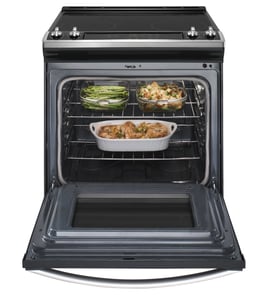




Does an electric stove top use a lot of electricity?
An electric cooktop on the Amana ACR4303MMS0 can use a noticeable amount of electricity, but the real cost depends on how many burners you run, the heat setting, and how long you cook. Most electric surface elements draw roughly 1,000 to 3,000 watts while heating.
Typical electricity use (what to expect)
Electric cooktops cycle on and off to hold temperature, so they do not pull full wattage every second.
- Small element: often about 1,200 to 1,500 watts
- Large element: often about 2,000 to 3,000 watts
- Simmering uses less because the element cycles less “on” time
- Using multiple burners at once increases total draw
- Cookware matters; flat-bottom pans heat faster and reduce run time
Quick cost estimate (use your electric rate)
Use this formula:
- kWh = (watts ÷ 1,000) × hours used
| Example use | Power | Time | Energy used |
|---|---|---|---|
| One large burner on high | 2,500 W | 1 hour | 2.5 kWh |
| One small burner on medium | 1,500 W | 1 hour | 1.5 kWh |
| Two burners (mixed) | 4,000 W | 30 min | 2.0 kWh |
To estimate cost, multiply kWh by your utility’s $/kWh rate.
Ways to reduce electric cooktop usage
- Match pan size to the burner size
- Keep lids on when possible to shorten cook time
- Use the lowest setting that maintains a steady simmer
- Turn the burner off a minute early and use retained heat
- Replace damaged or loose burner connections that cause poor heating (see magic chef range surface element receptacle 814399)
Why it matters
High wattage is normal for electric cooking, but efficiency comes from reducing cook time and improving heat transfer. If a burner heats inconsistently or takes too long, you can waste energy and overwork the surface element circuit.
Last updated: January 2026
What is bake assist on Amana stove?
Bake Assist (often shown as “Bake Assist Temps”) on the Amana ACR4303MMS0 electric range is a set of preset baking temperature selections. Instead of keying in a temperature manually, we use the preset option to quickly choose a common bake temperature and start baking faster.
How Bake Assist works on the ACR4303MMS0
Bake Assist is designed for speed and consistency. It is not a separate heating element or a special cooking mode; it is a shortcut to select a temperature.
Typical steps:
- Press Bake (or the Bake Assist option, depending on the control panel layout)
- Choose one of the preset temperatures shown on the keypad/display
- Press Start and allow the oven to preheat
- Put food in after preheat for best results
When Bake Assist helps most
We see Bake Assist used most for everyday baking where you want a quick, repeatable setup.
Common use cases:
- Weeknight casseroles and sheet-pan meals
- Cookies, muffins, and quick breads
- Frozen foods that call for a standard bake temperature
- Meal prep where you repeat the same temperature often
Bake Assist vs. regular Bake
| Feature | Bake Assist Temps | Regular Bake |
|---|---|---|
| Temperature selection | Preset choices | Any temperature you enter |
| Best for | Speed, convenience | Precision, custom recipes |
| Changes how the oven heats | No | No |
Why it matters
Using Bake Assist reduces button presses and helps prevent simple input mistakes (like selecting the wrong temperature). If baking results seem off (too hot or too cool), the issue is usually calibration, airflow, or a sensing problem, not the Bake Assist feature itself.
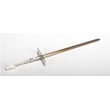
If you suspect inaccurate oven temperatures, checking the oven sensor circuit is a common first step; the range oven temperature sensor WPW10181986 is the component that monitors oven temperature during baking.
Last updated: January 2026
Is Amana a low-end brand?
Amana is generally positioned as a value-priced, no-frills appliance brand; for an Amana electric range like model ACR4303MMS0, that typically means straightforward features, practical performance, and lower upfront cost compared with premium lines.
What “low-end” usually means in real-world terms
Value brands are built to hit an affordable price point. That often shows up in feature set and finishes more than basic cooking capability.
- Fewer premium features (for example, fewer specialty cooking modes)
- More standard materials and simpler styling
- Controls and electronics that are designed for everyday use, not luxury extras
- Repairs tend to focus on common wear items (surface controls, elements, sensors)
- Parts availability matters more than “premium” branding when you own it long-term
How to judge your specific range (ACR4303MMS0)
Instead of focusing only on brand tier, we recommend evaluating the range by how it performs and how serviceable it is.
| What to compare | Value-focused ranges (typical) | Premium ranges (typical) |
|---|---|---|
| Features | Core bake/broil and basic cooktop | More advanced modes and automation |
| Styling | Practical finishes | Higher-end finishes and design |
| Repair approach | Replace common components | More complex electronics and assemblies |
| Cost of ownership | Lower upfront, straightforward repairs | Higher upfront, sometimes higher repair cost |
Parts that commonly affect performance (and are serviceable)
If performance is the concern, these are examples of parts that often matter on electric ranges:
- Oven temperature regulation: range oven temperature sensor WPW10181986
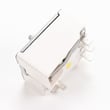
- Cooktop heat control: range surface element control switch WP3148952
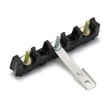
- Power connection issues: range terminal block WPW10245259
Why it matters
A “value” brand can still be a smart buy if the range heats evenly, the oven temperature is accurate, and replacement parts are readily available. When symptoms show up (oven not heating, burner not working, temperature swings), targeted part replacement is often the most cost-effective fix.
For common heating complaints, we also recommend: oven wont heat troubleshooting electric range problems video
Last updated: January 2026