 Owner’s manual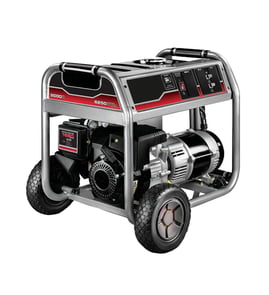




Are Briggs and Stratton generators any good?
Yes. Briggs & Stratton portable generators like model 030320 are a solid, dependable choice when they’re maintained correctly; most owners buy them for reliable backup power and straightforward operation. Long-term performance depends heavily on fuel quality, storage steps, and routine maintenance outlined in the owner's manual.
What “good” usually means for a portable generator
A good generator consistently starts, holds stable output, and runs without overheating or surging under normal loads. For the Briggs 030320, pay special attention to fuel handling and storage practices because stale fuel is a top cause of hard-start and rough-running complaints.
Common strengths customers value
- Reliable power for outages and jobsite use when maintained
- Straightforward controls and familiar small-engine service needs
- Good parts support for wear items and hardware
- Serviceable design (fasteners, covers, and common components are replaceable)
Maintenance habits that make the biggest difference
Fuel and storage practices are the biggest separator between “great generator” and “constant headaches.” The manual specifically calls out running the engine until fuel lines and the carburetor are empty for seasonal storage, using fresh fuel next season, and avoiding engine or carburetor cleaner products in the fuel tank.
Do this to keep performance consistent
- Use fresh gasoline; do not store fuel in the tank for long periods
- Before seasonal storage, run the engine until the fuel system is empty
- Avoid adding engine or carburetor cleaner products to the fuel tank
- Check and tighten hardware periodically (vibration can loosen fasteners)
- Inspect exhaust sealing if you notice louder-than-normal operation or exhaust leaks
Quick “good vs needs attention” checklist
| What you notice | What it usually points to | What to do next |
|---|---|---|
| Starts easily, steady RPM | Normal operation | Keep up with routine maintenance |
| Surging or hunting | Fuel quality or fuel system issue | Drain old fuel; follow storage guidance in the manual |
| Hard starting after storage | Stale fuel or varnish | Use fresh fuel; follow proper storage steps |
| Exhaust leak sound or smell | Exhaust gasket issue | Inspect and replace the exhaust gasket 692237 if needed |
Why it matters
Portable generators are simple machines, but they are unforgiving about fuel and storage. Following the storage and fuel guidance in the manual prevents the most common “it ran fine last year” problems and helps your Briggs 030320 deliver dependable backup power when you need it.
Last updated: February 2026
Can you still get parts for Briggs & Stratton engines?
Yes. We still offer replacement parts for Briggs engines used on the Briggs & Stratton 030320 portable generator, including common hardware and generator components. The fastest way to get the right part is to match your exact model and then confirm the part callout in the owner's manual.
How to find the correct part for your engine or generator
Use these steps to avoid ordering the wrong item:
- Confirm the generator model number is 030320 (from the ID label).
- Use the exploded views and parts list to match the part location and callout number.
- Compare the part name and part ID before ordering.
- If you are working on the engine side, also record the engine model and type code from the engine label.
- Replace worn fasteners and seals when you remove major components (muffler, fuel system, covers).
Parts we commonly see customers replace on model 030320
Availability changes, but these are examples of parts we list for this model:
- Fuel cap 846987 (helps prevent leaks and fuel contamination)
- Exhaust gasket 692237 (helps seal the muffler to prevent exhaust leaks)
- Generac generator receptacle 68759GS (a common wear point if plugs fit loosely)
Quick checks before you order
These checks help confirm you are solving the right problem:
| Symptom | Often related to | What to verify first |
|---|---|---|
| Fuel smell or seepage | Fuel cap, fuel line, fittings | Cap seal condition; cracks in fuel line |
| Loud exhaust, popping | Exhaust gasket, muffler | Soot marks at muffler joint; loose fasteners |
| No power at outlet | Receptacle, wiring, breaker | Outlet damage; tripped breaker; burned terminals |
Why it matters
Generators are sensitive to fuel quality, exhaust sealing, and electrical connections. Using the correct model-specific part keeps your 030320 running reliably and helps prevent repeat failures after a repair.
Last updated: February 2026
What are the parts of the generator?
For the Briggs 030320 portable generator, the main parts are the engine (drives the unit at about 3,600 RPM), the alternator section (rotor and stator windings that make AC power), and the supporting systems that keep it running safely, such as fuel, exhaust, and controls. For labeled diagrams, use the owner's manual.
Core generator sections (what each one does)
- Engine: provides mechanical power to spin the generator head.
- Generator head (alternator): produces AC electricity; includes rotor and stator windings.
- Fuel system: stores and delivers fuel to the engine (tank, cap, lines, carburetion components).
- Exhaust and muffler: routes exhaust away and reduces noise (gasket and muffler components).
- Cooling airflow and housing: cooling air slots and covers help prevent overheating.
- Controls and receptacles: outlets and switches that deliver power to cords and loads.
- Frame and wheel kit: supports portability; axle, wheels, and mounting brackets.
Common replaceable parts you may see for model 030320
These are examples of parts listed for this model that relate to typical generator assemblies:
- Fuel cap 846987 (seals the fuel tank)
- Exhaust gasket 692237 (helps seal the exhaust connection)
- Rotor 199545GS (part of the alternator that spins)
- Generac generator receptacle 68759GS (an outlet connection point)
Quick “what’s what” table
| Generator area | What it affects | Common symptoms when it fails |
|---|---|---|
| Fuel system | Starting and run quality | Hard start, surging, stalls |
| Alternator (rotor/stator) | Power output | No/low voltage, unstable output |
| Exhaust/muffler | Noise and safe exhaust flow | Loud operation, exhaust leak smell |
| Cooling airflow/covering | Temperature control | Overheating, shutdown, hot housing |
Why it matters
Knowing which section you are troubleshooting helps you avoid unnecessary parts replacement and prevents overload or overheating issues. The manual also emphasizes not exceeding the generator’s wattage/amperage capacity.
Last updated: February 2026