
Should a 25 year old furnace be replaced?
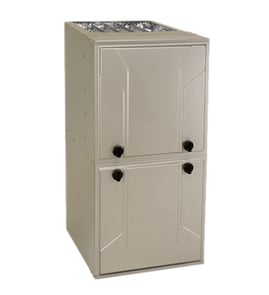
Yes. A 25-year-old York furnace like model P3URD10N05501 is past the typical furnace lifespan (about 15 to 20 years), so replacement is the smart move for reliability, efficiency, and safety. At this age, the risk of expensive breakdowns rises sharply, especially during peak heating season.
If you see any of the issues below, replacement is the practical path instead of putting more money into repairs:
- Frequent repairs or repeated no-heat calls
- Rising gas bills or uneven heating from room to room
- Short cycling (turning on and off too often)
- Excessive noise (rumbling, booming, or squealing)
- Rust, soot, or persistent “hot metal” odors around the furnace
- Trouble keeping the pilot or ignition system running consistently
Use this as a simple way to decide where your money goes.
| Situation | Usually makes sense to… | Why |
|---|---|---|
| Minor electrical issue (like a weak blower motor run capacitor) | Repair | Low-cost part, quick fix |
| Multiple parts failing over a season | Replace | Repairs stack up fast |
| Heat exchanger or major combustion concerns | Replace | High cost and high risk |
| Comfort and efficiency are poor even after tune-ups | Replace | Newer furnaces heat more evenly and efficiently |
If you are troubleshooting a blower that hums, struggles to start, or overheats, a failed run capacitor is a common cause; the Capacitor 12907 is one of the model-specific parts listed for P3URD10N05501.
A furnace that is well beyond its expected service life can fail without warning, and older systems typically cost more to run. Replacing proactively helps avoid emergency no-heat situations and can improve comfort, airflow, and temperature consistency.
- Confirm the exact model number from the furnace rating plate (you have P3URD10N05501)
- Compare the cost of the last 1 to 2 years of repairs against replacement
- Plan replacement before the coldest weeks, when breakdowns are most disruptive
- Keep the old furnace running safely until replacement by changing filters regularly and keeping vents clear
Last updated: February 2026
How do I read my furnace model number?
Your York furnace model number is the identifier we use to match the correct parts and diagrams to your exact unit. For model P3URD10N05501, the full string typically encodes the product series, fuel type, airflow configuration, and heating capacity; the exact meaning of each character depends on York’s coding.
We recommend reading the model number directly from the furnace rating plate, then using that exact text when ordering parts.
- Look for a data label inside the burner compartment or on the inside of the access panel
- Copy the model number and serial number exactly (letters, numbers, and any dashes)
- Use the model number to pull the correct parts list for P3URD10N05501
- Use the serial number to identify the manufacturing date code (format varies by brand)
- If the label is worn, take a clear photo and zoom in to confirm characters
York model numbers are commonly a series of letters and numbers that describe the furnace family and key specs. While the exact decoding varies, here is the practical way to interpret what you see.
| What you see in the model number | What it usually indicates | How we use it |
|---|---|---|
| Letter prefix (example: “P…”) | Product series/family | Helps match the correct diagrams |
| Middle letters (example: “URD”) | Configuration/feature set | Narrows compatible assemblies |
| Number group (example: “10”, “055”) | Size or capacity family | Helps confirm correct motor/controls |
| Ending digits | Revision/version | Ensures the right replacement part |
- Match the model number exactly; one character difference can change the parts list
- Confirm the part by description and ID before checkout
- For motor-related issues, a run capacitor is a common match point; see the capacitor 12907 if your parts list calls for it
Using the exact York model number (P3URD10N05501) prevents mismatched parts, reduces downtime, and helps ensure safe, correct fit for components like blower motor electrical parts and controls.
Last updated: February 2026
How many square feet will a 60,000 BTU furnace heat?
A 60,000 BTU furnace like the York P3URD10N05501 typically heats about 1,200 to 2,000 sq. ft. The real coverage depends on your climate zone, insulation, air leakage, window quality, and ceiling height; colder climates and drafty homes land on the lower end.
Use these as practical planning numbers, not a final sizing decision:
- Warm or mild climates, good insulation: ~1,700 to 2,000 sq. ft.
- Mixed climates, average insulation: ~1,400 to 1,700 sq. ft.
- Cold climates or older, leaky homes: ~1,200 to 1,500 sq. ft.
- High ceilings, lots of glass, or poor ductwork: expect less coverage
- Tight, well-sealed homes: expect more coverage
| Home and climate situation | Typical sq. ft. a 60,000 BTU furnace can heat |
|---|---|
| Mild climate + good insulation | 1,700 to 2,000 |
| Average conditions | 1,400 to 1,700 |
| Cold climate or poor insulation | 1,200 to 1,500 |
Square footage rules of thumb ignore the biggest drivers of heat loss. These factors often change the required furnace size more than the floor plan does:
- Insulation levels in attic, walls, and basement
- Air sealing (drafts around doors, rim joists, recessed lights)
- Window type and how much glass faces north
- Duct leakage and ducts running through unconditioned spaces
- Ceiling height and open stairwells
For the most accurate result, we size by a load calculation (often called Manual J). That calculation matches furnace output to your home’s heat loss so you avoid common issues:
- Oversized furnace: short cycling, temperature swings, noisier operation
- Undersized furnace: long run times, cold rooms during extreme weather
If you are troubleshooting blower performance or motor starting issues on the P3URD10N05501, a weak run capacitor is a common electrical failure point; match ratings exactly when replacing. The parts list for this model includes the capacitor 12907.
Last updated: February 2026
Is a 95% furnace worth the extra money?
Yes; a 95% AFUE furnace is worth the extra money when you have a long heating season and plan to stay in the home long enough to benefit from lower gas use. For a York upflow natural gas furnace like model P3URD10N05501, the decision comes down to fuel savings versus higher installation complexity.
A 95% furnace is the better value when most of these are true:
- You expect to live in the home 8+ years.
- Your furnace runs a lot (cold winters, long heating season).
- You are replacing an older 80% AFUE furnace.
- You can run approved intake and exhaust venting to the outdoors.
- You have a plan for condensate drainage (required on 90%+ condensing furnaces).
High-efficiency (condensing) furnaces pull more heat out of the exhaust, which is why they need different venting and a drain.
| Feature | 80% AFUE (non-condensing) | 95% AFUE (condensing) |
|---|---|---|
| Heat from 100,000 BTU of gas | About 80,000 BTU | About 95,000 BTU |
| Venting (typical) | Metal flue | PVC/CPVC/PP (per code) |
| Condensate drain | No | Yes |
| Install cost/complexity | Lower | Higher |
Most homeowners see payback in about 6 to 10 years, driven mainly by:
- Local gas cost
- Climate and runtime
- Home insulation and air leakage
- Installed price difference between 80% and 95%
A 95% furnace can cut heating fuel use and often improves comfort because it can run longer at lower output. The install details (venting and condensate handling) determine whether you get reliable performance.
If you are diagnosing a blower that hums, starts slowly, or overheats, a weak run capacitor is a common cause. For this model, we list the capacitor 12907 (part number 024-20045-700).
Last updated: February 2026