Owner’s manual
 Error Codes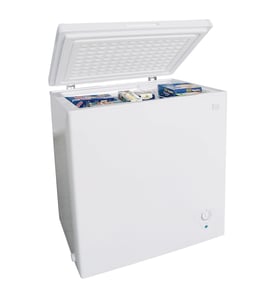




How do I find my chest freezer model number?
For your Frigidaire chest freezer, the model number is printed on the appliance data label. On model FFCL1542AW, you will typically find that label on an inside wall of the cabinet, on an exterior side panel, or on the back of the unit; confirm the exact label location in the FFCL1542AW owner's manual.
Where to look on a chest freezer
Check these common label locations first:
- Inside the freezer cabinet on a side wall (often near the top edge)
- On the exterior side panel
- On the back panel near the power cord area
- Near the lid opening or hinge area (less common)
What the label looks like and what to write down
The data label usually includes multiple identifiers. We recommend copying these exactly:
- Model number (example format: FFCL1542AW)
- Serial number (needed for warranty and date code questions)
- Electrical rating (volts/amps) for troubleshooting power issues
- Manufacturing codes (if shown)
Quick tips before you start
- Unplug the freezer if you need to reach behind it.
- Use a flashlight; labels are often small and low-contrast.
- Take a clear photo so you can zoom in later.
Model number vs. serial number (why both matter)
| Item | What it’s used for | Example |
|---|---|---|
| Model number | Matching parts and diagrams | FFCL1542AW |
| Serial number | Production details and service history | Varies by unit |
Why it matters
Using the exact FFCL1542AW model number helps us match the correct Frigidaire parts list and ensures you get the right replacement parts the first time.
Last updated: February 2026
Why is my chest freezer leaking water from the bottom?
Water under a Frigidaire FFCL1542AW chest freezer is usually defrost meltwater that did not drain correctly, or condensation that formed when warm, humid air leaked past the lid gasket. On this model, using the built-in drain plugs correctly during defrosting prevents overflow and bottom leaks (see the FFCL1542AW owner's manual).
Most common causes (and what to check first)
- Drain plugs not opened during manual defrost: Water can pool inside and spill over the cabinet edge.
- Outside drain not routed to a pan: Water exits low on the front left and can run under the freezer.
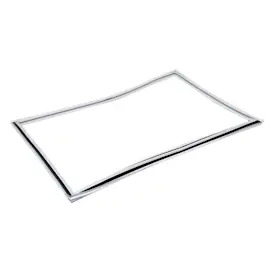
- Lid not sealing (dirty, worn, or misaligned gasket): Warm air enters, creating excess moisture and meltwater.
- Freezer not level: Water can migrate to one side and escape during defrosting.
- High humidity or frequent lid openings: Increases internal sweating and frost buildup.
How to stop the leak on FFCL1542AW
- Unplug the freezer before cleaning up water.
- If you recently defrosted, confirm you opened both drain points:
- The inside drain plug on the freezer floor
- The outside drain plug on the lower left front
- Place a shallow pan under the outside drain outlet and monitor it so it does not overflow.
- After defrosting, reinstall both drain plugs snugly.
- Clean and inspect the lid gasket; wipe it with mild detergent and warm water, then dry.
Quick diagnosis table
| What you see | Most likely cause | Best next step |
|---|---|---|
| Water appears during/after defrost | Drain plugs not opened or pan overflow | Open both drain plugs; use a larger pan |
| Water appears on humid days | Condensation from warm air entry | Clean gasket; reduce lid openings |
| Water appears on one side only | Freezer not level | Level the cabinet on a solid floor |
| Frost builds fast near the top | Lid opened often or not sealing | Check gasket fit; close lid firmly |
Why it matters
Standing water can refreeze into thick ice, increase frost buildup (the manual recommends defrosting when frost reaches about 1/4 to 1/2 inch), and make the freezer run longer than necessary.
Last updated: February 2026
What can cause a chest freezer to stop working?
On the Frigidaire FFCL1542AW chest freezer, the most common reasons it stops working are power supply problems (tripped breaker, blown fuse, loose plug), the temperature control being set to OFF, or the freezer being plugged into a GFCI-protected circuit that interrupts power. See the FFCL1542AW owner's manual troubleshooting chart for model-specific checks.
Quick checks we recommend first
- Make sure the plug is fully seated in the outlet.
- Confirm the temperature control is not set to OFF.
- Check the home breaker and reset if tripped.
- Check the house fuse and replace with a 15-amp time-delay fuse if needed.
- If the freezer is on a GFCI outlet, move it to a standard outlet on a different circuit.
- If the room is below the freezer’s designed ambient range for long periods, relocate it to a suitable area.
Common causes and what they look like
| What’s happening | Likely cause | What to do |
|---|---|---|
| No lights/sound, totally dead | Power outage, loose plug, tripped breaker, blown fuse | Verify outlet power, reset breaker, replace fuse, reseat plug |
| Runs sometimes, then stops | GFCI nuisance trips, unstable power | Use a non-GFCI circuit; have an electrician check the outlet |
| Won’t start after moving/transport | Plugged in too soon after positioning | Wait at least 2 hours before powering on |
| Runs but doesn’t hold temp | Lid not sealing, frequent openings, warm food load | Close lid firmly, reduce openings, let temp stabilize |
Why it matters
A chest freezer that “does not run” is often a simple electrical or control setting issue. Fixing the power source or control setting quickly helps prevent food thawing and avoids unnecessary part replacement.
Last updated: February 2026
How do you drain a Frigidaire chest freezer?
To drain a Frigidaire FFCL1542AW chest freezer, we unplug the unit, remove food, leave the lid open to defrost, then open the inside floor drain plug and the outside drain plug (lower left front) so meltwater flows into a shallow pan. See the FFCL1542AW use and care manual.
Step-by-step: draining during defrost
- Unplug the freezer (prevents electrical hazard while defrosting).
- Move food to another freezer or insulated coolers.
- Leave the lid open so frost can melt.
- If frost is soft, pull it off with a plastic scraper (never metal).
- Unscrew the drain plug on the freezer floor.
- Unscrew the outside drain plug on the lower left front.
- Set a shallow pan under the drain outlet; empty it before it overflows.
After the water is drained
Once defrosting is complete, we reinstall both drain plugs, dry the interior, and then restart the freezer.
- Replace both drain plugs snugly.
- Wipe up remaining water and dry the gasket and rim.
- Clean the inside with 2 tablespoons baking soda in 1 quart warm water, then rinse and dry.
- Plug the freezer back in and let it pull down to temperature before reloading.
What to use (and what to avoid)
| Task | Use | Avoid |
|---|---|---|
| Removing frost | Plastic scraper | Metal tools (can puncture liner) |
| Catching water | Shallow pan, towels | Letting water overflow |
| Cleaning | Mild detergent or baking soda solution | Abrasive pads, harsh cleaners |
Why it matters
Draining correctly keeps meltwater controlled, protects electrical parts while the unit is unplugged, and helps prevent interior damage from sharp tools. It also reduces odors by letting you clean and fully dry the cabinet after defrosting.
Last updated: February 2026