Installation guide
 Owner’s manual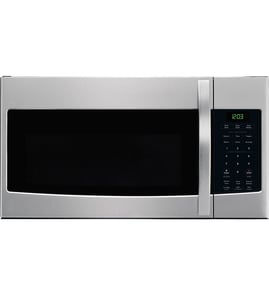


Do all over the range microwaves have the same dimensions?
No. Over-the-range microwaves are not all the same dimensions, even though many are designed to fit a common 30-inch cabinet opening. For the Frigidaire FFMV162LMB, the installation requirements focus on the cabinet opening and clearances, so you should match the opening width and required spacing before buying a replacement; see the FFMV162LMB installation guide.
What is “standard” for over-the-range microwaves?
Most OTR microwaves are built around a few common fit targets, but height and depth vary a lot by brand and design.
- Common cabinet opening width: about 30 inches
- Typical height range: about 16 to 18 inches (low-profile models are shorter)
- Typical depth range: about 15 to 18 inches
- Mounting style differences: rear wall plate, top cabinet bolts, and venting direction can change fit
Key fit rules for the FFMV162LMB installation space
The FFMV162LMB installation instructions call out spacing rules that matter more than “overall microwave size.”
- The space between cabinets must be 30 inches wide and free of obstructions.
- The bottom of the cabinet needs to be 30 inches or more above the cooking surface.
- Plan for 66 inches or more from the floor to the top of the microwave.
- The microwave must be level during installation.
- The microwave must be connected to at least one wall stud.
Quick comparison: what to measure before you replace an OTR microwave
| What to check | Why it matters | What to do |
|---|---|---|
| Cabinet opening width | Determines whether the unit physically fits | Measure inside-to-inside between cabinets (often 30 inches) |
| Cooktop-to-cabinet clearance | Prevents heat damage and improves usability | Confirm you have 30 inches or more |
| Venting direction (recirculating vs outside vent) | Impacts duct alignment and installation parts | Match your existing duct setup before ordering |
| Mounting points (studs, wall plate location) | Prevents unsafe mounting | Locate studs and verify mounting plate position |
Why it matters
Even when two microwaves are both “30-inch OTR” models, differences in height, depth, venting, and mounting-hole locations can turn a simple swap into cabinet or ductwork modifications. Using the installation clearances for the FFMV162LMB helps you avoid a poor fit and rework.
Last updated: January 2026
What is the average life of a Frigidaire microwave?
Most Frigidaire microwaves, including over-the-range models like the FFMV162LMB microwave/hood combo, typically last 7 to 10 years with normal household use. Heavy daily use, poor ventilation, and repeated door slams can shorten lifespan; consistent cleaning and proper venting help it reach the high end of that range.
Typical lifespan and what affects it
A microwave’s life is mostly driven by heat, electrical load, and door-switch wear.
- Usage frequency: multiple long cook cycles per day ages components faster
- Ventilation and grease: clogged filters trap heat and stress the magnetron
- Door operation: slamming the door can damage the latch and interlock switches
- Power quality: frequent surges can stress the control board and noise filter
- Cleaning habits: food splatter and grease buildup can lead to arcing and overheating
What “end of life” usually looks like
These are the most common symptoms we see as an over-the-range microwave ages:
| Symptom | Common cause | What to check first |
|---|---|---|
| Runs but does not heat | High-voltage components aging | Cooling airflow, then heating circuit diagnosis |
| Dead display/no power | Fuse, wiring, control issue | Outlet power, breaker, internal fuse testing |
| Starts then stops | Overheating protection opening | Grease filter, venting, thermostat/thermal cut-off |
| Door won’t start unit | Door latch or switch problem | Latch alignment and interlock switches |
For model-specific operating and care guidance, follow the maintenance and safety sections in the FFMV162LMB owner’s manual.
Maintenance that helps you get the full 7 to 10 years
- Clean the cavity and waveguide area regularly; avoid harsh abrasives
- Keep the vent path clear and replace or clean filters on schedule
- Use microwave-safe cookware to reduce arcing and interior damage
- Avoid running the microwave empty (it can overheat components)
- Close the door gently to protect the latch and switch mounts
If you’re seeing arcing or burn marks, the steps in how to repair arc or burn marks in a microwave video help you address common causes safely.
Why it matters
Over-the-range microwaves work harder than countertop units because they also manage heat and grease from the cooktop. Keeping airflow and filters in good shape reduces heat stress on key parts like the magnetron, thermostats, and control components.
Last updated: January 2026
What is the difference between 1.7 and 1.9 cu ft microwave?
A 1.9 cu. ft. microwave has about 0.2 cu. ft. more cavity space than a 1.7 cu. ft. model, which mainly affects what size dishes fit and how much food you can heat at once. For the Frigidaire FFMV162LMB specifically, the rated capacity is 1.6 cu. ft., so compare by cavity dimensions and wattage, not just the label. See the FFMV162LMB owner’s manual for the exact specs.
What changes when you go from 1.7 to 1.9 cu. ft.
Capacity differences are real, but they are usually subtle in day-to-day use.
- Bigger usable cavity: more room for taller bowls or wider casserole dishes.
- Turntable clearance: a slightly larger cavity often means fewer “dish hits the wall” issues.
- Cooking multiple items: more space can improve airflow around food (more even heating).
- Exterior size may not change much: many over-the-range units stay close to 30 inches wide.
- Power can vary by model: some 1.9 cu. ft. units are higher wattage, but it is not guaranteed.
How to compare two microwaves the right way
We recommend comparing the specs that directly affect fit and performance.
| What to compare | Why it matters | What to look for |
|---|---|---|
| Cavity dimensions | Determines what dishes actually fit | Width, height, depth of the cavity |
| Output wattage | Affects heating speed | Higher wattage typically heats faster |
| Outside dimensions | Determines cabinet fit | Width and height for over-the-range installs |
| Venting type | Impacts kitchen ventilation | Outside top, outside back, or recirculating |
For FFMV162LMB, the manual lists 1000 W output and provides both outside and cavity dimensions, which are more useful than comparing 1.7 vs 1.9 alone.
Why it matters
A small capacity jump (1.7 to 1.9) is most noticeable when you routinely heat larger plates, use taller microwave-safe containers, or want fewer restrictions on dish shape. For over-the-range microwaves, installation clearances and venting options can matter as much as capacity; review the FFMV162LMB installation guide before choosing a replacement.
Last updated: January 2026