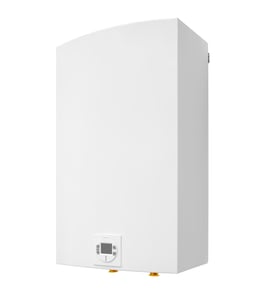



How do I reset a Dunkirk boiler?
To reset a Dunkirk PWX-3VNG2 boiler, we start with the control’s reset function: clear the lockout at the boiler control, then restore power so the control can re-check safeties and attempt ignition again. If it immediately locks out again, troubleshoot the cause before repeating resets.
Safe reset steps (typical for boilers)
- Set the thermostat to OFF (or turn it down) so the boiler is not calling for heat.
- If your boiler has a reset on the control, press it once to clear a lockout.
- If the control uses a power/reset button, press and hold to power the unit off, then power it back on.
- Wait a few minutes for the control to complete its startup checks.
- Turn the thermostat back ON and call for heat.
If it keeps tripping after a reset
Repeated lockouts usually mean a safety is opening or the boiler is not proving a required condition (pressure, draft, flame, or water flow). Check these common items:
- Low system pressure or air in the system
- Closed valves or restricted flow
- Venting or combustion air issues
- Loose, damaged, or overheated wiring
- A safety control opening, such as a pressure limit
Parts that can be involved
If diagnostics point to a safety control, these are examples of parts listed for the PWX-3VNG2:
| Symptom | What it often points to | Example part on this model page |
|---|---|---|
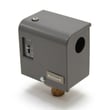
| Locks out on pressure-related safety | Pressure limit opening or out of range | Press limit PA404A1033 |
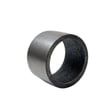
| Need to drain water for service | Drain point leaking or not operating | Drain valve (listed for this model) |
Why it matters
A reset only clears the symptom (the lockout). Finding the reason for the lockout helps prevent nuisance shutdowns and protects key components like the gas valve, igniter, and control board.
Last updated: February 2026
What boiler spares do I need?
For a Dunkirk PWX-3VNG2 boiler, the most useful spares are the safety and service parts that commonly stop heat when they fail: pressure/limit controls, drain components, and basic electrical items. On this model page, the two most directly relevant spares are the press limit PA404A1033 and the drain valve.
Recommended spares to keep on hand
These are the spares we see most often help restore operation quickly on residential boilers:
- Pressure/limit control (pressure limit or pressuretrol type)
- Drain valve (for draining and service)
- Low-water cutoff related parts (if your system uses one)
- Ignition and flame-sensing components (varies by fuel and control)
- Common electrical items (fuses, wire terminals, connectors)
- Gaskets and sealing items used during service (varies by section opened)
Model-specific parts we can point to on this page
Here is how the parts listed for PWX-3VNG2 fit into a “spares” plan.
| Spare type | What it helps with | When it’s worth stocking |
|---|---|---|
| Pressure/limit control | Prevents unsafe pressure; can shut the boiler down if it fails or drifts out of range | If you have nuisance shutdowns, pressure issues, or an older control |
| Drain valve | Makes draining safer and faster; helps during flushing and service | If the existing valve is corroded, seeping, or hard to operate |
How to choose the right spares (so you do not buy the wrong part)
Use these checks before ordering:
- Match the boiler model number exactly: PWX-3VNG2.
- For controls, match the control type and connection style (thread size, mounting, and sensing method).
- For valves, match the pipe size and connection type.
- If you are replacing a safety control, restore wiring exactly as found and verify safe operation after installation.
Why it matters
Boiler downtime is often caused by a single safety or control part that opens the circuit and prevents firing. Keeping the right spares reduces time without heat and helps you complete routine maintenance without delays.
Last updated: February 2026
What are the three types of boilers?
The three common boiler types used in many homes are combi (combination), system, and regular (heat-only/conventional) boilers; the main difference is whether they store hot water in tanks or make it on demand. For a Dunkirk PWX-3VNG2 boiler, the “type” is also often described by fuel and design.
The 3 home-heating boiler types (quick definitions)
- Combi boiler: Heats water on demand; typically no separate hot water cylinder.
- System boiler: Uses a hot water cylinder; usually no cold-water storage tank in the loft.
- Regular (heat-only) boiler: Uses a hot water cylinder and often a cold-water storage tank.
Another common way boilers are categorized
In parts and service conversations, we also see boilers grouped by these practical categories:
- Fuel: natural gas, propane (LP), oil, electric
- Heat distribution: hot water (hydronic) vs steam
- Heat exchanger design: fire-tube vs water-tube
Which “type” matters most when buying parts
For ordering the correct replacement parts for your Dunkirk PWX-3VNG2, the most important identifiers are:
- The model number: PWX-3VNG2
- The exact part name and part ID
- The symptom you are fixing (no heat, short cycling, pressure issues, leaking)
Here are two examples of model-matched parts commonly tied to boiler operation:
| Part | What it helps control | Common symptom when failing |
|---|---|---|
| Press limit PA404A1033 | Pressure safety/limit control | Boiler shuts down, pressure-related lockout/behavior |
| Drain valve (browse parts list) | Draining/servicing the boiler | Leaks at valve, won’t open/close smoothly |
Why it matters
Boiler “type” affects installation and hot water delivery, but your model number and the exact control/valve you need determine parts compatibility. Matching the correct limit control, valve, or electrical component helps restore safe, stable heating.
Last updated: February 2026
What are the parts of a boiler?
A boiler is built from a heat source (burner), a pressure vessel (heat exchanger), safety devices, and controls that regulate temperature and pressure. On a Dunkirk PWX-3VNG2 boiler, common service parts include safety limit controls and drain components.
Core boiler components (what they do)
- Burner and ignition: creates the flame and starts combustion.
- Combustion chamber: contains the flame and directs heat into the boiler.
- Heat exchanger (boiler sections): transfers heat to water; this is the main pressure vessel.
- Controls and sensors: manage firing, temperature, and safety shutoffs.
- Safety/limit devices: stop operation if pressure or temperature goes out of range.
- Piping and valves: move water/steam and allow filling, draining, and isolation.
Parts you may replace on the PWX-3VNG2
These are examples of replaceable components we commonly see customers order for this model:
- Pressure limit control: helps protect the system by shutting down on unsafe pressure.
- Drain valve: lets you drain the boiler for service or seasonal maintenance.
| Part on this model | What it’s for | When it’s commonly replaced |
|---|---|---|
| Press limit PA404A1033 | Pressure safety limit control | Nuisance shutdowns, failed switch, out-of-spec operation |
| Drain valve (part number 146-22-000) | Draining the boiler | Leaks at stem, won’t close fully, corrosion |
Why it matters
Knowing the major boiler parts helps you troubleshoot faster and replace the right component. For example, a pressure-related shutdown often points to a limit/control issue, while water on the floor near the boiler often points to a valve or fitting leak.
Before you service any boiler
- Turn off electrical power at the breaker.
- Let the boiler cool completely.
- Close the fuel supply (gas or oil) if applicable.
- Relieve pressure safely before opening any drain or fitting.
- If you smell gas or suspect unsafe operation, stop and use a qualified technician.
Last updated: February 2026
What is the pressure on the Dunkirk boiler?
On a Dunkirk PWX-3VNG2 boiler, the pressure you see on the gauge is the system water pressure, not the boiler’s maximum rating. Most hot-water (hydronic) systems run around 12 to 15 PSI when cold and typically rise to 18 to 25 PSI when hot.
What “boiler pressure” usually refers to
There are a few different pressures people mean when they ask this:
- System pressure (gauge reading): the everyday operating pressure in the piping and boiler.
- Relief valve setpoint: the safety valve opening pressure (commonly 30 PSI on many residential hot-water systems).
- Maximum allowable working pressure (MAWP): the boiler’s design rating on the nameplate.
Typical gauge readings (hot-water systems)
Use these as practical targets for troubleshooting.
| Condition | Typical gauge reading (PSI) | What it suggests if you’re outside the range |
|---|---|---|
| Cold (not calling for heat) | 12 to 15 | Low: needs fill; High: overfilled or expansion tank issue |
| Hot (running) | 18 to 25 | High rise: expansion tank waterlogged or undersized |
| Safety concern | 25 to 30+ | Stop and correct cause before the relief valve opens |
Quick checks if pressure is high or low
- Low pressure: verify the feed water valve is open and the auto-fill is working.
- High pressure: check the expansion tank air charge and signs of waterlogging.
- Frequent pressure swings: look for a sticking fill valve or failing expansion tank.
- If you need to lower pressure by draining water, use a boiler drain such as the drain valve 31-606-04 (when it matches your unit’s connection style).
- If the boiler is shutting down on pressure, test or replace the pressure control such as the press limit PA404A1033.
Why it matters
Correct pressure prevents nuisance relief valve discharge, protects the boiler and circulator, and helps eliminate air-related heating problems.
Last updated: February 2026