
Are scroll saw blades interchangeable?
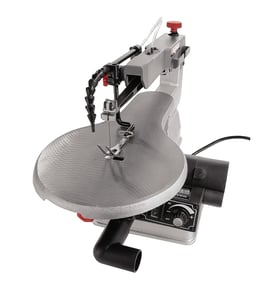
Scroll saw blades are only interchangeable when the blade end style matches your Craftsman model 31517251 (pinned vs. pinless) and the blade length fits the clamps. Within the correct end style, you can usually swap blade sizes and tooth patterns to match the cut.
Before buying blades for a Craftsman 31517251 auto-scroller saw, confirm the blade mounting style:
- Pinned blades have small cross pins at each end; they fit saws with pin hooks or pin slots.
- Pinless (plain-end) blades have no pins; they clamp directly in blade holders.
- Some saws accept both styles with the right holders, but you still need the correct setup.
Once the end style and length fit, these blade features are interchangeable and chosen based on your material and cut quality:
- Blade size/number (thicker for straighter cuts; thinner for tight turns)
- TPI (teeth per inch) (higher TPI for smoother cuts; lower TPI for faster, rougher cuts)
- Tooth style (skip tooth, double skip, reverse tooth, spiral)
- Material (carbon steel vs. hardened/high-speed for tougher stock)
| Cutting goal | Typical blade choice | Why |
|---|---|---|
| Tight curves, fretwork | Smaller, thinner blade | Turns easier without binding |
| Smooth edges in thin wood | Higher TPI | Cleaner finish, less tear-out |
| Faster cuts in thicker wood | Lower TPI, wider blade | Clears sawdust better |
| Clean bottom surface | Reverse-tooth | Reduces underside splintering |
Using the wrong end style can prevent the blade from mounting securely, and the wrong TPI or blade thickness can cause burning, wandering cuts, or frequent blade breaks.
If you are not 100% sure you have the correct model number, verify it on the saw’s data label before ordering parts or accessories; our guide explains where to look: how to find your appliance model number (and what it means for parts).
Last updated: February 2026
Can you make straight cuts with a scroll saw?
Yes. You can make straight cuts with a Craftsman scroll saw model 31517251, but it takes more setup and technique than a saw designed for ripping. Blade drift and flex can pull the cut off-line, so short straight cuts are realistic; long, perfectly straight cuts are harder.
- Use a fresh, sharp blade; dull teeth wander and burn.
- Increase blade tension until the blade “pings” when plucked (firm, not over-tight).
- Choose the right blade for the job:
- Wider blades track straighter than very fine blades.
- More teeth per inch (TPI) helps on thin stock; fewer TPI clears sawdust better in thicker wood.
- Keep steady feed pressure; pushing too hard deflects the blade.
- Support the work flat on the table and keep the wood tight to the surface.
- Make a test cut in scrap and adjust your technique before cutting your project piece.
Blade drift is the tendency for the blade to cut at a slight angle even when you feed straight.
| What you notice | Common cause | What to do |
|---|---|---|
| Cut slowly curves off the line | Dull blade or wrong blade type | Replace blade; pick a blade matched to thickness |
| Cut starts straight then wanders | Too much feed pressure | Slow down; let the teeth do the work |
| Cut leans left/right consistently | Blade not tracking straight | Re-tension and re-seat blade; re-test on scrap |
| Burning or heavy sawdust packing | Too fine a blade for thickness | Use fewer TPI or a more aggressive blade |
A scroll saw excels at curves, inside cutouts, and delicate work. For long straight rips, a table saw, track saw, or circular saw with a guide is typically the better choice.
Straight cuts depend on controlling blade deflection. With a scroll saw, small changes in blade tension, blade choice, and feed rate have a big impact on accuracy and edge quality.
For general DIY technique and tool prep that also applies to scroll saw work, we recommend reviewing are diy appliance repairs safe.
Last updated: February 2026
Should I get pinless or pinned scroll saw blades?
For a Craftsman 31517251 scroll saw, we recommend pinless (plain-end) blades for most projects because they fit more blade styles and make inside cuts through small starter holes much easier. Pinned blades are sturdier and quicker to change, but they limit detail work.
| Feature | Pinless (plain-end) blades | Pinned blades |
|---|---|---|
| Best for | Fretwork, lettering, puzzles, tight curves | Thicker stock, rougher cuts, quick swaps |
| Inside cuts | Excellent (small pilot holes) | Limited (needs larger holes) |
| Blade variety | Widest selection (skip-tooth, reverse-tooth, spiral) | Fewer options |
| Setup | Needs blade clamps/adapters | Uses pins; often faster changes |
- Choose pinless when you need clean detail, tight turns, or frequent inside cuts.
- Choose pinned when you want simple blade changes and you are cutting larger, less-detailed shapes.
- For mixed work, keep both on hand; use pinned for quick roughing and pinless for finish and detail.
- Match blade size to material thickness; most scroll work in 1/8 to 3/4 inch stock runs best with smaller pinless blades.
- If your saw uses pinned holders, use a pinless adapter so you can run plain-end blades.
- Tension the blade so it “plucks” with a clear ping; too loose wanders, too tight snaps.
- Let the teeth do the work; pushing hard overheats and breaks blades.
- Use the right tooth direction (most cut on the downstroke); reverse-tooth helps reduce bottom tear-out.
- Start with a fresh blade; dull blades drift and burn wood.
Blade type directly affects cut quality, how small your inside-cut holes can be, and how much control you have on curves. For detailed scroll saw patterns, pinless blades give the control and selection most users need.
For tool and repair basics that help with testing switches, cords, and connections on power tools, see how to use a multimeter to test electrical parts video.
Last updated: February 2026