Owner’s manual
 Error Codes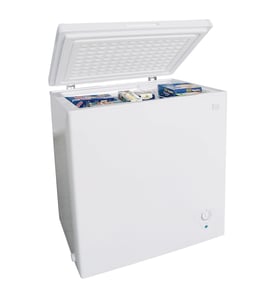



What is the life expectancy of a chest freezer?
A chest freezer typically lasts 15 to 20 years with normal home use. For your Maytag MZC5216LW, good airflow, correct room temperature, and regular defrosting and cleaning (as outlined in the MZC5216LW owner's manual) help it reach that full lifespan.
Typical lifespan and what affects it
Most chest freezers are simple, durable appliances; lifespan mainly depends on compressor workload and how well the lid seals.
Common factors that shorten life:
- Poor ventilation/clearance around the cabinet (traps heat and overworks the compressor)
- Hot installation locations (garages or rooms that run above normal indoor temps)
- Dirty condenser surfaces (on “skin condenser” designs, heat is rejected through the cabinet walls)
- Damaged lid gasket that leaks air and causes long run times
- Frequent lid openings or overfilling that blocks airflow inside
Quick care checklist for longer life
We recommend these habits for the MZC5216LW and most Maytag chest freezers:
- Keep the freezer in a space that stays roughly 32°F to 110°F ambient temperature
- Maintain about 2.75 inches of clearance on both sides and the back
- Defrost and clean when frost buildup starts reducing space or performance
- Confirm the lid closes evenly and seals all the way around
- Let the freezer cool 6 to 8 hours before loading it after startup
What “normal” operation looks like
| Symptom | Usually normal | When it points to a problem |
|---|---|---|
| Outside walls feel warm | Yes (heat is being released) | If it is extremely hot and cooling is weak |
| Compressor runs a lot after startup | Yes (first cool-down) | If it never cycles off after fully cooled |
| Red temperature light (if equipped) | During warm-up or heavy loading | If it stays on with properly frozen food |
Why it matters
A chest freezer that runs hotter or longer than it should wears the compressor faster and increases energy use. Simple setup steps like clearance, leveling for a good seal, and routine maintenance protect the sealed system and help avoid premature failure.
Last updated: January 2026
Is it cheaper to run a chest freezer or upright freezer?
A chest freezer is typically cheaper to run than an upright freezer because it holds cold air better when opened and usually runs more efficiently. For your Maytag MZC5216LW chest freezer, proper placement and airflow (clearances) help keep operating costs as low as possible; see the MZC5216LW owner's manual.
Why chest freezers usually cost less to operate
Chest freezers open from the top, so less cold air spills out when you lift the lid. Upright freezers open like a refrigerator door, so more cold air can fall out and the unit may need to run longer to recover.
Common efficiency advantages of chest freezers:
- Less cold-air loss during door openings
- Often better temperature stability when the lid stays closed
- Typically fewer air leaks around the opening (depends on gasket condition)
- More usable storage at colder temperatures (less warm-air mixing)
What matters most for your electric bill
Even between two chest freezers, real-world cost depends heavily on setup and use. The MZC5216LW manual calls out key installation conditions that affect efficiency.
- Keep at least 2.75 inches of clearance on both sides and at the back for airflow
- Place the freezer where ambient temperature is typically 32°F to 110°F
- Level the cabinet so the lid seals properly
- Do not cover the freezer with blankets, sheets, or tablecloths (reduced air circulation)
Quick comparison
| Factor | Chest freezer (like MZC5216LW) | Upright freezer |
|---|---|---|
| Cold air loss when opened | Lower | Higher |
| Organization | Harder (stacking) | Easier (shelves) |
| Frost management | Often manual defrost | Many are frost-free |
| Typical operating cost | Lower | Higher |
Why it matters
If you open the freezer often, a chest model usually saves energy over time because it recovers temperature faster. If you value quick access and visibility, an upright may be worth the slightly higher operating cost.
Last updated: January 2026
Does Maytag make good freezers?
Maytag generally makes good freezers, and the Maytag MZC5216LW chest freezer is built around proven basics: a simple temperature control system, straightforward care steps, and standard safety and electrical requirements. For day-to-day reliability, correct setup and maintenance matter as much as the brand; follow the MZC5216LW owner's manual.
What “good” means for a chest freezer
A good chest freezer typically delivers consistent temperatures, seals tightly, runs efficiently, and is easy to maintain.
Key things we look for:
- Stable freezing performance when the lid stays closed
- A tight lid seal to prevent warm air leaks and frost buildup
- Simple controls that are easy to set and monitor
- Practical maintenance steps (defrosting, cleaning, moving care)
- Clear guidance for power interruptions and food safety
How to judge your MZC5216LW in real use
Use these quick checks to decide if your freezer is performing like a “good” unit.
- Temperature consistency: Food stays solidly frozen; ice cream stays firm (not soft).
- Lid seal: The gasket grips evenly all the way around; no gaps or condensation at the rim.
- Run behavior: It cycles on and off; it does not run constantly in a cool room.
- Frost level: Light frost over time is normal; heavy frost points to frequent openings or a sealing issue.
- Power outage resilience: A fuller freezer stays cold longer than a partially filled one.
Quick performance guide
| What you notice | Most likely cause | What to do first |
|---|---|---|
| Softening food | Control set too warm, warm room, frequent openings | Adjust control, limit openings, allow 24 hours |
| Heavy frost | Lid not sealing, frequent openings | Inspect gasket and lid alignment |
| Runs a lot | Hot location, poor airflow, overloading with warm food | Improve ventilation, cool food before loading |
Parts that affect “good freezer” performance
If performance issues show up, these model-specific parts are commonly involved:
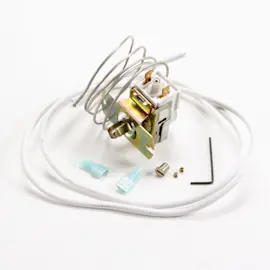
- Maytag freezer temperature control thermostat W11685637 (temperature regulation)
- Gasket, door W11597677 (lid sealing and frost prevention)
Why it matters
A chest freezer that seals well and holds temperature protects food quality, reduces freezer burn risk, and helps avoid unnecessary compressor run time and energy use.
Last updated: January 2026