Owner’s manual
 View engine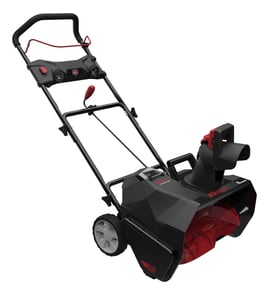




How to tell year of Craftsman snowblower by serial number?
For Craftsman snow thrower model 536884582, the most reliable way to determine the build year is to match the serial number format on your unit to the decoding method shown in the owner's manual. Once you identify the format, the serial number characters translate into a specific month/day and a year within a decade.
Check these common locations on Craftsman snow throwers:
- The rear of the frame near the handles
- The side of the auger housing
- Near the engine mounting area
- On a model and serial tag or decal
Craftsman snowblower serial numbers were used by different manufacturers over the years, so the decoding depends on which serial format you have.
A common Craftsman format uses characters in the serial number to represent the date:
- First character: product type identifier
- Next characters: month/day code (varies by format)
- Fifth character: year within the decade (example: “1” can indicate 2001 or 2011)
On many MTD-built machines, the first five characters are used as a date code:
- Letter: month (A = January through L = December)
- Next digits: day of month
- Next digit: year within the decade
Because some serial formats only store a single digit for the year, you determine the decade by comparing it to the machine’s design and features.
| Serial digit for year | Possible years | How to choose the right one |
|---|---|---|
| 0 | 2000 or 2010 | Compare styling, decals, and parts used |
| 4 | 2004 or 2014 | Check if parts match older or newer revisions |
| 9 | 2009 or 2019 | Consider purchase timeframe and wear history |
Knowing the correct year helps us match the right diagrams and replacement parts for your Craftsman 536884582, such as the chute 762222MA or auger assembly 327072MA, and reduces the chance of ordering a part that looks similar but does not fit.
Last updated: February 2026
Do electric snowblowers work in heavy snow?
Yes, but performance drops in heavy, wet snow. Your Craftsman 536884582 (21-inch single-stage, auger-propelled with electric start) can clear heavy snow more effectively when you take narrower passes, slow down, and keep the discharge chute aimed downwind; see the owner's manual.
Heavy snow is all about depth and weight. This style of single-stage snow thrower works best when you let the auger do the work and avoid overloading the housing.
- Take less than a full cut in heavy snow (narrower swaths)
- Slightly overlap each pass to reduce strain and clogging
- Aim the chute downwind; lower the deflector in windy conditions
- Let the machine adjust to outdoor temperature before you start
- Keep the area clear of stones and debris to prevent damage
The manual’s snow-throwing tips are the same techniques we use to improve results in tough conditions.
| Condition | Best technique | Why it helps |
|---|---|---|
| Heavy, wet snow | Half-width passes | Prevents bogging and chute plugging |
| Deep snow | Clear in layers (top first, then lower) | Reduces load on the auger |
| Windy snow | Lower chute deflector | Keeps snow from blowing back |
| Gravel drive | Raise auger slightly (avoid auger-propel) | Helps prevent throwing rocks |
If the snow thrower used to handle heavy snow and now struggles, inspect wear and damage.
- Cracked or loose discharge chute: consider the chute 762222MA
- Chute control issues: check the chute guide 577021MA
- Poor scraping and leaving snow behind: inspect the scraper 55323MA
- Auger damage or excessive vibration: inspect the auger assembly 327072MA
Heavy snow loads the auger, chute, and scraper the most. Using narrower cuts and keeping the chute adjusted reduces clogging, improves throwing distance control, and helps prevent premature wear.
Last updated: February 2026
Are electric snowblowers reliable?
Yes, electric snowblowers are reliable for the jobs they are designed to do: clearing light to moderate snow on sidewalks and driveways with simple controls and fewer engine-related issues. For the Craftsman 536884582, reliability depends most on safe electrical use, correct starting steps, and keeping fasteners tight (see the owner's manual).
This model is a 3.0-hp, 21-inch, single-stage, auger-propelled snow thrower with electric start. In real-world use, it tends to be dependable when you:
- Use a properly grounded 120V outlet for electric starting
- Follow the cold-start priming guidance (more primes in colder temps)
- Avoid over-cranking the starter (20 seconds max per attempt, then cool-down)
- Check bolts frequently and keep the machine tight and safe
- Let the engine and unit acclimate to outdoor temperature before clearing snow
- Power and cord: Use the extension cords and receptacles specified for snow throwers; damaged cords cause intermittent starting.
- Starter protection: Do not crank longer than 20 seconds; allow a 10-minute cool-down between attempts.
- Starting procedure: Key ON, choke FULL for cold starts, then adjust choke as it warms.
- Fuel mix (engine models): This unit uses a 40:1 gas/oil mixture; incorrect mix leads to hard starting and poor running.
- Hardware and wear: If performance drops, inspect wear items like the chute and auger components.
| Condition | Typically reliable? | What to expect |
|---|---|---|
| Light to moderate snowfall | Yes | Consistent clearing with normal technique |
| Heavy, wet, end-of-driveway plow berms | Less reliable for fast clearing | More clogging and slower progress |
| Uneven, steep, or elevated surfaces | Not recommended | Reduced footing and control; avoid above-ground surfaces |
If snow discharge control or throwing performance changes, these model-specific parts are often involved:
- Chute 762222MA (direction control)
- Chute guide 577021MA (guiding and positioning)
- Auger assembly 327072MA (snow intake and propulsion)
Matching the machine to your snowfall and using the correct electrical starting and operating steps prevents nuisance no-starts, reduces wear on the starter, and keeps your Craftsman snow thrower dependable season after season.
Last updated: February 2026
Who manufactures Craftsman snowblowers?
Craftsman snowblowers are built by different manufacturers depending on the model and production year. For the Craftsman model 536884582 (21-inch, 3 HP class snow thrower), the most reliable way to confirm the exact build and service details is to match the model and parts breakdown shown in the 536884582 owner's manual.
Because “Craftsman” is a brand used across multiple production runs, the manufacturer is best confirmed by the model tag and the parts list that matches it.
- Locate the model number label and confirm it reads 536884582 exactly
- Compare your controls and assemblies (chute, belt cover, auger housing) to the diagrams in the manual
- Use the parts list to confirm you are ordering the correct components for your build
- If you see prior repairs, verify fasteners and brackets match the illustrated assemblies
- When ordering, match by model number first, then by part ID
The documentation for 536884582 is written as a Craftsman 21-inch snow thrower with an electric start assembly and a defined parts breakdown (for example, chute and belt cover assemblies). That model-specific manual and parts list are the practical “manufacturer identifier” for service and replacement parts.
| Assembly area | Example part you can match | What it helps with |
|---|---|---|
| Discharge chute | Chute 762222MA | Restores aiming and discharge direction |
| Belt cover area | Nut 578109MA | Secures panels and control/belt cover hardware |
| Auger system | Auger assembly 327072MA | Restores snow intake and throwing performance |
Knowing the exact build behind a Craftsman snowblower helps you avoid ordering the wrong chute parts, belt cover hardware, or auger components. Model-matched documentation also keeps maintenance and adjustments aligned with the correct safety controls and procedures.
Last updated: February 2026
Is it worth fixing a snowblower?
Yes, it’s usually worth fixing a Craftsman snow thrower like model 536884582 when the problem is a normal wear item or a single broken component, and the machine is otherwise solid. If the unit has repeated major failures or severe damage, replacement typically makes more sense than continued repairs.
Use these checkpoints to make a clear call:
- Repair when the issue is isolated (chute damage, worn hardware, a single bearing, etc.).
- Repair when the machine has been maintained and hasn’t had recurring breakdowns.
- Replace when you’re facing multiple major problems at once (drive system plus auger plus engine issues).
- Replace when the frame or auger housing is badly damaged and alignment can’t be restored.
- Repair when parts are readily available and the fix is straightforward using the owner's manual.
These are typical repairs that often restore performance quickly:
- Replace a damaged discharge chute with the chute 762222MA
- Fix chute aiming or binding with the chute guide 577021MA
- Address squealing, wobble, or rough rotation by replacing the bearing 577023MA
- Correct scraping performance by replacing the scraper 55323MA
- Restore auger performance if the assembly is worn or bent with the auger assembly 327072MA
Use this as a practical guide when you’re estimating time and value.
| Repair type | Typical effort | Typical outcome |
|---|---|---|
| Chute or chute guide replacement | Low | Better throwing direction and control |
| Bearing or pulley related repair | Medium | Smoother operation, less noise |
| Auger assembly replacement | Medium to high | Restores snow intake and throwing ability |
| Multiple systems failing | High | Costs add up; replacement often wins |
A snowblower that’s structurally sound but underperforming often just needs the right part to get back to safe, reliable operation. The manual also emphasizes stopping the engine, removing the key, and preventing accidental starting before inspections or repairs, which helps you avoid injury and prevents further damage.
Last updated: February 2026