Owner’s manual




How much does it cost to replace a rubber seal on an LG washing machine?
On the LG WT7405CW top-load washer, there is no front-load style door boot gasket; when people say “rubber seal,” they usually mean an internal tub or shaft seal related to a leak. Typical professional repair pricing runs $200 to $600 total, depending on whether it is a simple clamp or hose fix or a deeper tub tear-down. Use the WT7405CW owner's manual to pinpoint when the leak happens and what area to inspect first.
What “rubber seal” usually means on this LG top-load washer
- Inlet hose washers or hose gaskets at the wall valve or washer connection
- Internal hose or clamp seals inside the cabinet
- Drain-side seals around the pump or drain hose connections
- Tub-to-pump hose leaks that look like a tub seal problem
- Tub/shaft seal area (more labor because the washer must be disassembled)
Typical cost ranges (parts and labor)
| Repair type (common leak source) | Parts cost | Labor cost | Typical total |
|---|---|---|---|
| Hose gasket, clamp, or minor leak fix | $5 to $40 | $150 to $250 | $155 to $290 |
| Drain pump replacement | $80 to $180 | $150 to $300 | $230 to $480 |
| Internal tub or shaft seal level repair | $30 to $120 | $250 to $500 | $280 to $620 |
How we recommend confirming the leak source before you buy parts
- Leak during fill: check inlet hoses and the water inlet valve area.
- Leak during agitation: look for splashing, tub ring issues, or internal hose seepage.
- Leak during drain/spin: inspect the drain hose and pump connections.
- Water under the center: suspect an internal tub or shaft seal level issue.
- Error codes or poor draining: a drain problem can mimic a “seal” leak.
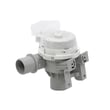
If the leak shows up mainly during draining or the washer struggles to empty, the washer drain pump assembly AHA75673404 is a common repair path for this model.
Why it matters
Misidentifying a “rubber seal” leak often leads to buying the wrong part. Matching the leak timing (fill vs drain vs spin) to the system involved prevents repeat leaks and unnecessary labor.
Last updated: February 2026
What is the average lifespan of an LG washer?
Most LG washers, including model WT7405CW, typically last 10 to 15 years with normal household use. You can often extend lifespan by keeping the tub and drain system clean, using the right load size, and replacing wear parts promptly; see the maintenance guidance in the WT7405CW owner's manual.
What affects washer lifespan the most
- Load size and balance: frequent overloading and unbalanced loads increase stress on the suspension and drive system.
- Water quality and hoses: mineral buildup and aging hoses can cause fill issues and leaks; LG recommends replacing inlet hoses every 5 years.
- Drain health: coins, lint, and small items can strain the pump and cause slow drains.
- Detergent use: too much detergent can lead to residue, odors, and extra rinsing.
- Leveling and vibration: an unlevel washer can shorten the life of shocks, bearings, and the tub support.
Quick care checklist (high impact)
| What to do | How often | Why it helps |
|---|---|---|
| Replace inlet hoses | Every 5 years | Reduces leak and burst risk |
| Run a tub-clean cycle or cleaning routine | Monthly | Cuts odor and residue buildup |
| Check pockets and use a mesh bag for small items | Every load | Prevents drain clogs and pump damage |
| Keep the washer level | At install and after moving | Reduces vibration wear |
When a repair can add years (common examples)
If the washer is otherwise in good shape, replacing a failed component often restores normal operation:
- Not draining or humming during drain: consider the washer drain pump assembly AHA75673404.
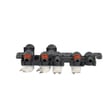
- Not filling or filling slowly: the LG washer water inlet valve assembly AJU75152602 is a common fix after you confirm good water pressure and clean hose screens.
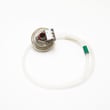
- Overfilling or water level problems: the LG washer water-level pressure switch 6501EA1001R and the washer water-level pressure switch hose 5210FA3427J are typical suspects.
Why it matters
A washer that is kept clean, level, and properly loaded runs with less vibration and strain. That reduces premature wear on major systems like the motor, tub, and drain components, helping you reach the 10 to 15 year lifespan range.
Last updated: February 2026
What is the most common problem with LG washers?
For the LG WT7405CW washer, the most common issues we see are drain and spin problems: the washer will not drain fully, stops mid-cycle, or shows an unbalance condition during spin. These problems are often tied to load balance, drainage restrictions, or water-level sensing.
Most common issues (and what they look like)
- Unbalanced load during spin (UE): shaking, thumping, or the cycle pauses to rebalance.
- Drainage trouble: slow drain, standing water, or a humming/gurgling sound as the pump runs.
- Fill problems (IE): washer does not fill or fills very slowly.
- Water-level sensing problems (PE): incorrect fill level or cycle behavior tied to sensing.
- Motor-related stoppage (LE): the washer stops and needs time before restarting.
Quick checks we recommend first
- Redistribute the load; mix similar-weight items and avoid washing a single heavy item alone.
- Run a drain and spin; the WT7405CW owner's manual describes using a Spin Only cycle to drain and spin.
- Confirm water supply; fully open both faucets and check for kinked inlet hoses.
- Listen for normal sounds; the manual notes some clicking, spraying, and pump humming can be normal during operation.
Parts that commonly relate to these symptoms
| Symptom | Common area to inspect | Example model-matched part |
|---|---|---|
| Won’t drain / drains slowly | Drain pump, drain path | Washer drain pump assembly AHA75673404 |
| Overfills / underfills / PE error | Water-level sensing | LG washer water-level pressure switch 6501EA1001R and washer water-level pressure switch hose 5210FA3427J |
| Won’t fill / IE error | Water inlet valve, screens | LG washer water inlet valve assembly AJU75152602 |
Why it matters
Drain and balance issues can look like “the washer is broken,” but they often come from correctable causes (load distribution, restricted draining, or a sensing/fill problem). Fixing the root cause prevents repeat stoppages, poor spin-out, and unnecessary part replacement.
Last updated: February 2026