Owner’s manual
 Error Codes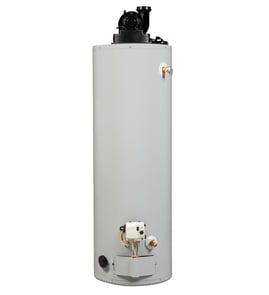





What is the typical lifespan of a gas hot water heater?
A typical gas water heater lasts 8 to 12 years. For your American FG6140T403PV gas water heater, regular maintenance (especially flushing sediment and inspecting the anode rod) is what most directly determines whether you land closer to 8 years or closer to 12. See the maintenance schedule in the owner's manual.
Typical lifespan ranges (what to expect)
Most residential tank-style water heaters fall into these ranges:
| Water heater type | Typical lifespan | What most affects it |
|---|---|---|
| Gas tank water heater | 8 to 12 years | Sediment buildup, venting/combustion air, anode condition |
| Electric tank water heater | 10 to 15 years | Heating element wear, water quality, anode condition |
What extends the life of the FG6140T403PV
We see the longest service life when these items are handled on schedule:
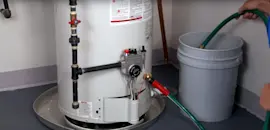
- Drain and flush the tank periodically to reduce sediment and overheating
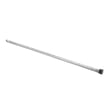
- Inspect the anode rod about every 3 years and replace it when it is more than 50% depleted
- Keep the area around the heater clear of flammable vapors and liquids
- Maintain proper venting and combustion air so the burner runs cleanly
- Address small leaks early (valves, fittings, drain valve) before corrosion spreads
If you are planning an anode inspection or replacement, the model parts list includes a compatible option: water heater anode rod 100109594.
Signs you are near end-of-life
These symptoms usually mean the tank and internal components are wearing out:
- Rusty or discolored hot water that returns after flushing
- Rumbling or popping sounds from heavy sediment
- Water around the base of the tank (tank corrosion)
- Frequent pilot/ignition problems or burner shutdowns
- Hot water runs out faster than it used to
Why it matters
Once the anode rod is depleted, the glass-lined tank starts corroding and eventually leaks. Staying ahead of anode and sediment maintenance is the most reliable way to get full lifespan from a gas water heater.
Last updated: February 2026
What is the average cost to install a 40 gallon gas water heater?
For a 40-gallon gas water heater like the American FG6140T403PV, total installed cost typically runs $900 to $3,000, with many homeowners landing around $1,000 to $2,500 depending on venting, gas-line work, code upgrades, and disposal of the old tank. Use the owner's manual to confirm location, venting, and gas supply requirements before pricing.
What drives the price up or down
Installation cost changes most based on how much work is needed beyond a basic swap.
- Venting changes (draft hood, vent connector, chimney/vent sizing, added elbows)
- Gas piping work (new shutoff, sediment trap, resizing pipe for BTU load)
- Water piping updates (shutoff valves, dielectric unions, expansion tank)
- Code and safety items (drain pan, discharge piping for the T&P valve)
- Access and labor time (tight closets, attic installs, long runs)
- Haul-away/disposal of the old water heater
Typical cost breakdown (what you are paying for)
| Cost item | Typical range | Notes |
|---|---|---|
| Water heater (40-gallon gas) | $400 to $1,000 | Higher for premium efficiency/features |
| Labor | $400 to $1,500+ | More if venting or gas piping must be modified |
| Materials/permits | $100 to $500+ | Valves, fittings, vent parts, permit fees |
| Total installed | $900 to $3,000 | Wide range based on job complexity |
Model-specific details that affect install scope
The FG6140T403PV manual emphasizes correct indoor, vertical installation on a level surface, locating the heater close to the chimney/gas vent, and following local codes (or National Fuel Gas Code ANSI Z223.1/NFPA 54 where applicable). Those requirements often determine whether the job is a simple replacement or a more involved retrofit. See the owner's manual for the installation checklist and gas supply guidance.
Why it matters
A low quote can turn expensive if the installer later finds the vent route is too long, the gas pipe is undersized for the heater’s BTU input, or safety items like a drain pan and proper T&P discharge piping are missing. Pricing is most accurate when the installer evaluates venting, combustion air, and gas piping up front.
Last updated: February 2026
What is the average cost of a 50 gallon gas water heater?
A typical 50-gallon gas water heater usually costs about $600 to $1,300 for the tank alone; installed cost commonly lands around $1,000 to $3,100+ depending on venting type, efficiency, and any gas-line or vent upgrades. For your American FG6140T403PV, use the owner's manual to confirm venting and gas requirements that can affect install cost.
What changes the price the most
- Venting type and complexity (short, straight vent runs cost less than long runs with elbows)
- Gas piping changes (pipe sizing, shutoff valve, sediment trap, line reroute)
- Combustion air needs (tight closets or small rooms can require added air openings)
- Efficiency level and warranty length (higher efficiency and longer warranty cost more)
- Local code requirements (drain pan, expansion tank, seismic strapping, etc.)
Quick cost ranges (typical)
| Item | Typical range | Notes |
|---|---|---|
| Water heater unit (50-gal gas) | $600 to $1,300 | Basic atmospheric vent is usually lower; power-vent/high-efficiency is higher |
| Installation labor + standard materials | $400 to $1,800 | Varies by access, venting, and gas piping |
| Total installed cost | $1,000 to $3,100+ | Add more if venting or gas line must be reworked |
Model-specific details that can add install cost (FG6140T403PV)
Your manual highlights installation factors that often drive labor and materials:
- The heater must be installed indoors, vertical, and level.
- It should be located close to the chimney or gas vent to minimize vent length and elbows.
- Gas pipe sizing is based on BTU input and total pipe length (the manual includes capacity tables).
- Combustion air rules matter; a confined space is less than 50 cubic feet per 1,000 BTUH of total gas appliance input.
Why it matters
The tank price is only part of the bill. Venting layout, gas pipe sizing, and combustion air requirements can turn a simple swap into a larger code-compliant installation, especially in tight utility rooms.
Last updated: February 2026
Why are gas water heaters being phased out?
Gas water heaters are being phased out in some areas because regulators and utilities are targeting lower emissions from buildings, especially nitrogen oxides (NOx) and greenhouse gases. Your American FG6140T403PV is still a serviceable gas unit; local rules determine whether replacement must be electric or can remain gas.
What is driving the phase-outs
Most phase-out proposals focus on reducing air pollution and climate impacts from burning natural gas or propane in homes.
Common drivers include:
- Local air-quality rules aimed at cutting NOx (a smog-forming pollutant)
- State or city building decarbonization plans (electrification incentives or requirements)
- Utility programs that encourage heat pump water heaters
- New-building codes that restrict gas hookups in certain jurisdictions
- Regional differences in air basins where pollution levels are higher
What it means for owners of model FG6140T403PV
In most places, existing gas water heaters can be repaired and maintained; restrictions usually apply to new installations or like-for-like replacements.
Use this quick guide:
| Situation | Typical impact | What we recommend |
|---|---|---|
| Your heater is working | No immediate change | Maintain it; follow the owner's manual |
| Pilot will not stay lit | Repair may be allowed | Check the water heater pilot igniter 100110936 and venting basics |
| Tank is leaking | Replacement is needed | Confirm local replacement rules before buying |
| You are remodeling | Rules may be stricter | Plan for venting, combustion air, and electrical needs |
Safety and installation context that still matters
Even when policies change, safe operation requirements do not. The FG6140T403PV manual emphasizes proper indoor, vertical installation, adequate combustion air and ventilation, and safe handling of flammable vapors.
Key safety reminders:
- Never store or use flammable liquids (gasoline, solvents) near the water heater
- If the unit has been under water, replace the water heater (do not operate it)
- If hot water has not been used for 2 weeks or more, run a hot faucet for several minutes before using any electrical appliance connected to the hot water system
Why it matters
Phase-outs are location-specific; they can affect what type of replacement you are allowed to install, venting requirements, and total project cost. Keeping your current gas water heater maintained can help you avoid an unplanned replacement decision.
Last updated: February 2026
What is the most common problem with gas water heaters?
The most common gas water heater problem is ignition failure: the pilot will not light or will not stay lit, so the main burner will not ignite. On American model FG6140T403PV, the manual’s troubleshooting chart points first to pilot, thermocouple, gas supply, and airflow issues; see the FG6140T403PV owner's manual.
What you’ll usually notice
- No hot water and you do not hear the burner fire
- Pilot flame goes out shortly after lighting
- Burner will not ignite even though the thermostat is calling for heat
- Yellow, lazy burner flame (often tied to airflow or venting problems)
- Higher operating costs or inconsistent hot water (often tied to sediment)
Most common causes (and what to check first)
Start with the simplest, safest checks listed in the manual:
- No gas or air in the gas line: confirm other gas appliances work; relight per the manual.
- Pilot line or orifice clogged: debris can prevent a stable pilot.
- Loose or failed thermocouple connection: a weak safety signal shuts the gas off.
- Insufficient combustion air or venting issues: confined space, blocked vent, or drafts can extinguish the pilot.
- Dirty gas lines: contamination can restrict pilot or burner flow.
Parts that commonly relate to ignition problems
If troubleshooting points to a failed ignition component, these are model-matched parts we commonly see involved:
| Symptom | Part to consider | What it affects |
|---|---|---|
| Pilot will not light or stay lit | Water heater pilot igniter 100110927 | Pilot ignition and flame sensing circuit |
| Pilot lights but ignition is inconsistent | Water heater pilot igniter 100110936 | Pilot ignition reliability |
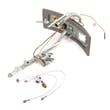
| Igniter mechanism feels broken or won’t click | Water heater piezo igniter bracket 100093718 | Mechanical support for spark ignition |
Why it matters
A gas water heater that will not ignite is often a safety shutdown related to flame proving, airflow, or gas delivery. Fixing the root cause restores reliable hot water and helps prevent soot buildup and inefficient combustion.
Last updated: February 2026