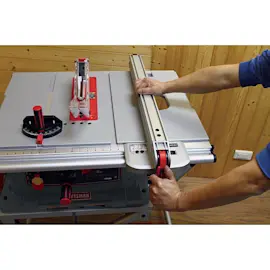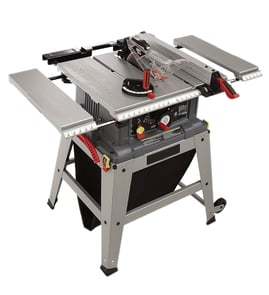

What are the common table saw mistakes?
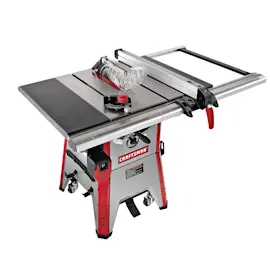
Common table saw mistakes on a Craftsman bench saw like model 11329990 include skipping basic safety steps, using the wrong cutting setup, and forcing stock through the blade. Fixing these habits reduces kickback risk, improves cut quality, and helps your saw run smoother.
Most common mistakes we see
- Cutting without a splitter or riving knife (or removing the blade guard and not reinstalling it)
- Standing directly behind the workpiece (puts you in the kickback line)
- Using the rip fence and miter gauge together for the same cut (can pinch and bind the wood)
- Cutting freehand instead of using the fence, miter gauge, or a sled
- Setting the blade too high above the workpiece
- Using a dull, dirty, or wrong-type blade for the material
- Not using push sticks, push blocks, or featherboards when hands get close to the blade
Safer setup checklist (before you cut)
- Set blade height so gullets are just above the top surface of the wood (typically about 1/8 to 1/4 inch above)
- Confirm the fence is parallel to the blade and locks firmly
- Use the miter gauge (or a crosscut sled) for crosscuts; use the fence for ripping
- Support long boards with outfeed and side support so the cut stays controlled
- Keep the tabletop clean and waxed so stock feeds smoothly
Quick “do this, not that” guide
| Task | Do this | Avoid this |
|---|---|---|
| Ripping | Fence + push stick/push block | Freehand ripping |
| Crosscutting | Miter gauge or sled | Fence + miter gauge together |
| Narrow rips | Push block, featherboard, proper stance | Fingers near blade |
| Any cut | Stand slightly to the side | Standing directly behind stock |
Why it matters
Most table saw injuries and ruined cuts come from binding and kickback. The mistakes above increase the chance the wood twists, pinches the blade, or lifts onto the teeth. A correct stance, correct guide (fence vs. miter gauge), and sharp blade prevent most of those problems.
Helpful DIY reference
For general repair and safety readiness (tools, testing, and basic DIY habits), we recommend are diy appliance repairs safe.
Last updated: February 2026
Are all table saw arbor nuts the same size?
No. Arbor nuts are not universal; the nut size and thread pitch must match the arbor on your specific saw. On a Craftsman bench saw like model 11329990, the correct arbor nut is the one that matches that saw’s arbor threads and flange stack, not just the blade’s arbor hole size.
What’s standardized (and what isn’t)
Many 10-inch table saw blades share a common arbor hole size, but that does not mean the arbor nut is the same across saws.
- Blade arbor hole: often standardized (commonly 5/8 in. on many 10-inch blades)
- Arbor threads: vary by saw design (diameter and thread pitch)
- Nut wrench size: varies by manufacturer and model
- Left-hand vs right-hand threads: varies by saw design
- Flanges/spacers: can change how much thread engagement you get
How to identify the right arbor nut for Craftsman 11329990
Use these checks before ordering or substituting a nut:
- Unplug the saw and remove the blade guard and throat plate.
- Remove the outer flange and nut; note whether it loosens clockwise or counterclockwise.
- Measure the arbor thread diameter (calipers work best).
- Determine thread pitch using a thread gauge (or compare to known nuts/bolts).
- Confirm the nut fully seats the outer flange and leaves solid thread engagement.
Quick compatibility guide
| What you’re matching | Must match exactly? | Why it matters |
|---|---|---|
| Arbor thread diameter | Yes | Prevents stripping and wobble |
| Thread pitch | Yes | Prevents cross-threading |
| Thread direction | Yes | Keeps the nut from loosening in use |
| Nut thickness/face | Usually | Ensures proper flange clamping |
| Blade arbor hole | No (if you use the right blade) | Blade fit is separate from nut fit |
Why it matters
A mismatched arbor nut can loosen, damage the arbor threads, or clamp the blade unevenly, which increases vibration and kickback risk. Getting the correct nut for Craftsman 11329990 protects the arbor, the blade, and cut accuracy.
For help locating the correct replacement part by model number and diagram, use how to find your appliance model number (and what it means for parts).
Last updated: February 2026
Does Craftsman make a good table saw?
Yes. Craftsman table saws are a solid choice for DIY and light-duty woodworking, and the Craftsman model 11329990 is best suited for basic ripping and crosscutting when it’s tuned correctly. For frequent, high-precision work, the biggest limiter is usually fence alignment and overall rigidity.
What “good” means for a table saw
A table saw can be “good” in different ways; matching the saw to your projects matters more than the brand name.
- Good for beginners and DIY: learning safe technique, building shop jigs, weekend projects
- Good value: capable cuts without paying for pro-grade features
- Not ideal for production work: all-day use, tight tolerance cabinetry, heavy hardwood ripping
- Upgrade-friendly: many owners improve results with a better blade and careful setup
What to check on your Craftsman 11329990 for best results
Most complaints about cut quality come from setup, not the motor.
- Verify the rip fence is parallel to the blade (front and back)
- Confirm the blade is parallel to the miter slot
- Check arbor/blade runout (wobble) and tighten mounting hardware
- Use a sharp, correct blade (rip blade for ripping; combo blade for mixed work)
- Inspect the belt and pulleys (if belt-driven) for vibration and glazing
- Make sure the stand and table are stable; shim the feet if needed
Quick comparison: DIY use vs. precision use
| Use case | Craftsman table saws typically do well | Typical limitation to watch |
|---|---|---|
| Home projects | Straightforward cuts, repeatable results after tuning | Fence drift or flex if not locked consistently |
| Trim and small stock | Fast setup, convenient size | Tear-out if blade is dull or wrong tooth count |
| Fine cabinetry | Possible with careful calibration | More time spent measuring, test cuts, and re-checking alignment |
Why it matters
A table saw that’s “good enough” becomes frustrating when the fence is out of square or the saw vibrates; that leads to burning, kickback risk, and parts that do not fit. A careful tune-up and the right blade usually deliver the biggest improvement.
Finding the right replacement parts
When you’re ready to replace wear items (switches, belts, bearings, guards, or fence hardware), search by the full model number 11329990 on Sears PartsDirect to match parts to your exact saw.
Last updated: February 2026
How do I get rid of an old table saw?
If you are getting rid of a Craftsman table saw model 11329990, the best option is to sell or donate it if it still runs, or recycle/scrap it if it is unsafe or non-working. Always remove the blade and secure sharp edges before transporting the saw.
Best disposal options (from easiest to most responsible)
- Sell it (local pickup): working saws, fences, miter gauges, and stands often have value.
- Donate it: good choice if it powers on, the arbor spins smoothly, and guards are included.
- List it for free: if you want it gone fast, “free, you haul” is usually the quickest.
- Scrap metal recycling: most of the saw (table, frame, motor housing) is recyclable metal.
- Municipal bulky-item drop-off: some areas accept power tools as bulky waste.
- E-waste drop-off (sometimes): if your local program accepts corded tools with motors.
Safety steps before you move or dispose of it
- Unplug the saw and coil/tie the power cord.
- Remove the blade and pack it separately.
- Lower the blade fully and lock height/tilt adjustments (if equipped).
- Remove loose accessories (rip fence, miter gauge, throat plate) and bag hardware.
- Tape or cover sharp edges (blade, broken castings, sheet-metal corners).
What to do with the blade
Most recycling programs do not want loose blades in bins because they are a cut hazard. Use this approach:
| Item | Best option | Prep needed |
|---|---|---|
| Steel saw blade | Scrap metal recycler | Wrap in cardboard and tape securely |
| Carbide-tipped blade | Scrap metal recycler (ask first) | Wrap and label “sharp” |
| Damaged blade | Scrap metal recycler | Wrap; do not toss loose |
Why it matters
A table saw is heavy, has sharp components, and includes a motor and wiring. Selling, donating, or recycling keeps usable parts out of the trash and reduces the chance of injury during handling.
For help identifying the exact model tag location and what the model number means when you are listing it, use how to find your appliance model number (and what it means for parts).
Last updated: February 2026