 Owner’s manual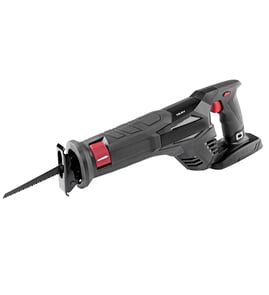

What should you not do with a reciprocating saw?
You should not force the cut, use the wrong blade, cut unsecured material, or make adjustments with the saw powered. On the Craftsman 315114270 reciprocating saw, disconnect the battery pack before installing a blade, cleaning, or doing maintenance to prevent accidental starting (serious injury risk).
Things you should not do
- Do not push hard to “speed up” the cut; let the blade do the work.
- Do not use a dull, bent, or incorrect blade for the material (wood vs. metal vs. plastic).
- Do not cut without securing the workpiece (vise, clamps, or stable support).
- Do not operate one-handed; keep two hands on the saw for control.
- Do not change blades, adjust, clean, or service the saw with the battery installed.
- Do not start a cut with the blade already jammed against the material.
- Do not cut where hidden wiring, nails, or fasteners are likely without checking first.
Quick safety checklist (315114270)
Use this as a simple “before you cut” routine:
| Check | What to do | Why it matters |
|---|---|---|
| Power state | Remove the battery pack before blade changes or maintenance | Prevents accidental starting |
| Blade choice | Match blade type and tooth count to wood, metal, or plastic | Reduces binding and overheating |
| Work support | Clamp the material and keep footing stable | Improves control and cut accuracy |
| PPE | Wear eye protection and hearing protection | Reduces injury risk |
Why it matters
Most reciprocating saw problems come from loss of control: forcing the tool, using the wrong blade, or cutting unstable material. Those mistakes increase binding and sudden movement, which can damage the blade clamp area and create a serious injury hazard.
Where to confirm model-specific guidance
For the Craftsman 315114270, follow the safety rules, blade installation steps, and battery handling instructions in the owner's manual.
Last updated: February 2026
How to put a blade on a Craftsman reciprocating saw?
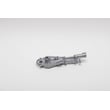
To install a blade on your Craftsman 315114270 reciprocating saw, keep the saw disconnected from power, lift the toolless blade clamp lock/release lever, slide the blade in between the clamp and saw bar as far as it will go, then release the lever to lock the blade in place (details in the owner's manual).
Step-by-step: installing the blade
- Disconnect the saw from power first (unplug it, or remove the battery pack if equipped).
- Lift the blade clamp lock/release lever on the side of the saw.
- Insert the blade between the blade clamp and the saw bar.
- Push the blade in as far as possible.
- Release the lever so it returns to the lock position.
- Tug the blade lightly to confirm it is locked and seated.
Removing a blade
- Disconnect the saw from power.
- Lift the blade clamp lock/release lever.
- Pull the blade straight out.
- Release the lever after the blade is removed.
Blade orientation and selection tips
Blade direction depends on the cut you want and the blade style; many reciprocating saw blades can be installed with the teeth facing either direction.
| Task | Typical blade type | Why it matters |
|---|---|---|
| Wood and demolition | Coarse-tooth wood/demolition blade | Faster cutting in softer materials |
| Metal (pipe, sheet) | Fine-tooth metal-cutting blade | Cleaner cut and less snagging |
| Plastic and drywall | Multi-purpose blade | Reduces chipping and binding |
Why it matters
A fully seated, locked blade cuts straighter and reduces vibration. Installing the blade with the saw disconnected from power also prevents accidental starts that can cause serious injury.
Last updated: February 2026
Where can I buy Craftsman replacement parts?
You can buy replacement parts for your Craftsman reciprocating saw model 315.114270 through Sears PartsDirect using the model number to match the correct parts list (the manual notes you should always reference the model number when ordering). Use the 315.114270 operator's manual to identify the exact part names and numbers.
Best way to get the right part for model 315.114270
- Confirm the model number on the plate attached to the motor housing.
- Use the exploded view and parts list in the manual to find the part description.
- Match any listed part numbers exactly (including punctuation and spacing).
- If your saw is part of a kit, verify whether the accessory came with the kit or is sold separately.
- Order using the model number so you do not accidentally buy a similar-looking part for a different Craftsman saw.
Common replacement items for this saw
The 315.114270 manual lists several items customers commonly replace, including:
- Shoe assembly
- Saw blade (wood cutting)
- Battery pack (examples shown in the manual include 1323517 and 1323903)
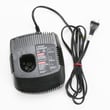
- Charger (example shown in the manual includes 1425301)
- Operator's manual
Quick reference: what to use for identification
| What you have | What to use when buying parts | Where to find it |
|---|---|---|
| The tool | Model number 315.114270 | Plate on the motor housing |
| A worn/broken component | Part description and part number | Exploded view and parts list |
| Battery/charger | Battery pack or charger number | Markings on the item and the parts list |
Why it matters
Craftsman cordless tools often share similar housings across model families, but internal parts (shoe assembly, switch, wiring, battery interface) can differ. Using the correct model number and the manual parts list prevents wrong-part returns and gets your saw running safely.
Last updated: February 2026
Are reciprocating saws and sawzall the same thing?
Yes, they are the same type of tool: a Sawzall is a reciprocating saw. “Sawzall” is a brand name that many people use generically, while “reciprocating saw” is the correct tool category (including your Craftsman 315114270). For safe use details, follow the owner's manual.
What the terms mean
- Reciprocating saw: the tool type; a straight blade moves back and forth to cut.
- Sawzall: a popular brand name for a reciprocating saw; people often use it as a nickname.
- Craftsman 315114270: your specific cordless reciprocating saw model.
Why it matters when buying blades and parts
Using the right blade and setup affects cut quality, speed, and safety. Your Craftsman 315114270 is designed for common reciprocating saw tasks such as cutting wood, plastic, drywall, and metals (with the correct blade).
Match the blade to the job
- Wood and demolition: coarse wood or demolition blades
- Metal pipe and sheet metal: fine-tooth metal-cutting blades
- Plastic and drywall: blades intended for those materials
- Tight spaces: shorter blades for control
- Thick material: longer blades for reach
Quick comparison
| Term you hear | What it actually refers to | What to use for Craftsman 315114270 |
|---|---|---|
| “Sawzall” | Brand nickname for a reciprocating saw | Any compatible reciprocating saw blade |
| “Reciprocating saw” | The tool category | Correct term for your tool type |
Safety and setup reminders
- Disconnect the battery pack before changing blades or doing maintenance.
- Use the tool’s toolless blade clamp correctly so the blade locks fully.
- Wear eye protection and use the right blade for the material.
Last updated: February 2026